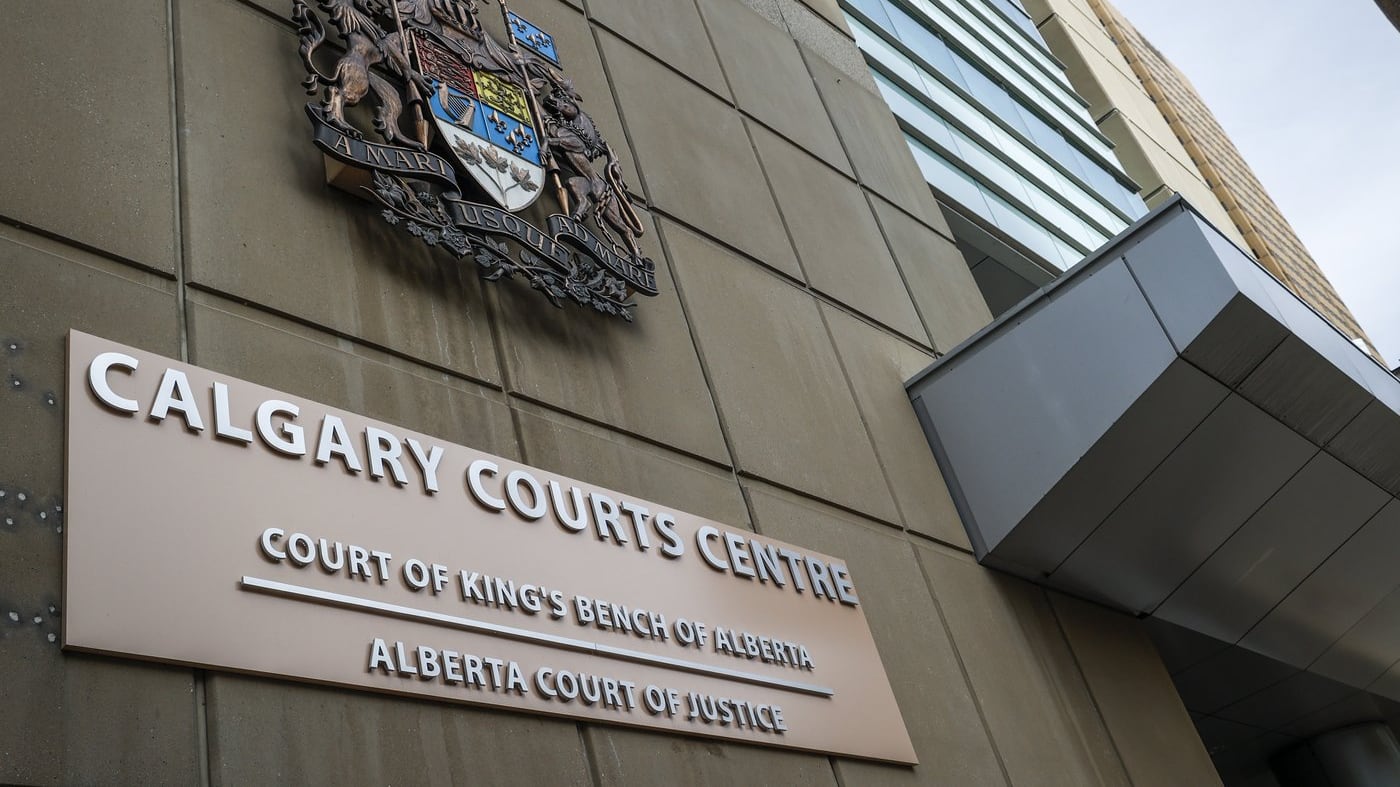
A Calgary judge has sentenced a Sierra Leone man, a former child soldier, to five months in jail after he was found living in the city illegally last year.
Justice I.L. Maharaj said Ibrahim Jalloh was deemed inadmissible to the country in 2012 based on “serious criminality.”
According to the Alberta Court of Justice’s decision published April 29 Jalloh was not removed from Canada until 2023.
Following that deportation, Jalloh made his way back to Canada, which he entered illegally through the port of Vancouver.
On Dec. 22, 2025, the Canada Border Services Agency discovered he was back in the country and, by Dec. 31, he was apprehended by the Calgary Police Service.
Maharaj, in her reasons, said the court is not responsible for evaluating the correctness of the immigration process that resulted in Jalloh being blocked from entering Canada.
“I accept that determination on its face. Mr. Jalloh is not permitted to be in Canada without authorization,” she wrote.
“This court is faced with determining an appropriate sentence for Mr. Jalloh’s offence of entering Canada in the face of an order that he not do so.”
‘Compelled to commit atrocious acts’
Jalloh, who was born in Freetown, Sierra Leone, in 1989, told the court he was recruited against his will into the rebel army and trained as a child soldier during the country’s civil war.
During that time “he was compelled to commit atrocious acts against others.”
“He asserts that he suffered severe psychological trauma as a result of this experience,” Maharaj wrote.
Following the war, Jalloh was reunited with his father and the pair immigrated to Canada, entering the country legally on July 23, 2007. Jalloh was granted permanent resident status at that time.
While living in Canada, Maharaj said Jalloh “acquired numerous criminal convictions” beginning in 2010.
Those convictions resulted in a deportation order against Jalloh, which was issued on June 7, 2012.
From that point, Maharaj said he “continued to add to his criminal record.”
Jalloh was finally deported in 2023.
Through evidence provided by affidavits from his uncle and a barrister, as well as medical information, Jalloh said he was attacked and kidnapped following his return to Sierra Leone.
His evidence states his fears that if he returns to the country, “he will be at real risk of further abduction, serious bodily harm, or even death.”
‘Very serious offence’
Maharaj said, despite the circumstances of his flight from Sierra Leone, Jalloh “made a choice to enter Canada surreptitiously.”
She said the breach of a court order designed to protect the safety of Canadians “is a very serious offence.”
“I accept that, in many circumstances, a breach of a court order to refrain from going to a place that you are not allowed to go (commonly referred to as a ‘no-go’ condition) might be interpreted as lower on the scale of gravity of offences than other types of breaches of court orders,” she wrote.
“An order prohibiting a person from entering all of Canada could be colloquially compared to a ‘super no-go’ because of the geographic extent of the prohibition. The order prohibiting an individual from entering all of Canada, for whatever reasons have been accepted by an adjudicative body or a court, is a very serious order focused on ensuring public safety and protecting the Canadians from the individual who has been deemed inadmissible to all of Canada.”
Maharaj said that while this is Jalloh’s first attempt to enter Canada illegally, he also possesses a “very significant criminal record.”
“The most comparable cases demonstrate a range in sentence between three and nine months in gaol, with sentences on the higher end of that range reserved for offenders who possess a notable criminal record or who have attempted to enter Canada without authorization more than once,” she wrote.
“Sentences shorter than five months are generally reserved for those offenders who come to the Court with no criminal record and as first-time offenders, or offenders with extraordinarily mitigating circumstances.
“Weighing all the foregoing mitigating and aggravating factors together, I have determined that a proportionate and individualized sentence for Mr. Jalloh’s conduct is five months in gaol.”

