New Brunswick-based trucker Peter Maclean has been a long-haul commercial driver for 30 years.
He says everything consumers buy usually arrives in stores the same way.
“People seem to think that stuff just shows up on shelves,” said MacLean. “They don’t realize it’s got to come in a truck.”
Those trucks, mostly 18-wheelers, run on diesel fuel, which is getting more expensive each week. “It’s got to be up 25 or 30 cents easy,” said MacLean.
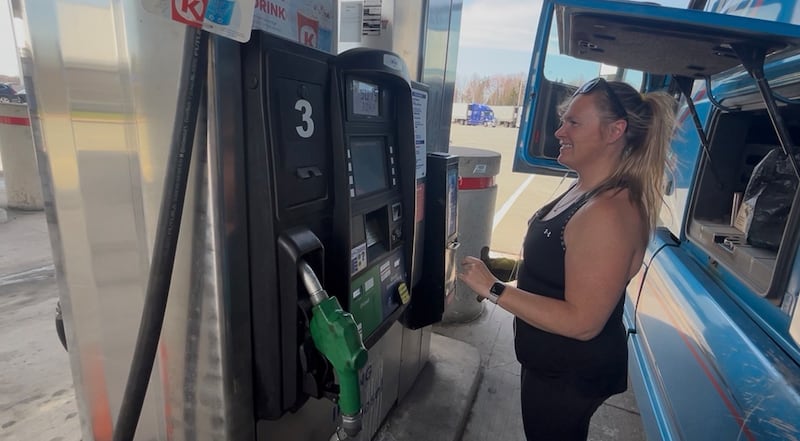
The cost to fill trucker Shannon Landsberg’s rig? “It’s like $1,600,” said Landsberg.
‘15 or 20 cents’ across provincial lines
The reasons for the increase are connected to the U.S. and Israel’s war with Iran. Since the conflict started in February, the global oil supply has been disrupted, causing diesel to jump in price dramatically.
According to fuel analyst Carol Montreuil, it’s even more expensive in Western Canada.
“By and large we are looking at a 50 to 60 per cent increase,” said Montreuil, Eastern Canada vice president of the Canadian Fuels Association.
When MacLean drives his truck from Ontario to Nova Scotia, he has noticed the fuel gets more expensive in each passing province because of different tax structures.
“Whatever it’s showing here in Nova Scotia is usually 15 or 20 cents different,” he said.
At the truck stop in Enfield, N.S., many of the truckers are on the road every day, fuelling up and shipping products between New Brunswick and Nova Scotia.
The highway connecting the two provinces is always busy with truckers hauling various types.
According to the Atlantic Provinces Trucking Association (APTA), 90 per cent of food, forestry products and manufacturing goods used in Nova Scotia and New Brunswick are transported by trucks travelling between the two provinces.
“It’s about 2,500 trucks a day, pass through that stretch of highway, moving $35 billion in goods per year,” said APTA Executive Director Chris McKee, who added many trucking companies use fuel surcharges to recover lost revenue. “At the end of the day, these costs are passed along the supply chain.”
As the price of diesel continues to increase, farmer Josh Oulton said he is now spending more money on essential materials.
“Fertilizer has gone up and we’re expecting between 30 and 40 per cent increase in price,” said Oulton at his farm in Port Williams, N.S.
“Energy is the life blood of all of our economy and truckers especially are feeling the pinch because it is such a high percentage increase,” said Montreuil, who added if the war with Iran continues, Canadians should expect even more diesel price hikes, causing added rounds of inflation impacting consumer goods that are shipped by trucks.

