As a professor of archeology, Jonathan Fowler loves living in Halifax.
“Here we are in one of Canada’s oldest cities,” he said. “There are all sorts of materials right outside our door to investigate.
“It powers the teaching process to do practical work in the environment you’re living in, and it’s a way to contribute something to our community.”
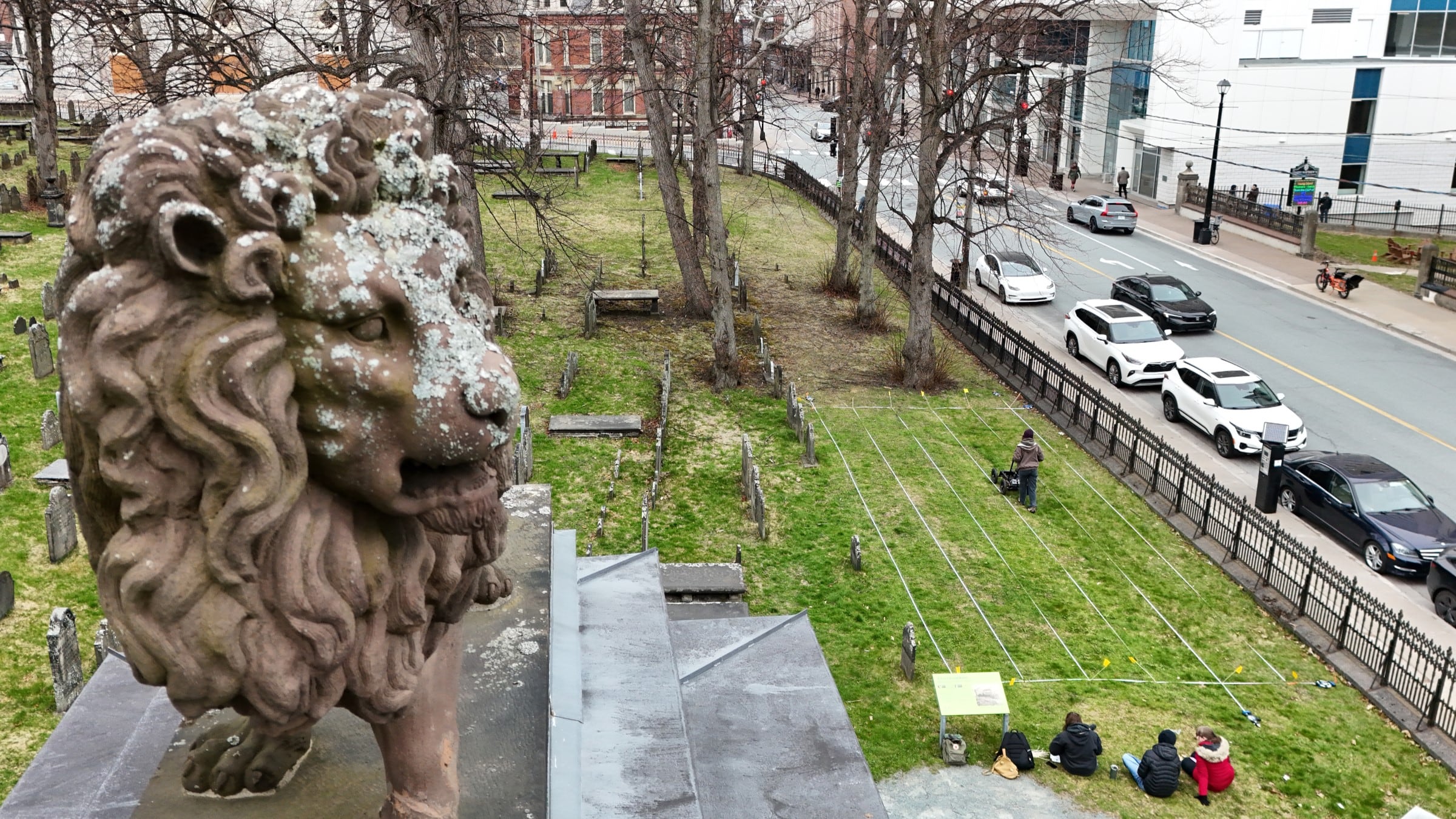
Fowler, who teaches at Saint Mary’s University, recently explored one of Halifax’s richest historic sites with his students: the Old Burying Ground.
“There’s an amazing collection of research material,” he said. “The burial ground is a site of many questions. There are 1,200 stones, but records indicate there were 10,000 burials.”
The Old Burying Ground, located in downtown Halifax, first opened its gates in 1749 and welcomed people to their final resting place until 1844. It was designated as a National Historic Site in 1991, making it the first Canadian graveyard to receive that distinction.
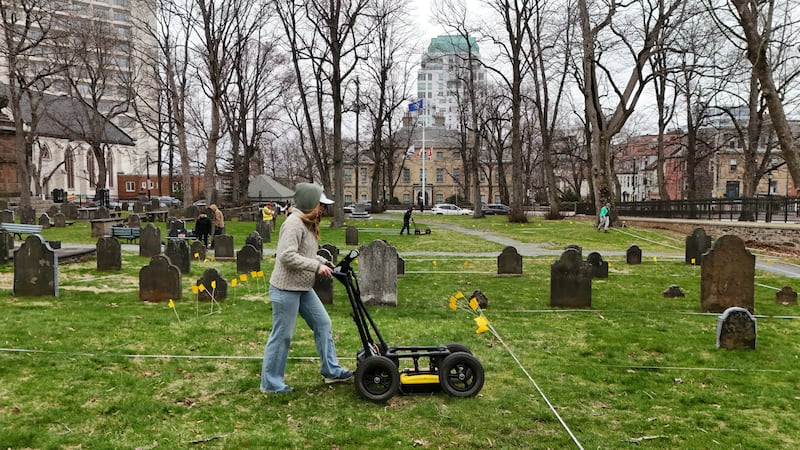
Fowler said his team focused on the southern part of the Old Burying Ground, which is a section that doesn’t have many visible gravestones. Fowler said they used ground-penetrating radar to scan beneath the earth, uncovering hints of the cemetery’s forgotten past.
“We’re not seeing down super far, maybe a metre or a little more,” he said. “We’ve got a lot of evidence we wouldn’t expect related to former landscaping. There are former pathways that are no longer there.
“One hundred years ago, paths were running through the cemetery. We can plot these old paths.”
Fowler said they’ve also seen evidence of burials at the site, but he notes they can’t be completely certain.
“All of the telltale signs are there,” he said. “There are a number of unmarked burials. The majority of burials there are unmarked.
“We’re not seeing 10,000 burials. We are seeing some graves very clearly, but not many of them. Some may have decayed.”
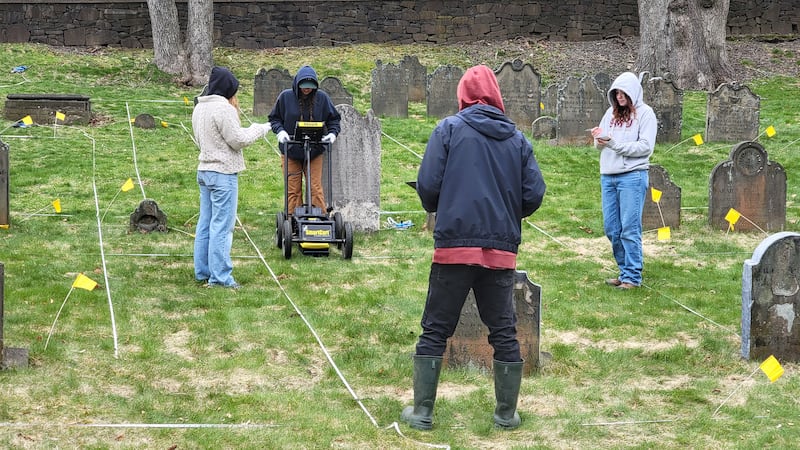
Fowler said his team will analyze the data they collected and prepare it for a report they hope to release in the fall.
Craig Ferguson, a board member with the Old Burying Ground Foundation, said they partnered with Fowler to learn more about the historic site.
“A lot of people walk past the Burying Ground and never think about it,” he said. “There’s a lot we don’t know about it.
“Hopefully this can provide some answers to questions we don’t even know yet.”
Ferguson said the foundation is always looking to expand the stories contained in the Burying Ground, and he’s hopeful the radar work might unearth more tales.
“One of the things we’re always interested in are people who are lesser memorialized,” he said. “How do we tell the stories of people whose graves aren’t marked?”
The Old Burying Ground is open to the public from May 1 to Nov. 11.
For more Nova Scotia news, visit our dedicated provincial page

