TORONTO - 15-year-old Jessica Nagy rocks back and forth on the couch in her family’s Etobicoke rental home to help release anxiety. For the teenager, who lives with severe cognitive and physical disabilities, it’s a common way she communicates to her parents that she’s uncomfortable or stressed.
Without missing a beat, her parents pull out her favourite toy: a wooden spatula. She runs her hand over it, then curls her fingers around it. The familiar sensation instantly soothes and calms her. She smiles and stops rocking.
It’s a small example of the kind of support Jessica’s parents say she won’t be able to receive in just over two weeks, when her parents and sister are scheduled to be forcibly removed from Canada on May 26.
Jessica’s parents say that even if she is brought to the family’s home country of Hungary, severe discrimination because of their Roma ethnicity would put them in fear that she could be taken from them and placed in a government-run care system with a history of systemic issues, including physical, emotional and sexual abuse of children in care.
“I am afraid of what’s going to happen if she has new issues or new medical concerns coming up. I’m worried about her safety. Are they going to deny care again because of her Roma ethnicity?” said her mother Zsuzsanna Szuhai in an interview with CTV News on Sunday through a translator.
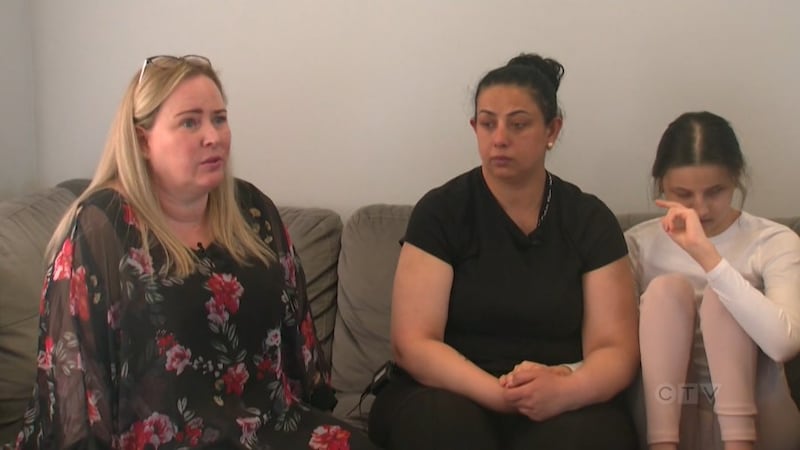
“I don’t know what’s going to happen to her. Can she even go to school? Where are we going to live? I’m terrified of everything,” the mother said.
Jessica is a Canadian citizen, born in Toronto, and lives with congenital blindness, autism and a very severe form of osteoporosis, which her parents say makes her bones as fragile as glass. Jessica’s father, Tibor Nagy, is also deaf and non-verbal.
The Roma people in Hungary continue to face systemic discrimination, widespread prejudice and severe socioeconomic exclusions -- particularly in education, housing and access to public service, according to human rights research from European Roma Rights Centre (ERRC).
It has resulted in high levels of poverty, poor education and limited access to housing -- which Zsuzsanna claims will result in the authorities removing Jessica from their care and into government-run state care.
‘She cannot live without us’
“Jessica requires 24/7 supervision and support and caregiving,” said Zsuzsanna. “We have to feed her, we have to change her diaper, we have to look after her every single day and now, on top of everything, the stress, the fear of the removal, the deportation, the harm, the uncertainty of what’s going to happen to us.”
“I was told to leave her behind [in Canada] and I would never be able to do that and Jessica cannot stay without us, for more than a very, very few hours. She cannot live without us,” added Zsuzsanna, wiping tears from her face.
Jessica’s parents and her older sister who is also named Zsuzsanna, came to Canada most recently in 2023 and filed a pre-removal risk assessment (PRRA), which allows individuals to request protection if they fear persecution and cruel treatment in their home country. They then filed for permanent residency under humanitarian and compassionate grounds the following year in 2024.
Prior to that, the family had come to Canada about 15 years ago, when Zsuzsanna gave birth to Jessica in Toronto, before being forcibly removed and sent back to Hungary in 2012.
Now it’s been roughly a year and a half since they filed for permanent residency, and the family is now questioning why no decision has been made, especially given their circumstances — having a Canadian daughter with severe disabilities — and the fact they’ve now received a removal date from the Canada Border Services Agency for later this month.
“According to the legislation, a humanitarian and compassionate [H and C] grounds submission does not stay removal proceedings -- so even if you have an H and C in process, it’s possible that CBSA could still initiate removals,” said the family’s immigration and refugee lawyer, Farah Issa.
Issa says the next step is for the family to request a deferral of removal to CBSA. If the request is denied, then they will file a stay of removal application to the Federal Court.
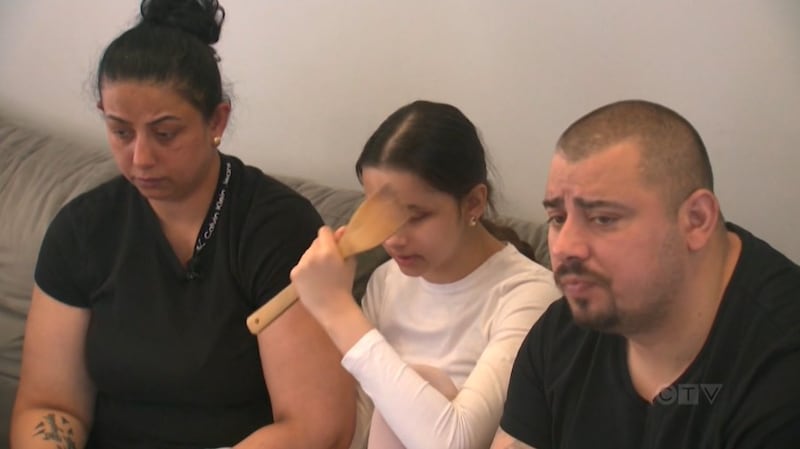
“This is where you can argue the irreparable harm that will come about if the this family gets removed,” said Issa. “So this is where the courts gonna look at the evidence, (and decide) is this a serious issue? Is there irreparable harm? If it’s a yes, they do stand a chance.”
“We are really pushing very hard for them to get status here in this country. We’re doing it for the sake of the family, for the sake of the child.”
In a statement to CTV News Monday evening, Immigration, Refugees and Citizenship Canada says it refused the family’s PRRA application a year and a half ago because it was determined that the family was at no risk of danger if they returned to Hungary.
“IRCC refused the family’s PRRA application in October 2024. Based on the information available at the time, it was determined that they would not face a risk of persecution, torture, risk to life, or cruel and unusual treatment or punishment if returned to Hungary,” said Taous Ait, a spokesperson for IRCC.
“Their most recent application for permanent residence under humanitarian and compassionate considerations (H&C) was received in in October 2024 and is still in process.”
Ait adds that these applications are assessed on a case-by-case basis, putting into consideration the family’s ties to Canada and the interest of the children involved – but these applications do not prevent or delay the removal from Canada.

