


PRINCE EDWARD COUNTY, Ont. – Canadian wineries could be adding billions more to this country’s GDP in the years ahead if the barriers they are facing were to be addressed, new analysis finds.
At a time where Prime Minister Mark Carney is pushing to strengthen domestic industries, there’s significant untapped growth potential in the wine sector, according to a new Deloitte report commissioned by Wine Growers Canada.
CTV News was granted exclusive first access to the analysis and is in Prince Edward County (PEC) – Ontario’s fastest-growing wine region – on Tuesday to talk to winemakers about the findings.
Located on the eastern shores of Lake Ontario, halfway between Ottawa and Toronto, are around 40 wineries in PEC, and more are opening every year.
The cool-climate wine region has produced award-winning wines, from traditional sparkling and delicate reds, to refreshing whites and innovative natural orange wines.
But provinces being slow to fully break down trade barriers and streamline the regulatory system, as well as the high federal tax burden, has put a cork in some small wineries’ ability to grow.“There’s lots of room to do better,” said Tim Kuepfer, winemaker at Broken Stone Winery.
“And from our perspective, there’s never been infrastructure to ship wine to other provinces, so that market’s still young and inaccessible to a winery my size, a very small winery.”
Canadian wines currently represent 28.8 per cent of domestic wine sales, contributing $10.1 billion annually to Canada’s GDP. But if the industry was able to achieve a majority market share of 51 per cent over the next 15 years, made-in-Canada wines could contribute $13.7 billion a year.

Getting there, the report outlines, would require lingering interprovincial trade barriers to be dismantled, the representation and brand recognition of Canadian wines across the country to be strengthened, and for lawmakers to implement policy and tax changes to level the playing field with international competitors.
As of 2025, there are more than 31,000 grape-bearing acres across Canada, and more than 600 wineries, sustaining approximately 99,300 full-time jobs. The wine industry in this country is also highly integrated with a range of other key economic sectors, from agriculture and manufacturing to tourism and retail.
“We start off at grapes, but then you support the wine industry, you support transportation, logistics, hotels and accommodations, tourism, hospitality and rural economic development,” said Wine Growers Canada president and CEO Dan Paszkowski in an interview with CTV News on Tuesday. “There’s a significant value chain.”
Paszkowski added there’s a “significant economic benefit” to implementing mechanisms to help to wine industry grow, and said his organization is calling for a federal wine strategy to make that happen.
“To take a look and co-ordinate all of the elements that are within the value chain, to make it more competitive, to make it more productive, and to provide the certainty for the industry to invest,” Paszkowski said, pointing to potential benefits of a national strategy.
Room to expand ‘Buy Canadian’
The sector has a footprint across the country, from British Columbia’s Okanagan to Nova Scotia’s Annapolis Valley.
Although, buying full-bodied red from Penticton, B.C.’s Painted Rock, or a crisp Tidal Bay from Benjamin Bridge, is often much harder to do from one or two provinces over, than it is to grab a generic Spanish Rioja off a local liquor store shelf.
That said, the report found that the “multiplier effect” for Canadian wines are six times greater than that of imported wines. Wine Growers Canada estimates that for every bottle of 100 per cent made-in-Canada wine purchased domestically, approximately $89.99 is generated for the economy, whereas a bottle of imported wine generates just $15.73.
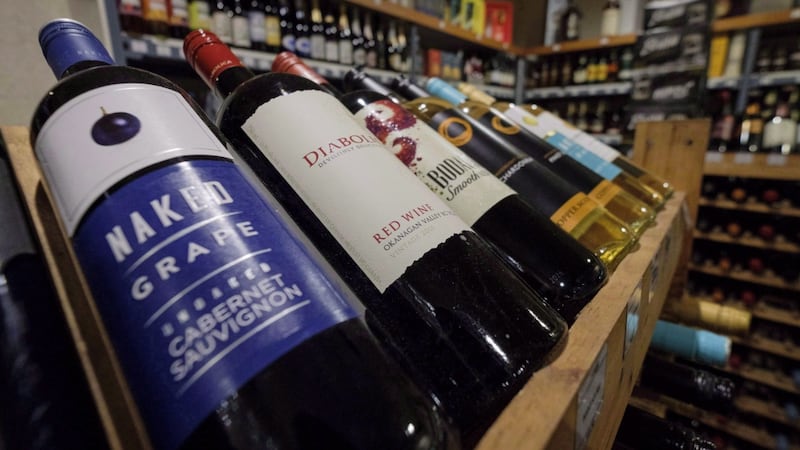
While the “Buy Canadian” push – sparked by U.S. President Donald Trump’s trade war – and provinces’ retaliatory decision to pull American alcohol off the shelves has proven to pay off big time for many domestic producers, there’s still room to squeeze more juice out of the market.
For example: Of the 166 million litres of wine sold in Quebec in 2023-24, only two million litres were wines made from 100 per cent Quebec-grown grapes. The report argues that the time is ripe for marketing wines as a perfect pick for Canadians looking to increase how much they’re shopping local.
“We’ve seen an uptick in just general support, and a lot of our customers that we already had are continuing to buy more wine and to bring their friends,” said Mackenzie Brisbois, winemaker and vineyard manager at Trail Estate Winery. “I think we could always use more buy local.”
“When I think of other wine regions in the world, we think of those wine regions as countries. And when we think of Canada, we think of B.C., Ontario, Quebec, Nova, Scotia, and we don’t look at ourselves as a Canadian-wide region,” Brisbois added.
Interprovincial barriers remain
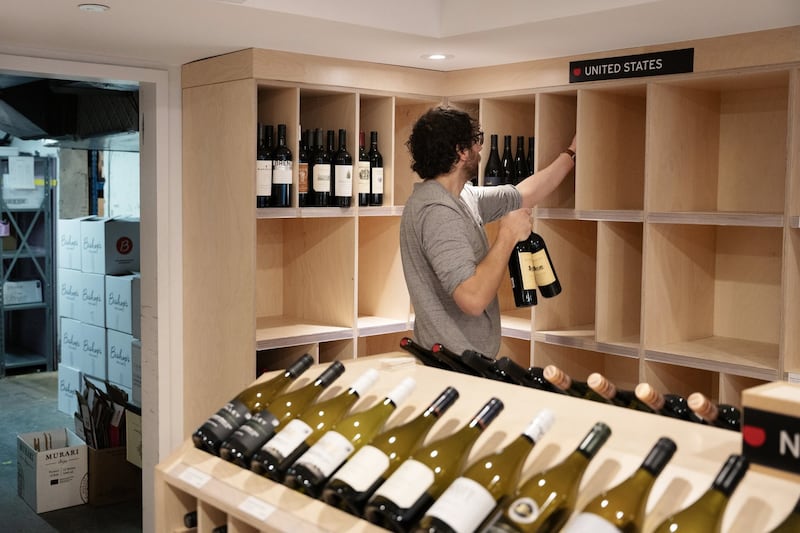
Despite the flurry of cross-provincial pledges to break down interprovincial trade barriers, many still persist and are hindering the wine sector’s ability to expand their presence across the country, the report argues.
While there is the federal Importation of Intoxicating Liquors Act, the interprovincial alcohol trade is largely governed provincially, in a way that to-date has resulted in a patchwork of licensing, compliance, and credential requirements.
According to Wine Growers Canada, its members have long identified this quilt of rules as a challenge to domestic growth as it limits consumer access and reduces revenue potential for producers.
What efforts to lift barriers looked like as of March, according to the report, showed an uneven map. The provinces with the lowest level of restrictions were B.C., Manitoba and Nova Scotia, as they allow direct-to-consumer (DTC) shipping of wine from other provinces and unlimited wine imports for personal consumption.
Among the parts of the country with moderate limits are Alberta and Ontario, where DTC shipping is not yet fully in effect. Meanwhile, the territories and Newfoundland and Labrador were deemed to have the highest restrictions, with legislated limits on personal imports and no DTC shipping.
Last month, Ottawa said 10 provinces and the Yukon were on track to allow consumers to buy Canadian alcohol for personal consumption directly by May 2026, but how that policy will be implemented remains up to each jurisdiction.
“There are so many different rules between provinces … between all of our regulatory systems that it is actually very difficult to market that to a consumer, and to explain what is actually going on,” Brisbois said.
“At the end of the day, it should be, ‘would you like to buy a bottle of wine from your local winery? Yes? Here you go and have a good time.’”
Policy, tax changes needed
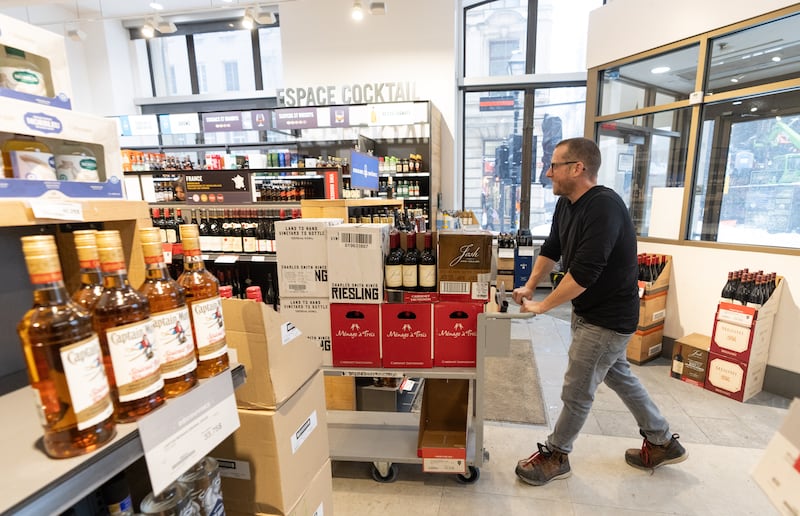
To further stretch the legs of the sector’s potential, the report also calls for the development of a dedicated federal wine strategy, separate from the existing national tourism plan.
A sector-specific strategy could improve long-term planning and investment certainty, and coupled with tax and regulatory changes that level the playing field with international competitors, it would improve the sustainability of the sector, the report argues.
As an example of the incongruity when it comes to the tax burden winemakers in this country face, a mid-sized Canadian winery – producing 500,000 litres a year – pays approximately C$372,500 in federal excise taxes.
A U.S. winery of comparable output pays an estimated US$19,700, or C$27,000, and that discrepancy has knock-on effects in pricing, margins and the ability to reinvest, the report states.
“The tax burden for wine and alcoholic beverages is very high, and there’s a very confusing regime around it,” Kuepfer said. “Governments take with one hand and give back with the other, but absolutely if taxes were lower, we could afford to invest more in the winery and maybe even hire a person or two,” he added.
Policy wise, winemakers and winery owners also point to uneven market conditions from one province to another, resulting in lingering uncertainty – even if trade barriers are brought down.
For example, one asked: Would an Ontario-based Vinters Quality Alliance, or VQA, be treated equally to a B.C. VQA, face the same regulations, processing and auditing? The smaller the producer, the more burdensome needing to comply with multijurisdictional requirements can become.
Paszkowski credited Internal Trade Minister Dominic LeBlanc and provincial ministers for pledging to implement a “harmonized, comprehensive plan for moving wine across provincial borders.”
But, he said, bilateral agreements between provinces is unlikely to “happen immediately.”
Paszkowski added one of the “biggest challenges” facing the industry is the rate of the federal excise tax on wine, adding it’s one of the highest duties in the world.
“We have to pay it on every bottle of wine that we that we ship,” he said. “So that is a significant detriment to cash flow for the industry. We don’t have the cash now to reinvest back into our business.”

‘We’ve done our part’: Internal trade minister
Speaking to reporters following an announcement in Moncton about funding for small craft harbours, LeBlanc said the federal government has removed all its trade barriers related to alcohol, and the only ones remaining are at the provincial level.
“The provinces have a series of regimes around the sale of alcohol, but the good news is, 11 of the 13 provinces and territories have agreed to allow direct-to-consumer sales of alcohol, so a winery in Nova Scotia can sell directly to a customer in Ontario,” LeBlanc said.
“We think the provinces need to do more,” he added. “We’ve talked to the provinces about moving faster. The Government of Canada doesn’t own liquor stores. Provinces do.”
As for the federal government’s role, LeBlanc said: “We’ve done our part.”
In a statement on Tuesday, Conservative B.C. MP Dan Albas criticized the federal government, saying they “haven’t done the hard work of actually reducing interprovincial barriers to build a singular Canadian economy.”
Albas also called for the federal government to fast-track Bill C-262 – a Conservative private member’s bill – that aims to modernize interprovincial alcohol shipping rules in Canada.
“If the Liberals are serious about strengthening Canadian industries and growing our economy, Conservatives are ready to fast-track Bill C-262 into law and remove the barriers holding back Canadian beer, wine, and spirit producers,” Albas said.
With files from CTV News’ Spencer Van Dyk

