OTTAWA – Security experts, human rights advocates and politicians are sounding the alarm about the renewal of a co-operation agreement between the Royal Canadian Mounted Police and China’s Ministry of Public Security as troubling details surface at a foreign interference trial.
Court documents filed at the trial of alleged double agent William Majcher reveals that at least 25 Canadian residents were targeted by Chinese police under an anti-corruption program, which doubled as a tool of transnational repression. The affidavit shows that the Chinese nationals may have been forced to return to their homeland against their will to face punishment for alleged financial crimes.
Some of them would have faced life imprisonment, or even a death sentence.
The 63-year-old Majcher, a former RCMP officer, is accused of illegally participating in an international anti-corruption campaign launched by Chinese President Xi Jinping called “Operation Fox Hunt,” which was later followed by a similar campaign known as “Operation SkyNet.” The judge’s verdict is expected on Wednesday.
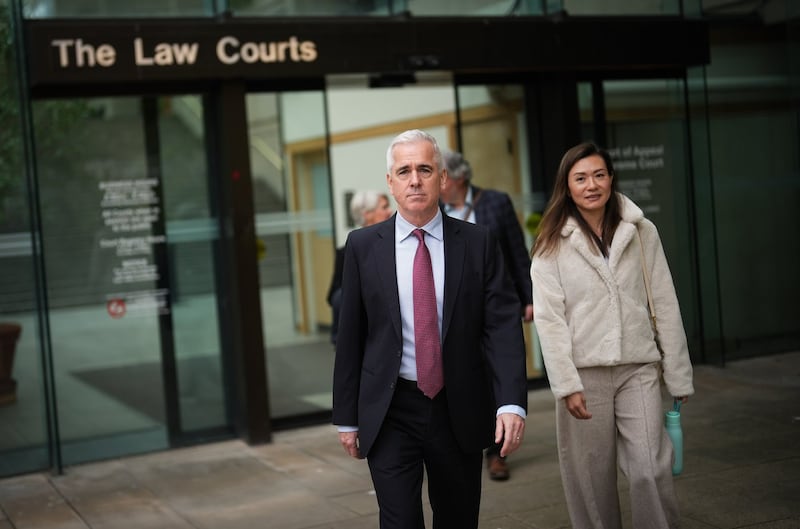
Majcher is charged with preparing materials to compel a Vancouver man, Kevin Sun, to return to China. The court heard that Sun, if repatriated, would likely have faced a death sentence for allegedly stealing more than $100 million from the Chinese government. Sun denies any wrongdoing.
- READ MORE: RCMP officer and alleged Chinese double agent pleads not guilty at foreign interference trial
- READ MORE: Trial of ex-Mountie charged with security offence concludes in B.C. court
China says Fox Hunt and SkyNet seek to repatriate economic fugitives, but human rights organizations say, in reality, the campaigns target Chinese nationals living abroad who are political rivals, dissidents and critics of Beijing.
Research from the Spain-based NGO Safeguard Defenders found that China’s Ministry of Public Security, or the MPS, operated at least 102 illegal police stations in 53 countries around the world, including Canada.
In January before Majcher’s trial began, Prime Minister Mark Carney signed a new strategic partnership with Xi to jumpstart trade and usher in Chinese EV’s in exchange for lowering punishing tariffs on Canadian canola.
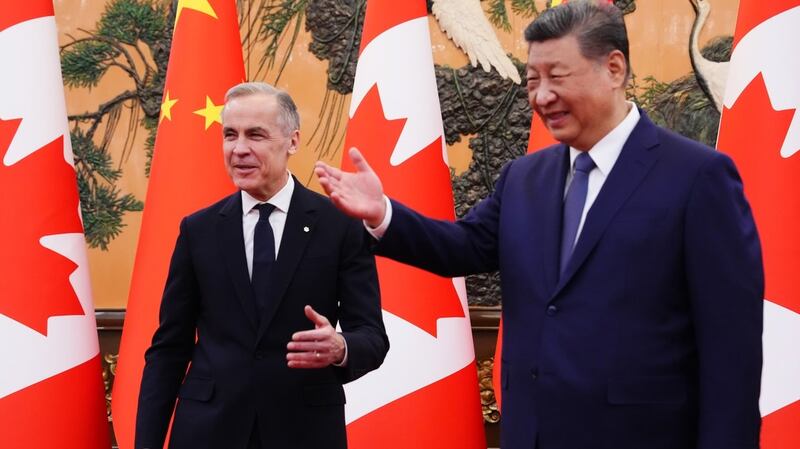
The agreement signed in Beijing also included a memorandum of understanding (MOU) titled “Cooperation in Combating Crimes between the RCMP and the MPS.” In the joint statement, the two sides “committed to strengthening law enforcement co-operation to combat corruption and transnational crimes, including telecommunication and cyber fraud and illegal synthetic drugs in accordance with their respective laws.”
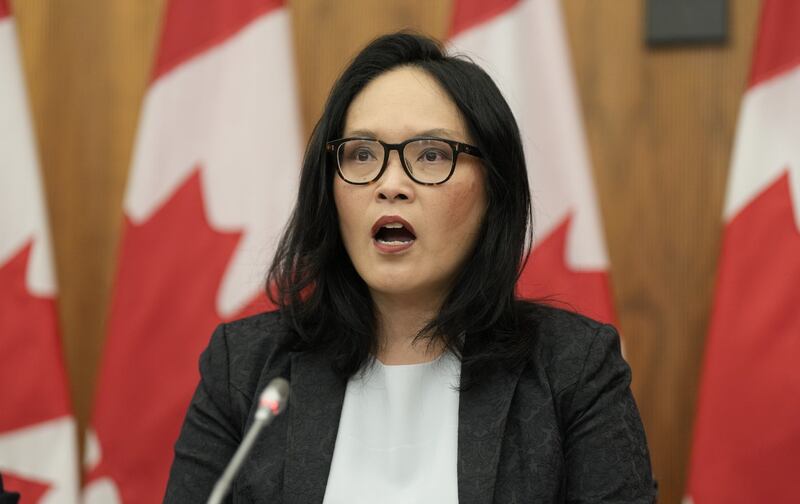
On Tuesday afternoon, Vancouver NDP MP Jenny Kwan wrote an open letter to express serious concerns about the government’s lack of transparency in signing the MOU.
Kwan wrote that it is “troubling” that the federal government has “declined to proactively disclose the police co-operation agreement, despite its significant implications for public safety, civil liberties, diaspora communities and national sovereignty.”
In a social media post, she noted that other agreements the prime minister signed while in Beijing were released publicly, such as an economic and trade co-operation roadmap.
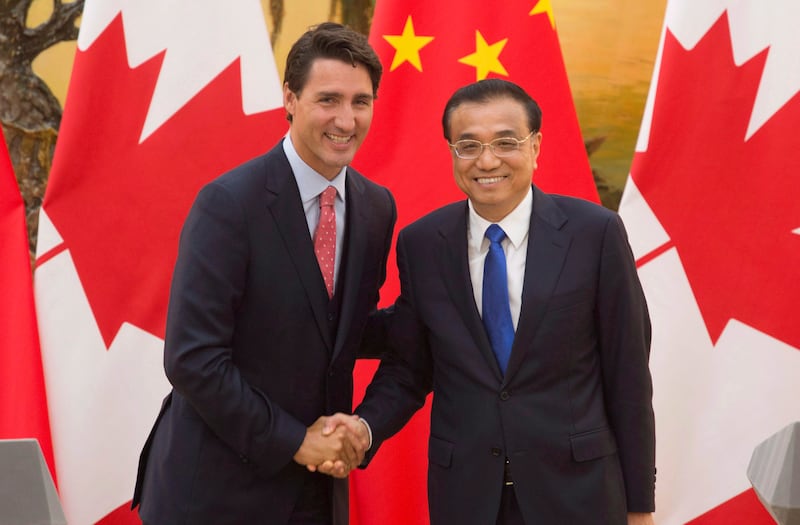
The RCMP says the agreement signed in January is a renewal of an MOU previously signed by former prime minister Justin Trudeau in 2016.
Under Prime Minister Stephen Harper, Canada and China first began exploring options for reaching an agreement on how to deal with the proceeds of crimes committed by foreign nationals.
The Chinese embassy did not answer if Fox Hunt or Sky Net was still in operation, but in an email to CTV News, an embassy spokesperson referred to the joint statement signed by Carney and Xi.
Both sides are committing to continuing their “annual meeting mechanism and dialogue and securing more concrete achievements to ensure the security and safety of the two peoples,” the spokesperson reiterated.
Critics say the federal government should disclose the text of the MOU, given the evidence presented at Majcher’s trial, which shows Chinese police acted outside of Canadian laws, as well as threatened and harassed permanent residents in Canada.
Lansdon Chan, an advocacy officer with Hong Kong Watch, says the expansion of official engagement with China’s police is alarming, given what was revealed at the Majcher trial.
“The least the government can do is disclose fully what is in the agreement for transparency and public confidence,” said Chan. “The Hong Kong community does not have confidence they will be protected if they speak out against China.”
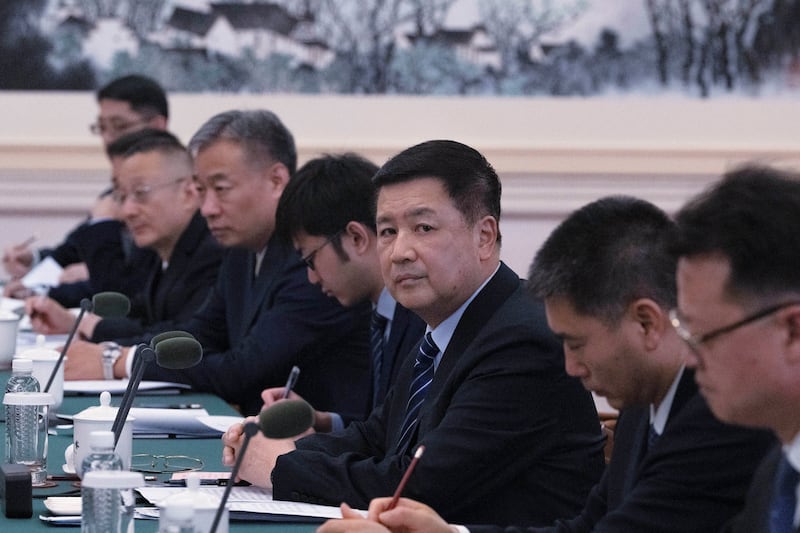
One example of Chinese police violating human rights that was cited in the Majcher trial involved a former Chinese Supreme People’s Court Judge who moved to Canada in 2014.
Xie Weidong criticized Beijing’s justice system and was accused of corruption. To pressure Xie to return home, the MPS imprisoned his sister and kidnapped his son from an underground garage in China. Beijing also sent agents to Toronto to threaten and harass Xie, according to an RCMP affidavit.
During Majcher’s judge-only trial, the court also heard from RCMP Supt. Peter Tsui, who previously worked as a liaison officer at the Canadian embassy in Beijing. He was involved in bringing together Canadian and Chinese officers to work on “mutual files” related to market fraud, money laundering and economic fugitives.
He testified that during an RCMP-escorted visit to Vancouver in 2018, three of 14 MPS officers went “missing” for six hours. Tsui testified there were concerns that they could be trying to illegally repatriate someone.
Chan says Hong Kongers, some who are Canadian citizens, have faced surveillance, intimidation and pressure directed at themselves and their families by Chinese authorities. He wants to see if the text of the MOU contains oversight mechanisms to limit the reach of China’s security apparatus.
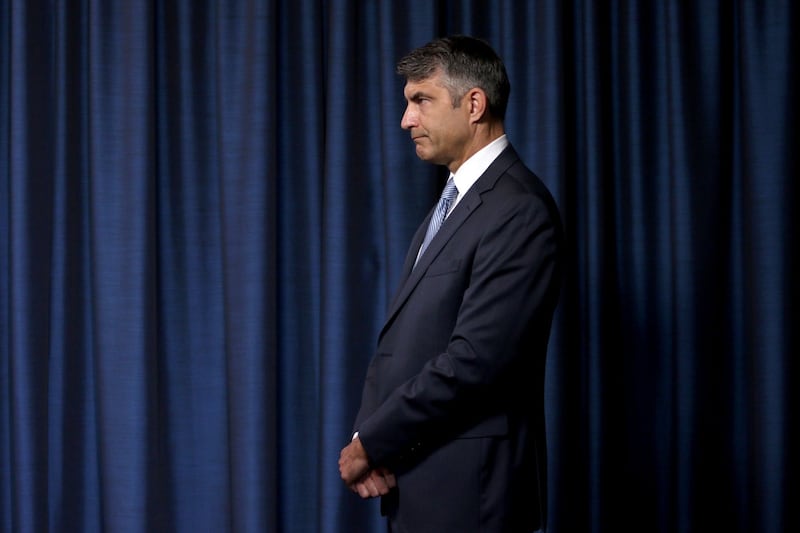
Parliament approved the appointment of Anton Boegman as the new foreign influence transparency commissioner in April. While Bill C-70, an act “respecting countering foreign interference,” became law in June 2024, a foreign agent registry has yet to be created. Chan worries the fighting foreign interference is taking a back seat to increasing economic ties with China.
Concerns about the “slow process” are echoed by Kent Roach, who researches counter-terrorism at the University of Toronto. The law professor says he was surprised the RCMP would renew the MOU previously signed in 2016, given the security concerns the Mounties have raised about using Chinese drones and the human rights situation in China.
“There needs to be in place robust safeguards. And without actually seeing the agreement, we’re really left to guess what the safeguards are and whether they are sufficient,” Roach said.
If the government is unwilling to release the full agreement, Roach says it should have a national security committee of parliamentarians with top secret clearance examine the MOU and publish it with redactions.
When asked what safeguards are in the new MOU that would prevent China from threatening and harassing Canadian residents, RCMP spokesperson Robin Percival said that “mutual respect for sovereignty is a foundational principle” of the agreement.
Percival wrote in an email to CTV News that co-operation between China’s MPS and the RCMP will be “in accordance with the Foreign Criminal Investigators in Canada Protocol that governs when and how foreign law enforcement officials may conduct criminal investigative activities on Canadian soil or targeting persons in Canada.”

