“Bone smashing is amazing,” the square-jawed social media influencer Braden Peters, known online as Clavicular, boasts in a November 2025 livestream appearance.
The 20-year-old American has become the face of “looksmaxxing,” an online trend promoting dozens of do-it-yourself methods that claim to “maximize” one’s appearance.
For members of the looksmaxxing community hoping to achieve what they consider the ultimate masculine physique, no method is too extreme.
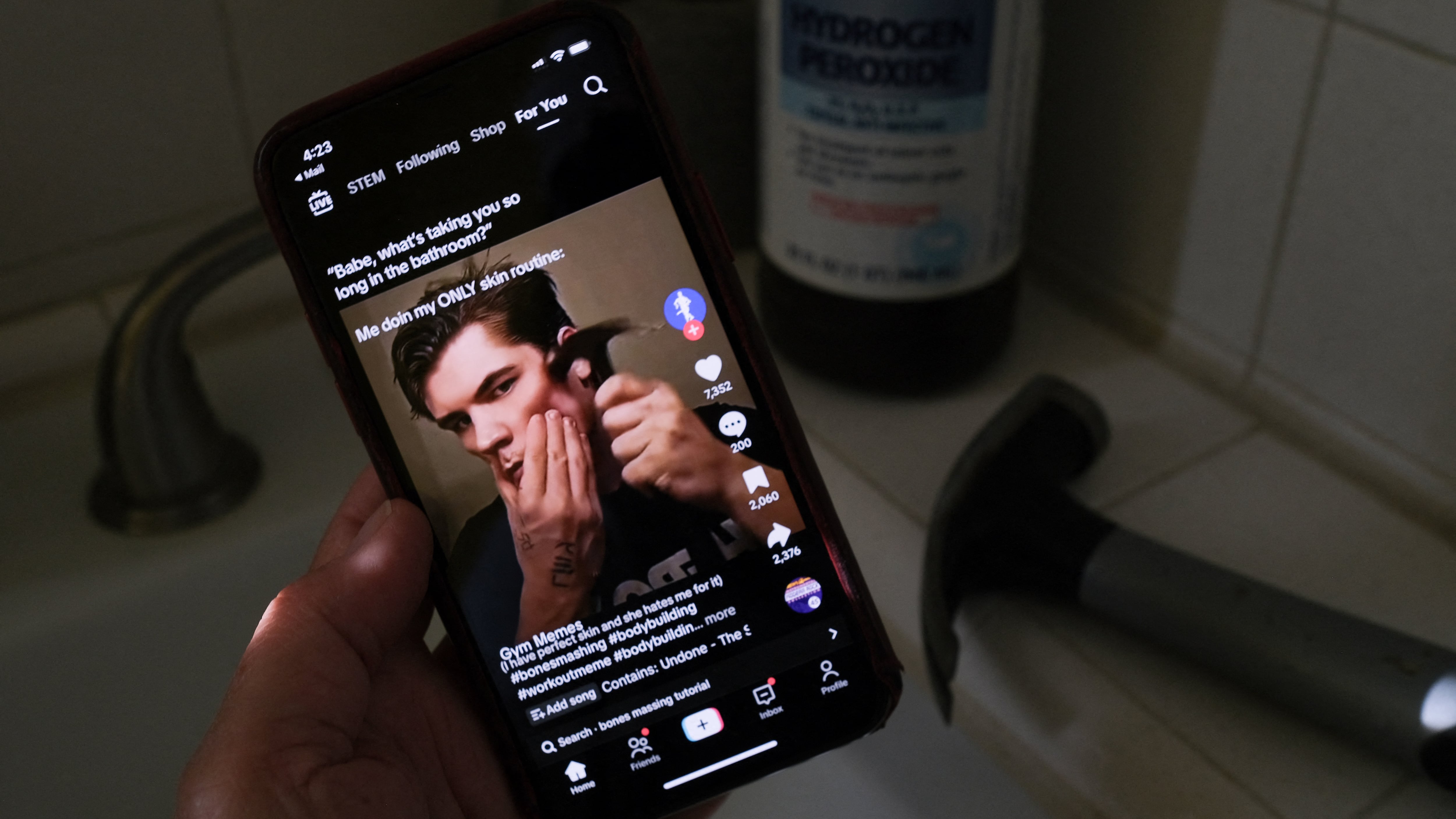
Proponents of bone smashing believe that taking fists and hammers to their jaws will cause the bones to heal into a more chiselled shape.
Other techniques with names like “mewing” and “zygopulling” claim that manipulating the tongue or facial bones can reshape the face and jaw in order to achieve a desirable appearance.
But experts say the looksmaxxing community uses self-improvement language to promote dubious — and often dangerous — techniques that have dire consequences for physical and mental health, especially among young people who are increasingly caught up in the trend.

What is looksmaxxing?
Michael Halpin, an associate professor of sociology at Dalhousie University in Halifax, says looksmaxxers seek the social benefits afforded to people who are deemed attractive, from more dates to a better salary.
Looksmaxxing is an offshoot of the online “manosphere,” and both communities base their philosophies on misogynistic ideas that prop up traditional gender roles and spread harmful lies about women.
Most looksmaxxers are young, heterosexual males aged between 12 and 25, and they vary widely in race and education, Halpin said in a phone interview last week. They obsess over minute details, such as the tilt of one’s eyes or the ratio between facial features.
“All these ways that they’re looking at their bodies, and they’re finding flaws in their bodies that I think we could say are distorted or inaccurate,” Halpin said.
No evidence mewing works
While conducting his research on looksmaxxing, Halpin detailed the “obsessive” extremes some men and boys were willing to go to, including a technique known as mewing. Mewing involves placing the tongue against the roof of the mouth and applying constant pressure, which advocates claim improves the appearance of the jawline over time.
He described the case of one man who reported sleeping on an incline while wearing a backpack loaded with books to force his tongue in the mewing position. “I’ve had people who are teachers in junior high contact me to say that they have young boys who won’t speak in class because they’re too busy mewing,” Halpin said.
The technique is a form of “orthotropics,” a branch of dentistry created by the late British orthodontist John Mew. Mew believed patients could change the shape of the face and jaw through their mouth posture.
Dr. Gina Ball, president of the Canadian Association of Orthodontists, noted that orthotropics are “very controversial” within the wider orthodontic community and that they lack the peer-reviewed research that supports other orthodontic treatments.
Dr. Benjamin Pliska, an orthodontist and associate professor in the faculty of dentistry at the University of British Columbia, said mewing doesn’t exert enough sustained pressure to have a meaningful effect on the position of the jaw. He said in a phone interview that many of the social media examples extolling the benefits of mewing simply reflect natural growth of the jaw during the teenage years, combined with loss of body fat.
Dr. Sunjay Suri, an orthodontist and graduate program director of orthodontics at the University of Toronto, said there isn’t any evidence mewing and similar techniques work. “We don’t have randomized control trials or even well-established cohort studies that have shown the effects of these in a positive way,” he said in a phone interview.
Holding one’s jaw forward in an attempt to change its shape is another common technique often used in combination with mewing, which Suri said could lead to jaw discomfort and even displacement.
“Occasionally people will come in with jaw pain, because they’re holding their jaw without support in a much more forward position trying to achieve a masculine look,” he said.
Does bone smashing lead to a better face?
Clavicular claims bone smashing improved his jawline, and he frequently touts its supposed benefits online.

“You’re going to punch yourself in the face,” he says while describing the technique during a livestream. “And then you’re hitting real hard. And what this is doing is this is creating micro-fractures.” He claims the bone will then grow back stronger.
Ball said the practice simply doesn’t work.
“You’re not going to get anything other than bruising, swelling, possible fractures, maybe some nerve damage,” she said in a phone interview.
The uncontrolled method of bone smashing is different from jaw surgery, where a trained surgeon uses controlled and precise movement that could achieve a desired esthetic effect, Ball said. Bone smashing is more likely to have the opposite effect, she added, since the bones could heal asymmetrically.
The dangers of looksmaxxing
Ball says orthodontists are fielding questions related to looksmaxxing “quite frequently.”
In fact, all of the orthodontists who spoke to The Canadian Press said they’ve been asked about mewing and other looksmaxxing trends by either parents or patients in the dentist’s chair — including some as young as 10. Patients want to know if the methods work, but Ball said most of the information available online is false.
Tongue position and certain oral habits such as thumb sucking can play a role in facial development during early childhood, but they won’t make a difference after that point, she said.
Orthodontic treatment can affect how the jaw grows, using appliances that help bring the upper or lower jaws forward. However, the appliances are “not magic wands,” Suri said, and they won’t result in a chiselled jawline if the patient did not inherit one genetically.
Halpin said that because beauty ideals in the looksmaxxing community are so extreme, some men are turning to more invasive procedures such as plastic surgery or injecting black market steroids. Some of those who fail to meet the demanding standards even express a desire to end their lives, he said, and in some cases they are encouraged to do so by fellow looksmaxxers.
“It’s not really a self-improvement community. It would be more accurate to say that it’s like a self-destruction or a self-harm community,” Halpin said.
This report by The Canadian Press was first published May 12, 2026.
Marissa Birnie, The Canadian Press

