

MONTREAL - The developer and operator of Montreal’s light rail transit system, the REM, says a new line that will soon get rolling through the West Island of the city will create wealth, move users efficiently and be good for the planet.
But convincing a large number of users to trust the system enough to leave their cars at home in a region where the majority of commuters are drivers is top of the agenda.
“If you look at the whole system, for sure there have been hiccups and it’s normal for a system like that,” says La Caisse President and CEO Charles Emond, who pointed to improvements over the past six months. “We are at 99 per cent reliability so people can actually come and take the train and be very confident that they will get to their destination fast.”
La Caisse (formerly the Caisse de Depot et Placement du Quebec) manages the Quebec pension plan but is also an institutional investor. A subsidiary, CDPQ Infra, is responsible for planning, financing, building and operating the REM.
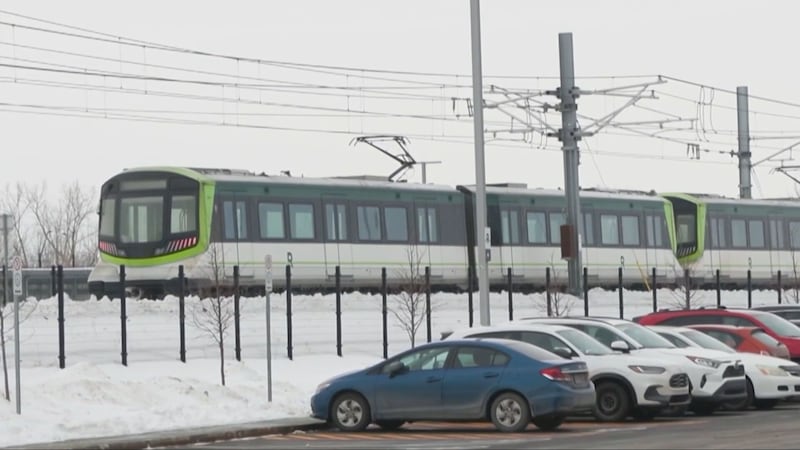
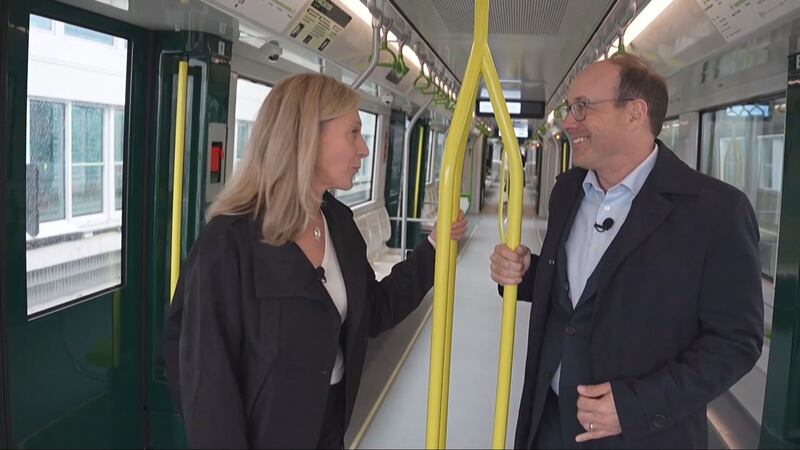
CTV News hopped on board the Anse-à-l’Orme line to the West Island with Emond for an advance look at the new branch, which is set to be up and fully operational on May 18.
“Every time we open up a segment, I try it a few times,” says Emond.
The REM’s first branch linking the South Shore of Montreal to the downtown core opened in 2023, and a second branch that runs through a tunnel under Mount-Royal and links neighborhoods to the north of the city got rolling in November 2025. The new line will add four stations to the system.
“This is opening such a new set of possibilities,” says Emond. “We can build so much real estate in future years. We have actually seen this on the South Shore and it has proven to be quite interesting for development and creating wealth for the whole Montreal region.”
Many in the West Island are celebrating the arrival of the long awaited 14-kilometre extension of the REM that could serve as a lifeline to cut through traffic and connect to the downtown core.
Mayors of municipalities along the new line say they have fought for decades for a large-scale public transit system of this kind and hope it will help revitalize their communities.
Though they acknowledge there could be growing pains, and the REM has faced some roadblocks.
Delays and budget woes
Since it was first announced more than a decade ago, there have been a series of delays and cost overruns.
Emond says those are partly due to issues like the COVID-19 pandemic and the discovery of explosives left behind in the bedrock of a tunnel after an excavation more than a century ago.
Delays and disruptions have also frustrated users.
From November to January, passengers faced repeated breakdowns or slowdowns of at least 20 minutes. Commuters left to stand in line for shuttles or trapped in immobile train cars were frustrated by the seemingly inadequate mitigation measures and poor communication.
Light rail transit systems in other Canadian cities have also faced challenges. Toronto’s project was delayed by over 260 construction deficiencies, legal disputes, software and signaling problems as well as surging costs.
Emond says the REM model compares favourably to projects around the world, in terms of costs and reliability, and that service is improving.
‘We have solved them’
“What I am happy about is looking at the trend and the causes of interruptions,” says Emond. “If you look at winter 2025, we had a bit of a difficult time versus winter 2026. We have had half the number of interruptions. The second element is that the issues we had in 2025 didn’t come back. We have solved them.”
La Caisse is entrusted with the pension plans of a large number of Quebecers and has aimed for a return on its investment in the REM in the range of eight to nine per cent per year.
“Obviously when you start constructing it, and you finance it, there are no passengers for the first four, five, six years, and there is no return,” says Emond. “But as of today, this morning, since day one, this project has been in the low end of that range of eight to nine per cent. So, it is meeting its objective from a financial standpoint.”
The head of La Caisse has acknowledged that it would do things differently if it were to take on the REM project again, and will apply lessons learned to other similar projects.
“What I mean is not that I wouldn’t do this project, but I would just maybe finance it differently,” says Emond. He also says that La Caisse would likely not be involved with operations once another project is built so that it can focus on its core business.
But Emond called the REM an “amazing project,” that will deliver value to commuters, to municipalities and to those whose pension plans are managed by La Caisse.
“This is the first public transit project that has been built in Quebec in 50 years,” says Emond. ”From a collective pride and confidence point of view, we have shown that we can build something that is world class, at the right cost, in the right amount of time. It never comes with no hiccups."

