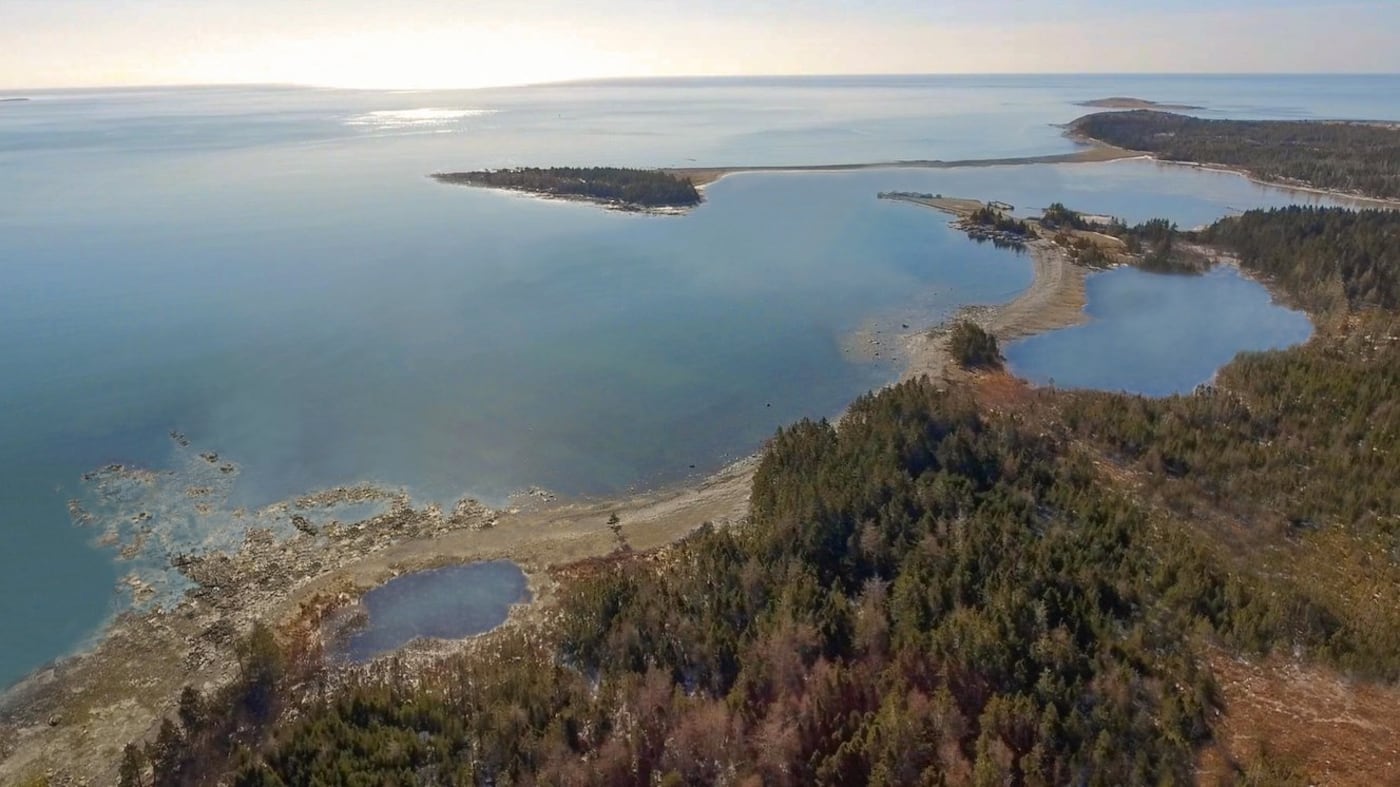
HALIFAX — A non-profit group in Nova Scotia has failed in its bid to bring two orcas from France to live in a seaside refuge being built for whales retired from marine theme parks.
The Whale Sanctuary Project issued a statement Friday confirming the French government had decided to send the killer whales -- Wikie and her son Keijo -- to Spain’s Loro Parque zoo on Tenerife Island, off the west coast of Africa.
The decision marks a major setback for the privately funded group, which announced its plans to to build a 40-hectare enclosure near Wine Harbour, N.S., more than six years ago.
As large as 50 football fields, it would include a ring of floating nets extending from the land. Experts say whales and dolphins raised in captivity can’t be returned to the wild because they lack necessary survival skills.
The animal welfare group issued a statement Friday saying the French government had agreed with a request from the whales’ owners at the now-closed Marineland Antibes in southern France to transfer the orcas to the zoo on the Canary Islands.
Marineland Antibes was closed in January 2025 to comply with a 2021 French law that bans keeping whales and dolphins captive for entertainment purposes.
Canada introduced a similar ban in 2019.
In December, the French minister responsible for the move said the planned facility in Nova Scotia was the preferred site for relocating the whales, saying the project was the “only ethical, credible and legally compliant solution.”
But Mathieu Lefevre, minister responsible for ecological transition, stepped back from that statement last month, saying the orcas were the private property of Marineland Antibes.
“Regarding Canada, I would just note that Marineland doesn’t want a transfer to Canada,” Lefevre told a committee meeting in April.
Charles Vinick, CEO of the Whale Sanctuary Project, issued a statement saying the decision would be devastating for the whales. He said the 2021 French law was intended to end the use of whales and dolphins for entertainment and captive breeding.
“The law explicitly prohibits these practices,” he said. “However, Loro Parque continues to rely on performance-based programming and breeding, particularly following the deaths of four orcas at the facility since 2019.”
“Transferring Wikie and Keijo into that environment risks perpetuating the very system the law was designed to phase out.”
Vinick said construction planning continues at the coastal site on Nova Scotia’s eastern shore.
Earlier this month, a spokesperson for Nova Scotia’ Natural Resources Department confirmed that the 20-year Crown lease needed for the project to proceed had yet to be signed, even though the provincial government had announced approval for the $15-million project in October.
As well, project organizers require a series of federal permits before any whales can be transferred.
“The Whale Sanctuary Project remains confident in its ability to secure the funding required to complete the sanctuary and support the long-term care of whales transitioning out of captivity,” the group’s latest statement said.
“We are continuing to build a sanctuary that can support whales in need around the world and provide a viable path forward as more governments and institutions move away from captivity.”
This report by The Canadian Press was first published May 15, 2026.

