Vassy Kapelos is the Chief Political Correspondent for CTV News.
MONTREAL -- I don’t understand people who skydive, who drive fast cars or jump off cliffs. I am allergic to anything that risks life.
There’s a simple reason why – I’ve seen it end. Fifteen years ago, my mom died three months after being diagnosed with cancer. Her symptom? Just a bit more tired than usual.
You never get over the shock of it. Even when you pick up the pieces of your life, what you put together is permanently altered. For me, that means a fear of death, and a sometimes-crushing anxiety over something happening to me and my son going through what me and my sisters did.
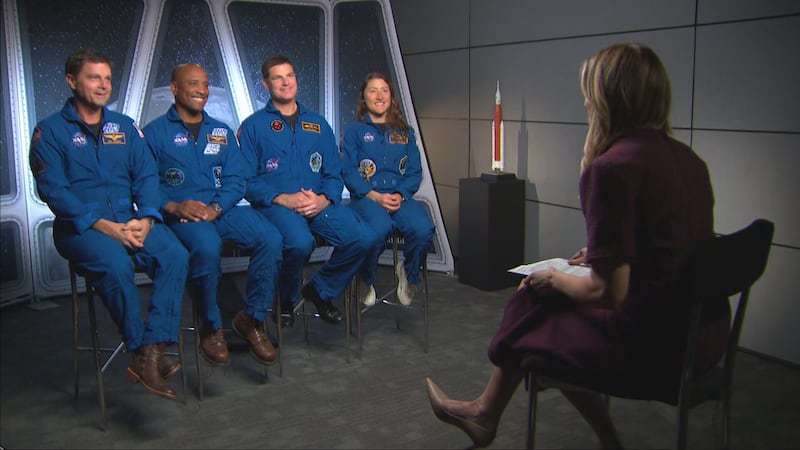
So when I was coming up with questions for the Artemis II crew, while I knew (as a political host) I wanted to focus on the space race with China, budget cuts at NASA and dropping the Canadarm, I also knew I had to squeeze in a question about the experience.
I wanted to ask if they were scared.
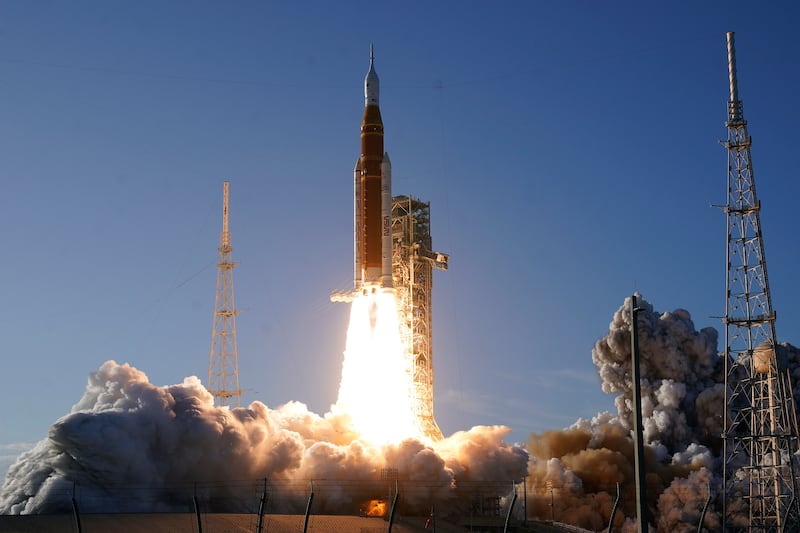
As I watched their rocket take off and even more so through the dangerous re-entry, like so many others, I held my breath, flashing back to the Challenger and Columbia tragedies. This is not for the faint-hearted.
How did they come to terms with the fact they could die, leaving kids and partners behind? Were. They. Scared?
“No.” Pilot Victor Glover’s answer was swift and unequivocal. My eyebrows shot up in surprise.
“I prayed, but I also made a will,” he said in an interview alongside his crew, which will air in full this Sunday on CTV Question Period.
“Prayer doesn’t absolve me of the real-world consequences that come from taking a risk like we took. … I made my peace and my family understood the risks, and we had a tough talk, and yeah, it was a little awkward, but I sent my kids a poem at the end of it, and I think that helped them, at least put some things in perspective.”
The crew’s captain, Reid Wiseman, nodded in agreement.
“I really resonate with what Victor just said. We’ve talked a lot that we really launched at peace,” he said. “We’re all about 50 years old, we’ve accomplished a lot in our lives. I was very comfortable.”
Wiseman’s challenges along that path to peace are well documented. His wife Carroll passed away from cancer in 2020 when his two daughters were young teenagers. One of the most poignant parts of the Artemis II mission was when the crew named a crater on the western edge of the moon’s nearside after Carroll. Not a dry eye in the house (or rocket).
“I am an only parent of two daughters - I definitely didn’t want to leave them alone like that,” he conceded.
“To me, the biggest feeling of anxiety that I had was, ‘how are they going to cope if we don’t come back?’ But aside from that, we talked very openly, the three of us, about the risks of this mission. I felt very confident that it was worth those risks.”
Did his daughters have the same confidence? Not initially.
“Around the seventh day of our mission, I was on a video chat with them, and I saw the sparkle in their eye that they didn’t understand it originally, not even on the third or fourth day,” Wiseman said. “But by the seventh day of this mission, seeing the way that the world had joined us and been uplifted, they understood why I wanted to go do this, and they understood why the risk was worth it. That was very meaningful for me.”
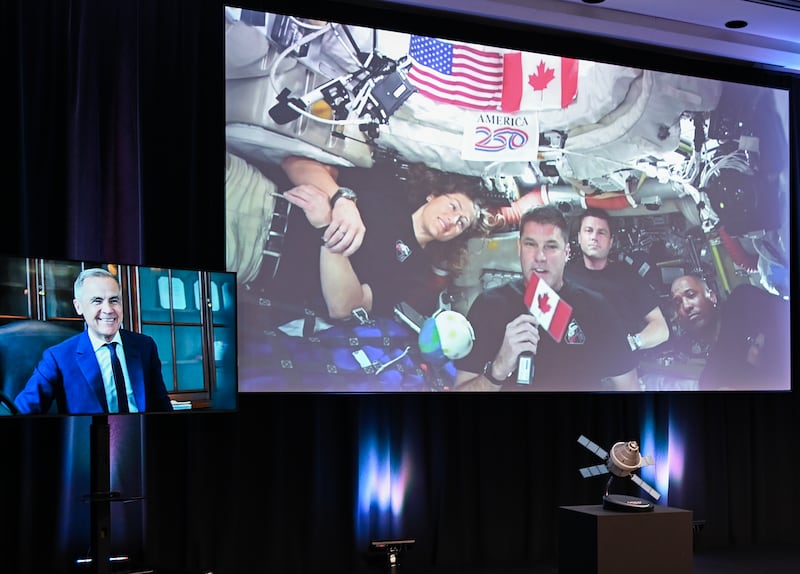
Canadian crew member and mission specialist Jeremy Hansen eventually arrived at a similar feeling that the risk was worth it.
“To go on that journey and not come back, and leave Catherine and Devin and Ashley and Caitlin behind. … I didn’t want to do that,” he said.
“However, this experience really solidified for me that these things are worth humanity coming together, to push us and go do new things, to push the boundaries and discover things we didn’t expect to discover.”
For Hansen, that was the payoff he expected. What he didn’t expect was the world’s reaction.
“The world decided to pay attention to something positive instead of something negative. That’s a beautiful thing. We didn’t go for that reason, but it’s a pretty extraordinary outcome.”
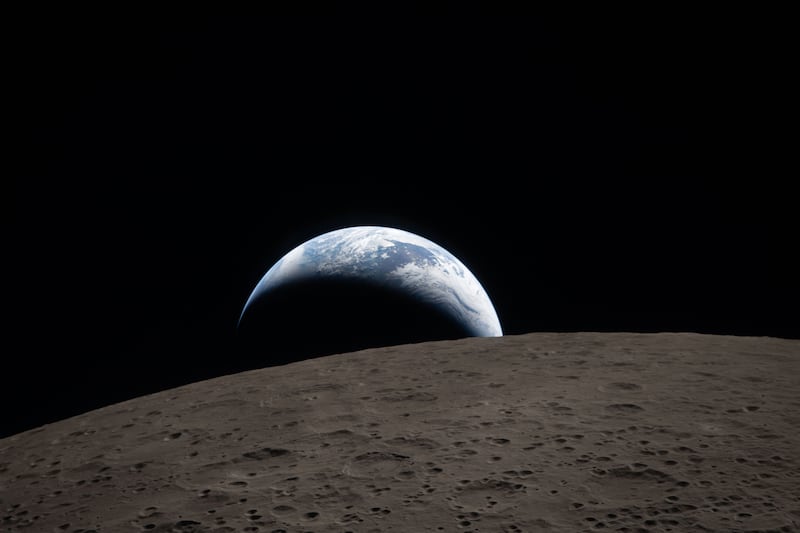
It was extraordinary, hard to argue with that. Seeing Earth from hundreds of thousands of kilometres away, orbiting the moon and setting the stage for a permanent spot on the moon is remarkable.
Mission specialist Christina Koch is still happy to be home.
“Home is what we saw from afar, and actually seeing home and how much that moves your heart,” she said.
“I think what is interesting about what we did, having a mission that went to a destination, is that you can be really, really happy to be home, but part of us can also miss the moon.”
My mom, when she was alive, like so many other moms would always tell her three girls she loved us to the moon and back.
I could never do what these astronauts did. Thank goodness for these four extraordinary people who weren’t scared, who knew the risks, found a way to work through them, then took the world along on a trip to the moon and back.