With a July 1 deadline to review the Canada-U.S.-Mexico Agreement (CUSMA) around the corner, new U.S. tariffs are set to take effect next week, this time on Canadian mushrooms.
“This is about 4,300 square feet of growing space,” said Mike Medeiros, owner of Carleton Mushroom Farms in Osgoode, Ont., as he toured his facility Saturday.
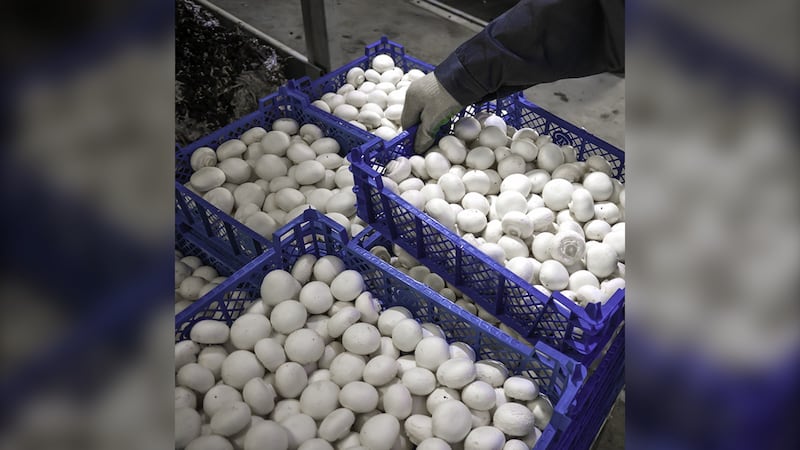
It is a massive and modern, but family-run, mushroom farm that grows, harvests and packages mushrooms in house.
An impressive “300,000 pounds per week” is how much Medeiros’s farm produces, making it one of the bigger players in the Canadian mushroom market.
But new U.S. tariffs set to be imposed on Canadian mushrooms Monday will take a toll on his business, even though his mushrooms stay in Canada.
“Forty per cent of the mushrooms in Canada are shipped to the U.S., and so what’s going to happen is as tariffs increase going to the U.S., there might be more mushrooms in Canada and then it would flood our market,” said Medeiros.
A fact sheet released this week by the U.S. Department of Commerce showed Canadian mushrooms will face new tariffs of up to five per cent, citing unfair government supports.
“They’re the same in the U.S. as they are in Canada,” said Ryan Koeslag, the executive vice-president of the Canadian Mushroom Growers’ Association, in an interview with CTV News.
“We’ve always been operating under the rules and regulations of fair trade between Canada and the U.S., and so the reason they identified this, I think, is they haven’t been able to find anything else.”
Known as countervailing duties, the same measures used to tariff Canadian softwood lumber, the tariffs are imposed on imports the U.S. deems are being unfairly subsidized.
But Canadian mushroom farms are just the latest example of a clear signal being sent by the Trump administration, targeting Canada’s agricultural sector.
“Ultimately the U.S. farmer is very powerful politically,” said William Pellerin, an international trade lawyer with McMillan LLP in Ottawa.
“There’s a broad trend to look at agricultural products coming into the United States and apply tariffs where the U.S. deems it’s important to do so,” he said.
Medeiros says the move could force him to start producing less.
“Once we start cutting back production, we would definitely have to look at cutting back staff to keep payroll in check,” added Medeiros.
Canadian mushroom farmers export almost exclusively to the U.S., and while industry says it will fight the new tariffs – that will still take time.

