
By 5:30 a.m. every morning, 88-year-old Walter Burch is already awake inside his Newmarket, Ont. apartment, quietly preparing for another day of caregiving.
Before daylight seeps in, Burch is organizing medications, anticipating the arrival of a personal support worker (PSW) and helping his wife navigate a series of health complications that have dramatically altered both of their lives.
“It varies by the night before,” Burch said in an phone interview with CTVNews.ca Wednesday. He explained how PSWs call with estimated arrival times that can shift from 8:15 a.m. to nearly 11 a.m.
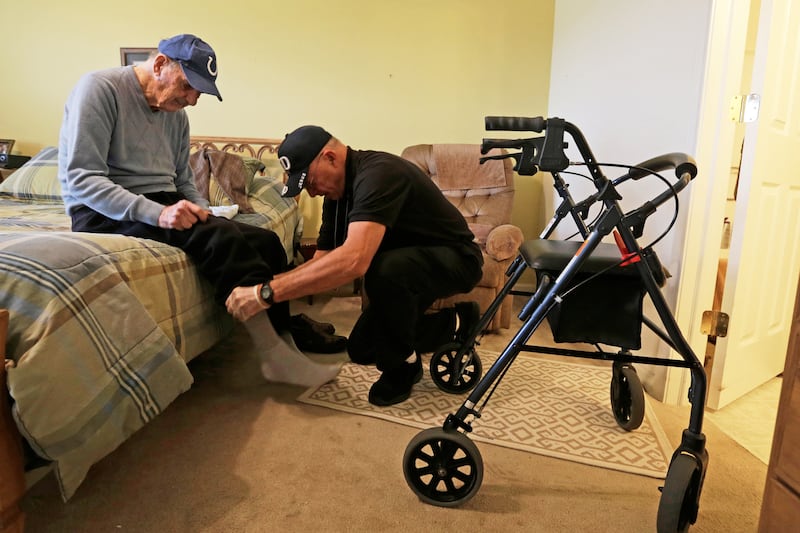
“My wife has to wear pressure stockings before she can move around. If a PSW is not coming till 11, then I can’t get her mobile until 11,” he added.
Burch’s wife was diagnosed with ovarian cancer in early 2025 and underwent a hysterectomy and radiation treatment. Months later, she suffered a stroke.
Then came another month-long hospitalization after a serious fall in their kitchen left her with a severe head injury.
“I feel the emotion, but in most cases I’m able to control it,” Burch said.
Now Burch balances caregiving with a return to the workforce - something he never imagined doing at 88-years-old.
“I don’t think we do a good job in preparing people for this,” he said.
Four days a week, Burch works at a golf club while a rotation of caregivers stays with his wife until he returns home around 3:30 p.m. The remaining days on the weekend are spent cooking, cleaning, preparing meals for the week and helping his wife with daily tasks.
“If I can get my wife to the car, then she comes with me,” he said. “I try to get her to the hairdresser once a week, just so she feels like she’s participating in some way.”
Burch’s experience reflects a growing reality for many caregivers across Canada who try to stay afloat financially while supporting, in some cases, aging parents, spouses, children or relatives with disabilities.

Unbearable pressure
A national report released this month from the Canadian Centre for Caregiving Excellence found that 59 per cent of caregivers are employed while also providing an average of 5.1 hours of unpaid care every day.
The findings, published in the organization’s 2026 Caring in Canada report, conclude some caregivers are being forced to work more to offset rising costs associated with care.
Seventeen per cent said they had taken on additional work hours, nine per cent delayed retirement and five per cent found second jobs in order to manage expenses.
The report said 49 per cent of caregivers face financial strain and one in five are spending more than $12,000 annually out of pocket.
At the same time, caregiving responsibilities are making it harder to remain fully engaged in the workforce. More than one-third of working caregivers reported reduced productivity, lost income or difficulty balancing employment with caregiving demands.
The report draws on responses from more than 2,600 caregivers and care providers across Canada.
CTVNews.ca asked its readers to share their caregiving experiences. Here’s what they had to say.
Emotional toll
In the report, 77 per cent of caregivers state negative impacts on their well-being, including stress, fatigue and burnout.
This is Leslie Ann Pointer’s reality. The Edmonton resident lives with her 92-year-old father.
“I never get a break. I never get time to myself,” she said in her email.
Landing a job after six months of unemployment due to a termination, Pointer said the caregiving responsibilities fall on her, despite having three brothers that live in the same city.
“I’m at a complete loss and mentally done,” Pointer said.
For 12 years, one Alberta couple built a life of love and laughter. But last August, everything changed when Matt Friend’s girlfriend was diagnosed with Bulbar ALS - a rapidly progressing diseases that since has taken away her ability to eat, speak and move independently.
“Now, she requires 24-hour care,” Friend said. Nights are interrupted two or three times as he helps reposition her or takes her to the bathroom, all while trying to manage the emotional exhaustion of watching the disease progress in real time.
The couple receives 40 hours of home-care support each week but he says financial pressures continue to mount. His construction job often requires travel for weeks at a time, something caregiving no longer allows.
While his girlfriend receives Assured Income for the Severely Handicapped (AISH) support from the Alberta government and he relies on medical EI, the couple has still needed loans and crowdfunding to cover bills and accessibility equipment.
Friend says one of the hardest realities has been learning he cannot be compensated as his girlfriend’s caregiver under Alberta Health Services.
For Burch, putting his wife into assisted living is impossible.
“They’re anywhere from $7,000 to $10,000 a month which I don’t have, because of looking after my son for so long.”
He and his wife cared for their adopted son for 17 years up until he passed away nine years ago. He was diagnosed with Huntington’s disease.
“Instead of being the golden years, it’s usually the rusty tin cup years,” Burch said.
Despite the emotional and financial strain, Burch maintains a calm outlook, crediting his faith and support system. But he believes the government and communities still underestimate the realities caregivers face.

Feeling unsupported
Only 13 per cent of caregivers have received supports and services in the past year, according to the report.
In Haliburton, Ont., Louis and Tonia Van Hattum say caring for Tonia’s 90-year-old father, who suffers from heart failure and mobility challenges, makes it “hard to move forward” with their lives.
“We could really use some help,” they said. “It seems we have a lot of extra expenses to deal with as he has little to no income.”
At 70, Louis says he still takes on side jobs to help cover expenses.
The report calls for strengthening financial supports for caregivers, including expanded disability tax credits and benefits, paid leave programs and direct compensation for family members providing significant unpaid care.
It also recommends improving access to home-care services and respite care, particularly for seniors and people living in rural communities where support can be inconsistent or difficult to access.
The report argues caregivers need more flexible and reliable services that allow them to maintain employment, manage their own health and avoid burnout through free counselling and mental health supports.
Researchers behind the report argue caregiving should be seen as a major social and economic issue requiring public policy across Canada.

