MOOSE JAW, SASK. – The community of Moose Jaw, Sask. is concerned about the future of the Canadian Forces Snowbirds, as the Department of National Defence prepares to unveil a plan critics warn could ground the aerobatic team for years.
Defence Minister David McGuinty is expected to announce changes Tuesday to the future of the Snowbirds, the iconic aerobatic squadron based in Moose Jaw.
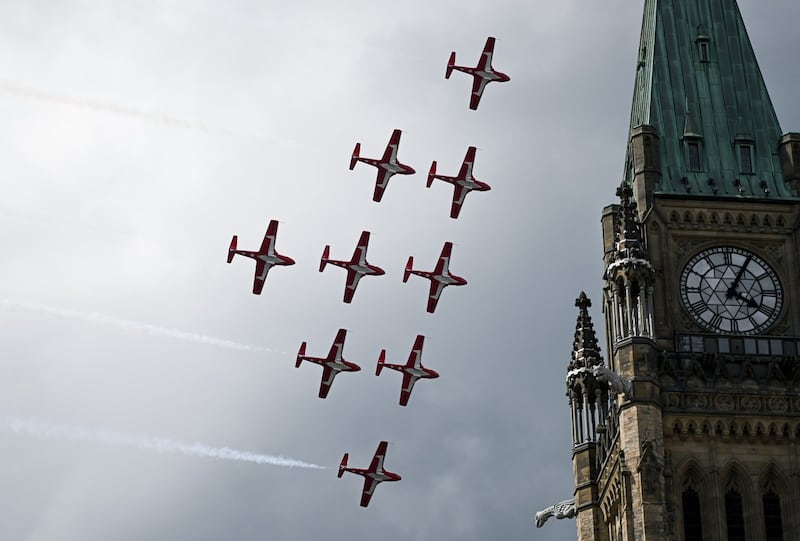
Critics fear the retirement of the CT-114 Tutor jets after the 2026 flying season — combined with what is typically a lengthy procurement process — could sideline the team for years, interrupting a tradition of more than five decades of aerial performances.
“I’m not optimistic. I wouldn’t have brought this up if I were optimistic,” Conservative MP Fraser Tolmie, who represents Moose Jaw, said in an interview with CTV News on Monday. “I believe that there is another plan, another way forward, but right now the government’s not listening to that, and I’m concerned that the news will be very disappointing tomorrow.”
During question period on May 7, McGuinty suggested safety concerns are driving the planned changes.
“The Snowbirds will continue air demonstrations with the Tutor fleet for as long as it is feasible and safe,” he said. He added the federal government is “beginning the process of examining potential aircraft options” once the fleet “reaches its end of life.”
The Tutor jets currently flown by the Snowbirds have been in service since the mid-1960s. In 2021, the government under former prime minister Justin Trudeau committed $30 million to extend their lifespan through upgrades intended to keep them flying until 2030.
It is unclear whether that plan has changed, and the upgrades announced in 2021 have not yet been fully completed.
In a statement, McGuinty said the plan to be announced Tuesday will ensure Canadians continue to enjoy the Snowbirds for “generations to come.”
However, if a replacement aircraft is selected, it is not clear how long it would take to procure and make the planes operational, or why the current fleet cannot continue flying until 2030 as originally planned.
‘We need that national pride’
Ahead of Tuesday’s announcement, residents of Moose Jaw are reflecting on the Snowbirds importance to the community and Canada at large.
“They’re kind of the heart and soul of Moose Jaw,” Roger Blager, who is the president of the Moose Jaw Flying Club, said in an interview with CTV News on Monday.
“We’re not shy on national symbols here in Canada, but we need that national pride, and I think the Snowbirds are probably the symbol of that, and we are proud of them in Moose Jaw,” Blager added.
Over at Hopkins Dining Parlour, a restaurant in Moose Jaw that’s been in business for nearly 50 years, Snowbirds memorabilia decorate the walls.
Bonnie Johnson, who previously worked there as a server for many years, is remembering “great parties” at the parlour where pilots and other fleets from around the world would come together to get “a little taste of Moose Jaw.”
“We’d get autographs and pictures and all the pilots would hang out here and it was just a lot of fun for them to interact with each other, other than in the air,” Johnson said.
Johnson added that if the current fleet is grounded, the Snowbirds will be missed despite shows becoming less frequent in recent years.
“It’s not planes. It’s community, and it’s something to be proud of,” Johnson said.
Concerns over a potential prolonged grounding
Some retired military pilots say acquiring new aircraft could take years and warn a prolonged grounding could erode the specialized flying and support expertise required to operate the team. They add that rebuilding the squadron after a multi-year hiatus would be difficult.
Blager echoed those concerns.
“The worry here is that the gap might turn from a year or two years into five and then you lose that expertise, that culture of safety,” Blager said. “It’s going to be way more costly down the road to start it up again from nothing.”
The Royal Canadian Air Force is also facing personnel shortages, with many squadrons not fully staffed. There is speculation the military may shift some pilots and support staff away from the Snowbirds to address operational demands elsewhere.
Most other G7 countries maintain aerobatic demonstration teams, many of them larger and better resourced than Canada’s Snowbirds. At a time when the Canadian Armed Forces is ramping up recruitment, critics say grounding the popular team during a potentially lengthy procurement process may be difficult for the government to justify.
“The Snowbirds fly all over this riding, all over this province, and all over this country. It’s woven into our nation’s fabric, and this is part of the tapestry that makes Canada such a wonderful country,” Tolmie said.
What could be the final performance of the current Snowbirds fleet is scheduled for Oct. 10, 2026, in Sacramento, Calif. No airshows have been so far scheduled for 2027.

