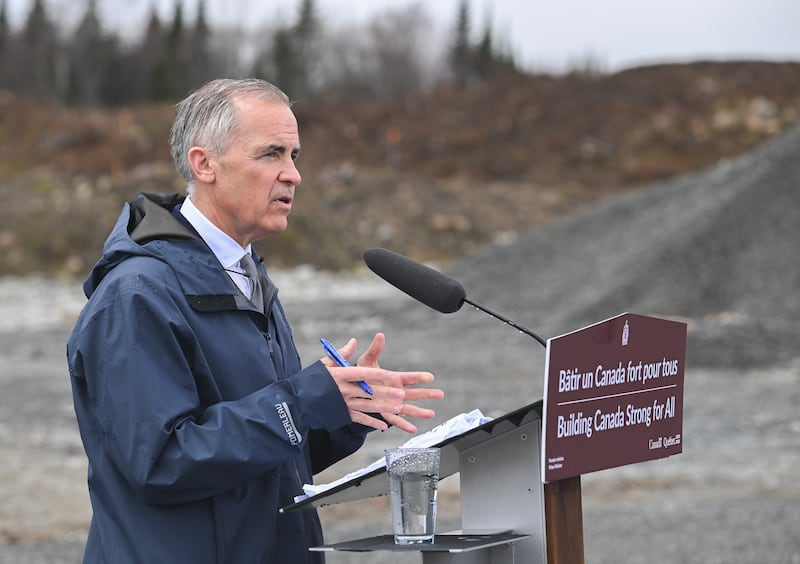
Prime Minister Mark Carney was on site at Quebec’s Matawinie Mine site Tuesday to break ground on a project billed as the biggest graphite mine in the G7.
According to Carney, the mine is expected to eventually pump nearly $2 billion into the economy and add 1,000 jobs, with annual production expected to hit more than 106,000 tonnes of natural graphite annually over 25 years.
“That is eight times – eight times – Canada’s total graphite production right now. It will make us stronger. It will make our international partners more resilient, and above all that, it will build a supply chain,” the prime minister said from the Nouveau Monde Graphite (NMG) mining site near Saint-Michel-des-Saints, Que., north of Montreal.
Graphite is used in electric vehicle (EV) batteries to make the anode, which stores and releases energy.
According to Natural Resources Canada, Canada currently produces 0.7 per cent of graphite globally, at 12,000 tonnes in 2024. Canada is eighth on the list worldwide, with China holding the top spot by far at 79.4 per cent. The second biggest producer is Madagascar at just 5.6 per cent.
The Liberal government highlights that shovels are going in the ground six months after the project was referred to the Major Projects Office (MPO). The prime minister says the MPO referral brought together four federal departments to co-ordinate financing help, permitting and approval processes, and secure offtake agreements for the company.
Ottawa is committing to a seven-year offtake agreement for 30,000 tonnes of graphite concentrate annually from the Matawinie Mine.
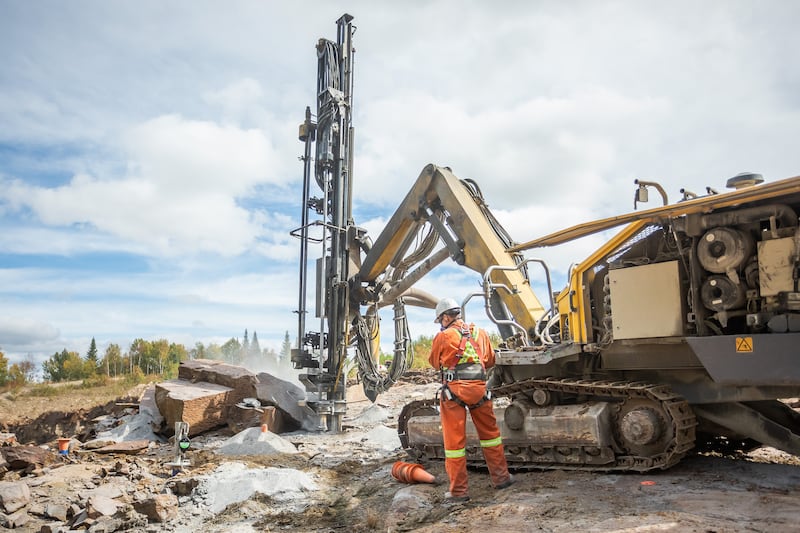
The federal government is providing a $459-million financing package from Export Development Canada and the Canada Infrastructure Bank, following previous commitments from the Canada Growth Fund. The government is also spending $4.4 million for an electric Caterpillar loader at the mine to replace diesel-powered equipment, through Natural Resources Canada’s Energy Innovation Program.
Conservatives argue Liberals are trying to take credit for a project that “was already well advanced.”
“Matawinie is another example of the resilience of Canada’s mining sector, despite Liberal red tape and barriers, not proof that Carney has now become their new champion,” said MP Shannon Stubbs in a statement.
When the project was first referred to the MPO in November, the federal government described it as an “open-pit graphite mine that will redefine global battery supply chains.”
The mine will integrate with another NMG project, the planned Bécancour Battery Material Plant, to make spherical graphite powered by Quebec’s hydroelectricity. The prime minister referred to that partnership as the first fully integrated supply chain in Canada for graphite.
Last week, NMG announced it had completed an approximately $426-million (US$309.5-million) financing package, allowing it to move forward with design and construction of the Phase-2 Matawinie Mine. A few days before that, a different press release detailed the start of Matawinie construction.
The United States was the top destination for Canada’s graphite exports in 2024, with 78 per cent of natural graphite and 56 per cent of synthetic graphite heading south of the border.

