ST. JOHN’S - A proposed megadeal between Newfoundland and Labrador and Quebec on hydroelectricity has suffered a new setback, as reviewers in N.L. said Tuesday the deal is lacking.
The proposed deal, signed in December 2024, sought to rewrite an infamous 1969 Churchill Falls contract that sent cheap power to Quebec for decades. The then-Liberal government called the deal a new chapter for N.L. in an ad-blitz to celebrate the agreement.
But an independent review committee — instituted by the subsequent Progressive Conservative Government in December 2025 — said in a report released Tuesday, that massive agreement is not in N.L.’sbest interests.
Reviewers said N.L. may not get enough electricity through the deal, to support mining and other industrial projects in Labrador. The review committee also said ownership and pricing models foreseen in the agreement were complicated and likely to cause further disputes in the future.
The memorandum of understanding (MOU) foresaw roughly $36 billion in inflation adjusted benefit for N.L’s provincial government — but exact agreements on pricing were not hammered out. Instead, an agreement was made that prices should be reflective of costs Hydro-Quebec would have to pay to seek the same amount of power elsewhere.
The Churchill River Independent Review Committee is the second such committee constructed since the deal was signed in December 2024.
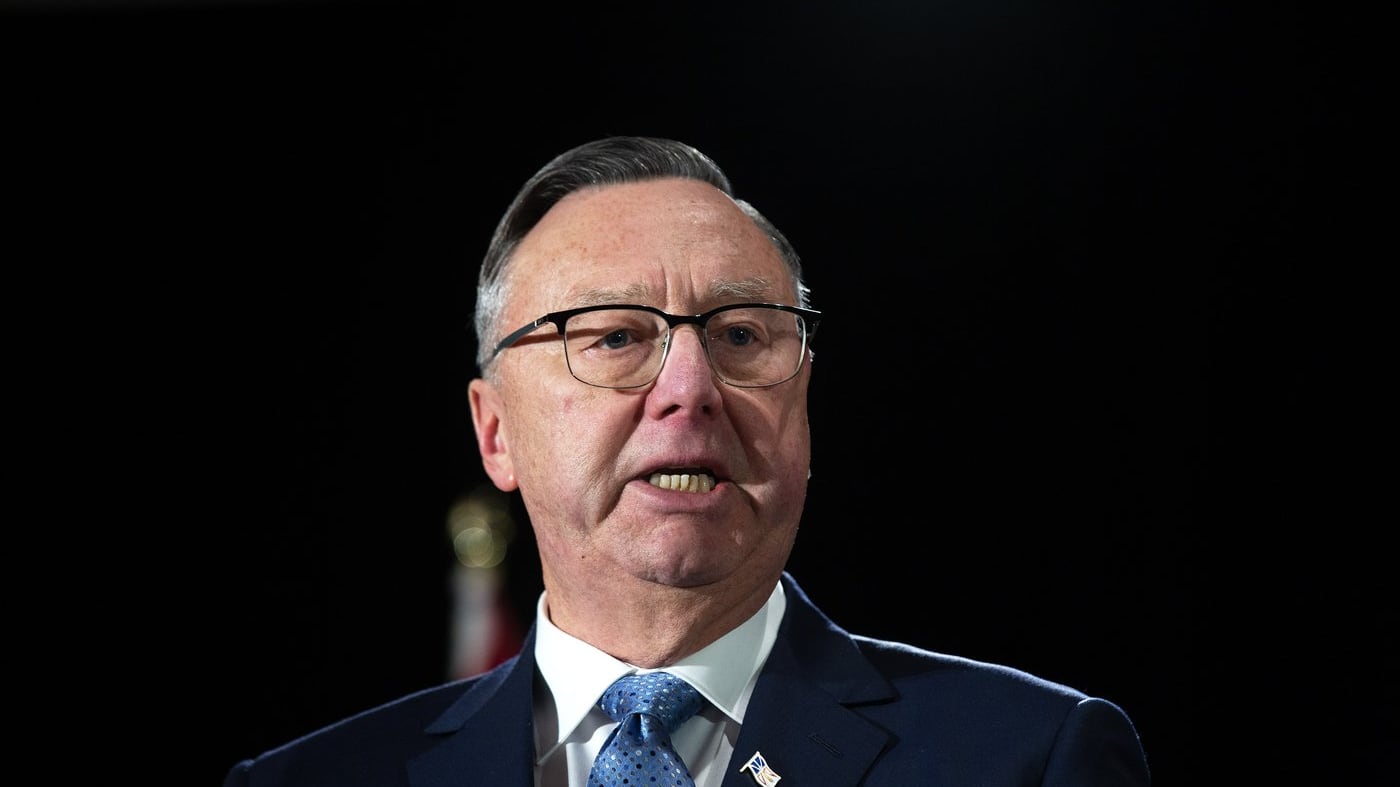
Premier Tony Wakeham spoke to the report in St. John’s, although members of the three-person review panel did not appear in the capital city to take questions on their findings.
The panel concluded that big segments of the MOU appeared to be in the province’s best interest, while other parts of the deal — like expansions to the Churchill Falls power plant and the Gull Island project proposal — were found to deserve further study.
The panel pointed towards a “mismatch” in project payment schedules and power purchasing agreements that could leave Newfoundland and Labrador Hydro with significant debt, and no clear buyer, after a 50-year purchasing agreement with Hydro Quebec terminates.
It appears — according to the review panel — that the former Liberal government dictated certain terms to negotiators in order to make the new deal look different from the infamous 1969 contract.
Quebec reaped billions in value from the 1969 contract, according to various studies by N.L. sources, while N.L. saw relatively little. Under the 1969 agreement, which has not yet been replaced, Hydro-Quebec can purchase power for 0.2 cents per kilowatt-hour. Residential customers in the province pay — at least — 35 times that amount.
Attempts to rewrite 1969 contract
Newfoundland and Labrador officials tried for decades to rewrite the 1969 contract, including several attempts at renegotiations and several lawsuits aimed at challenging the deal through the courts. Every attempt failed.
The panel report strikes another blow to the proposed 2024 megadeal, which has been languishing in uncertainty with political changes in both provinces.
Premier Andrew Furey, who signed the deal on behalf of Newfoundland and Labrador in 2024, resigned in 2025. His successor, John Hogan, was defeated in an election that October.
Premier Francois Legault similarly announced his resignation in January 2026.
Legault’s successor, former premier Christine Frechette, said Tuesday her government would take time to analyze the report, and said in a post on X, that she still agrees a win-win deal is important.
Newfoundland and Labrador Premier Tony Wakeham won election under the P.C. banner in October 2025. He promised during that campaign to hold a referendum on any proposed Churchill Falls deal.
He wouldn’t quite repeat that promise to reporters on Tuesday.
“The first thing I need to do is get a deal,” he said. “I believe there are real opportunities for all three of us, Quebec, Newfoundland and Labrador, and indeed the federal government.”
“I think all three of us can work together to get it done.”
‘Prepared to be at the table’
The panel report comes just days after Prime Minister Mark Carney announced a new national electricity strategy, aiming to double internal production of energy in Canada.
Wakeham suggested the federal government has taken interest in the Churchill Falls deal, and may have a role to play to ensure the projects see construction.
Frechette’s Coalition Avenir Quebec is set to head to the polls by October 2026, and is currently trailing in the polls behind both the Parti Liberal du Quebec and the Parti Quebecois.
Officials with the Parti Quebecois have panned the deal, calling it overly favourable to Newfoundland and Labrador.
Wakeham said he alone “can’t control” whether a new deal is signed before Quebec goes to the polls again, but added he is “prepared to be at the table.”

