The U.S. Drug Enforcement Administration says it plans on “keeping an eye on Canada” by opening two new offices in the country to track and intercept the flow of fentanyl into the U.S.
In a U.S. Senate hearing on May 12, Drug Enforcement Administration (DEA) Administrator Terrance Cole said the U.S. federal agency proposed the offices will be open by 2027 but did not specify where they will be located. However, the DEA has flagged Vancouver as a key entry point for fentanyl trafficking.
According to Cole, DEA teams have conducted “significant seizures of fentanyl in Canada” in the last two months, as they continue to target Mexican cartels that “have started producing and manufacturing fentanyl” north of the border.
Cole said the administration has seen “more (chemical) precursors” of fentanyl production, specifically “coming into the Port of Vancouver” before being shipped to the U.S.
The Port of Vancouver is Canada’s largest port, stretching across the Metro Vancouver waterfront and connecting Canada to more than 170 global trading economies. It sits just 50 kilometres north of the Vancouver-Washington State border but is not “too far away” from Alaska, according to Republican Sen. Lisa Murkowski.
At the hearing, Murkowski questioned if Cole and FBI Director Kash Patel were focusing resources on the Mexico-U.S. border while “taking our eye off the ball” when it comes to “the northern border.”
Patel told the senator that drug traffickers “got smart with the securitization of the southern border and moved (their operations to Canada),” to fly the drugs “into Alaska and also into mainland America on tribal lands.”
The FBI director ensured that the agency has had some success working with Canadian partners to tackle the flow of drugs.
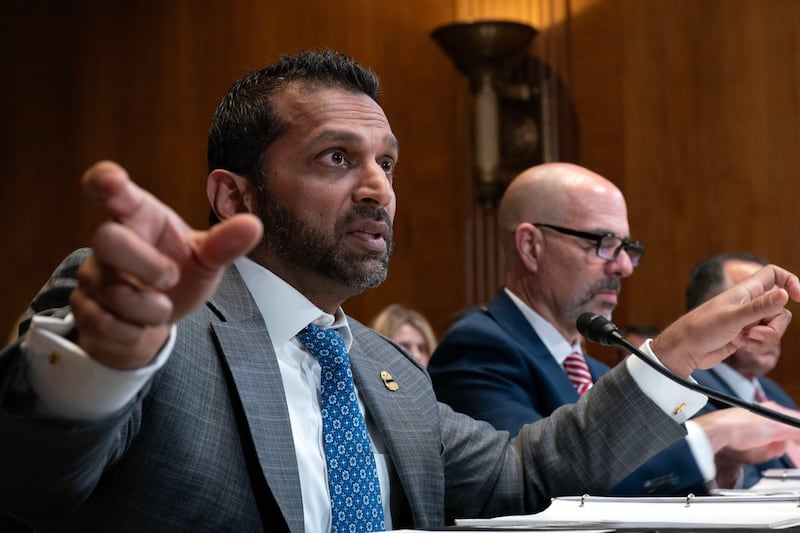
Cole also told the Alaskan senator that the DEA will take a holistic approach by doing outreach in Indigenous communities, while also “keeping our eye on (the) cause and effect that we see from the Mexican cartels now entering into Canada.”
CTV News reached out to the Vancouver Fraser Port Authority for comment. A spokesperson said via email that “safety and security at the Port of Vancouver involve a co-ordinated, multi‑agency approach, with local police forces, the RCMP, Canada Border Services Agency (CBSA), the port authority, and terminal operators.”
The spokesperson added that although the port is responsible for implementing security measures, the CBSA “is responsible for border protection at points of entry, like container terminals.”
CTV News reached out to the CBSA but did not receive a response.
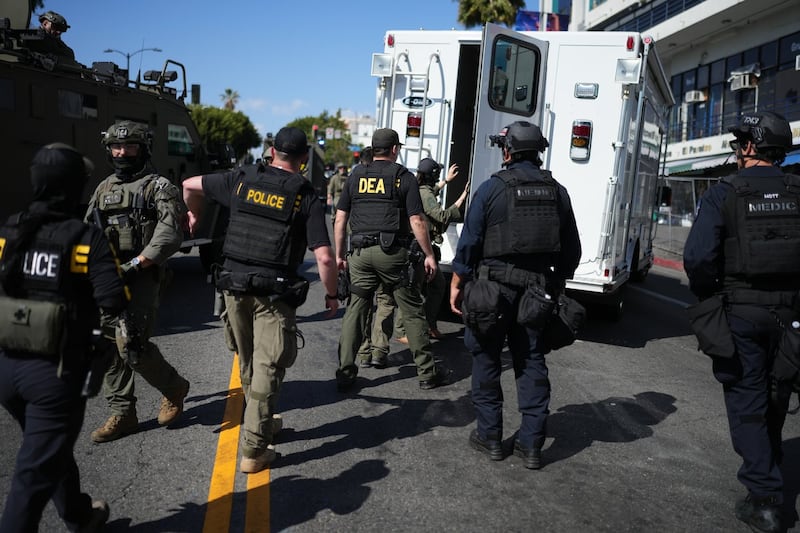
U.S. crackdown on fentanyl trafficking
Drug trafficking has become a focal point of U.S. President Donald Trump’s second term in office. Last year, Trump invoked an International Emergency Economic Powers Act as the reason why he imposed major tariffs on several Canadian industries after declaring an emergency related to fentanyl trafficking at the U.S.-Canada border.
Last week, the DEA released its National Drug Threat Assessment for 2025, which highlighted the trafficking and distribution activities of Mexican cartels. The report also cited “sophisticated fentanyl ‘super laboratories’” in Canada, as a growing concern for the U.S.
According to the report, one of these “super laboratories” was seized by the RCMP in October 2024.
In an emailed statement to CTV News, the RCMP said “available intelligence and operational reporting indicates Mexican cartels do not have a significant or controlling presence in Canada’s synthetic drug production landscape.”
However, the force says it will continue to work closely with the CBSA, the DEA, the FBI and the U.S. Homeland Security Investigations, as well as other Five Eyes and North American agencies, to “disrupt the precursor chemicals trafficking, dismantle clandestine laboratories, and target organized crime groups involved in synthetic opioids production and distribution.”
It’s estimated that flows of fentanyl from Canada are substantially lower than flows from Mexico. In 2024, 22.7 kilograms of Canada-sourced fentanyl were seized at the U.S.-Canada border, compared to 9,354 kilograms seized in the U.S.-Mexico border.

