

This is part two of a four-part investigative series exposing corruption at Canadian airports. Read part one here.
Passengers travelling through Toronto Pearson International Airport face layers of security designed to stop dangerous people and dangerous goods from boarding planes.
Carry-on bags are X-rayed. Water bottles are confiscated. Travellers are scanned, searched and monitored by cameras throughout the terminals.
But exclusive reporting from CTV News’ investigative unit W5 into how organized crime groups exploit airport insiders to move drugs has uncovered troubling gaps in the security systems meant to monitor employees with direct access to restricted areas of Canada’s busiest airport, including luggage and aircraft.
“When I finish work, I walk right out through the terminal doors, right out to go get the train to go to a parking lot. Nobody checks you,” said Charles, a Pearson ramp worker whose identity we are concealing to protect his job.
Charles has spent 20 years working airside at Pearson. He says a corrupt employee can easily get a suitcase of drugs off a plane and walk out of the airport.
“If somebody gets a hold of something, they’re gone with it,” he said. “We joke that you could walk out carrying a cruise missile and they wouldn’t even stop you.”

Charles says in his two decades working in high-security areas of Pearson, he has only been searched once while leaving the airport.
- If you have information on airport corruption or a story idea, send a confidential email to avery.haines@bellmedia.ca or joseph.loiero@bellmedia.ca
Charles says the reason he has only been searched once is because, as W5 has learned, it is no one’s mandate at the airport to routinely search employees as they leave the premises. Searches are only conducted if a specific incident is believed to have occurred.
This security gap, according to police, is one that is open for organized crime to exploit.
W5 EXCLUSIVES
- Part one: Luggage-tag switching scheme involves flights from Canada to countries where drug smuggling can carry death penalty
- Part two: Investigation reveals security gaps and organized crime at Toronto airport: ‘You could walk out carrying a cruise missile’
- Part three: Air Canada employee accused in Canada’s largest gold heist had been on police radar for years
- Part four: Whistleblowers say organized crime has infiltrated Canada’s largest airport
‘The back door of the airport’
Retired York Regional Police Insp. Dieter Boeheim investigated airport corruption as part of Toronto’s Airport Intelligence Unit. He says airports are built to scrutinize passengers, but not necessarily employees.
“The front of the airport, where you and I go as passengers, is super secure,” Boeheim said.
“The back door of the airport that’s accessible to the employees is like an open barn door where you can come and go at will.”
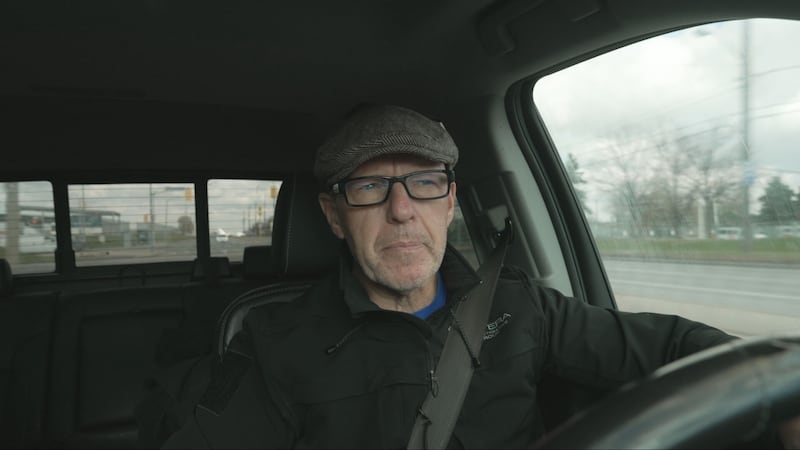
More than 50,000 people work at Toronto Pearson International Airport. The overwhelming majority are honest, hardworking employees. But W5 research has identified several organized crime groups including the Hells Angels, Mexican cartels, Asian organized crime networks and Italian mafia groups, who have corrupt employees working for them inside the airport.
According to Boeheim, that insider access is essential to drug smuggling operations.
“The airplane becomes your vessel to move cocaine,” he said, “which requires co-ordination not just at Toronto, but also in source countries.”
The retired police inspector says drugs are loaded into baggage systems abroad and then removed in Toronto with help from workers on the inside.
“You have your counterparts in Toronto unload and get it to the outside.”
How a bag can disappear
According to Boeheim, it is far too easy for a corrupt insider to move drugs from an airplane onto Toronto streets. All it takes, he says, is to simply reroute a drug bag away from the more secure international arrivals area so it comes out at the domestic baggage carousel, where there are no customs checkpoints and far less restricted access.
“[The drugs are] now accessible by anybody walking into the airport because you and me can go right now, pick up a domestic bag,” Boeheim said.
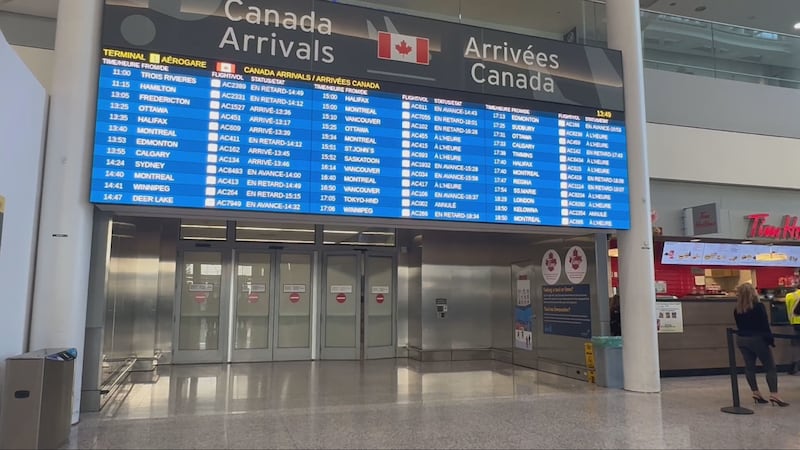
To test that claim, W5 walked directly from the street into Pearson’s domestic arrivals. While one-way doors clearly mark the baggage zone as a restricted area, it is still possible to access the luggage carousels without breaking any rules.
W5 also observed repeated instances of airport employees entering by tailgating through security doors without swiping their passes, meaning there would be no sign-in record showing who entered the controlled zone.
Despite the doors being clearly marked authorized personnel and passengers only, when asked about these security concerns, Toronto Pearson responded that “Domestic baggage claim areas are publicly accessible, including for passengers and others interacting with airline baggage service agents or claiming baggage.
Airport security maintains a presence in these areas, including through patrols. Allegations of illegal drug importation are not within the airport authority’s mandate.”
Security is even looser at other major Canadian airports, including Calgary, Vancouver and Montreal, where members of the public have direct access to baggage carousels.
Undetected cocaine-filled suitcases
The recent W5 documentary The Cocaine Suitcases uncovered troubling questions about how large quantities of cocaine move through major North American airports without detection.
Four separate Canadians travelled through Canadian and American airports with roughly 100 kg. of cocaine in their checked luggage. They are now facing life in prison after the drugs were discovered by customs agents in Hong Kong.

The mother of one of the imprisoned Canadians says she cannot understand how her teenaged daughter was able to get 25 kg. of cocaine through Pearson without being stopped.
“We’re still in shock that she can pass through the airport with a suitcase full of drugs. How?” she said.
“How is it that the Canadian authorities at an international airport cannot find a suitcase full of cocaine?” she asked. “That is my question: ‘how?’”
‘They bypass the scanner’
The Canadian drug mules were lured in by social media job offers and friend groups. All claim they did not know they were transporting drugs.

A young Canadian recruited by the same network, but who backed out before boarding a flight to Hong Kong, described how the airport corruption allegedly worked.
The young Canadian, who we are calling “Eric,” says organizers appeared to co-ordinate trips around airport employee schedules.
“I think that it was only like one or two employees that were in on the operation,” he said. “So, the days that they were obviously scheduled to work would be the only days that [flights] were allowed to happen.”
He also says couriers were instructed to use overweight luggage so insiders could identify specific bags during check-in.
“They said specifically that they overweigh the bags,” Eric said. “So that when the employee weighs that bag, they’ll see the number and then know that it’s that bag they’re supposed to take off.”
“I was told that they take it and they bypass the scanner.”
W5 asked the Canadian Air Transport Security Authority (CATSA), the Crown corporation responsible for screening outgoing passenger luggage, how bags full of narcotics are able to evade security.
In a statement, CATSA responded: “The security of the travelling public is the Canadian Air Transport Security Authority’s (CATSA) top priority. CATSA is mandated to screen passengers, non-passengers, and their baggage for prohibited items that could pose a threat to aviation security (such as explosives), in accordance with the standards set by Transport Canada,” adding that “Interception of illegal narcotics falls outside of CATSA’s mandate, although local police are informed if an illegal item of that nature is detected during a search for threat items.”
‘We’re in big trouble’
The Sept. 11 attacks changed the way passengers travel, ushering in new layers of screening designed to prevent terrorism.
Retired RCMP investigator Ulisses Botelho says airports now need a similar reckoning when it comes to insider threats.
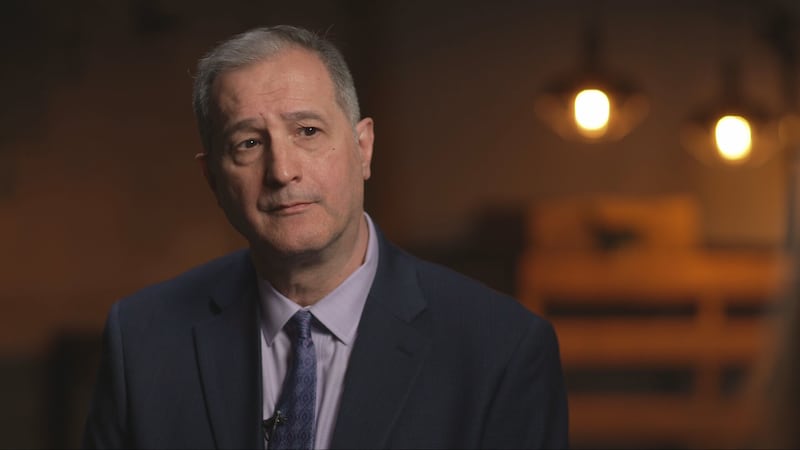
Botelho spent decades investigating organized crime and drug trafficking and later worked with an RCMP unit responsible for reviewing security clearances for airport employees.
He says the threat from insiders helping criminal groups move drugs through airports is too serious to ignore.
“It’s huge. And if we’re unable to dampen that component that is facilitating organized crime, we’re in big trouble,” Botelho said.

