LHSC announced Wednesday the largest ever Canadian clinical trial that will test ‘poop pills’ to improve immunotherapy for lung cancer.
“The trial titled LUNA-2 Trial basically looks at investigating the role of FMT which is fecal transplantation in patients with advanced lung cancer,” explained Dr. Jacques Raphael, a scientist with the London Health Sciences Centre Research Institute (LHSCRI).
Researchers said for nearly half of people diagnosed with lung cancer, immunotherapy can slow the disease but not stop it.
“It is actually the cancer with the most diagnosis in the world and it’s also the biggest killer in the world as well, so it is an underserved population,” said Dr. Saman Maleki, a scientist at LHSCRI. “We wanted to try and see if we could improve the conditions for patients.”
The trial, done in partnership with St Joseph’s Health Care and Lawson Health Research Institute, aims to do just that, through a $4 million joint investment from the Canadian Cancer Society and the Weston Family Foundation.
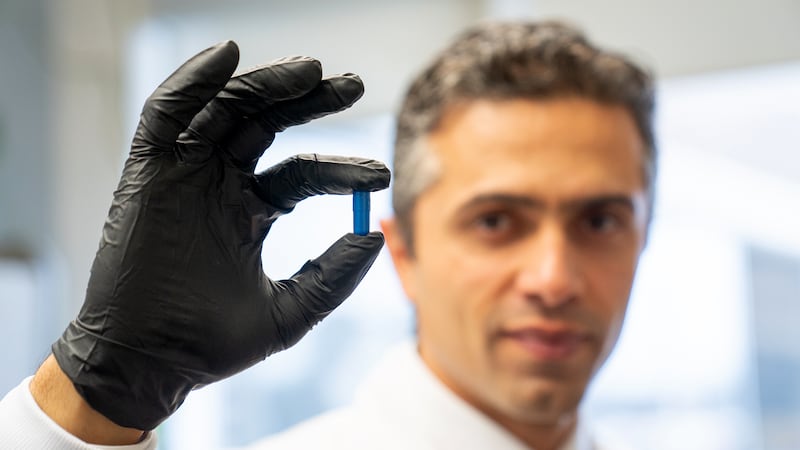
“Patients will still get their standard treatment which is a combination of chemo and immune therapy, and the patients will get the FMT intervention prior to starting their standard treatment,” said Raphael.
FMT delivered through capsules or ‘poop pills’, contains carefully screened gut microbes from healthy donors.
“The microbiome is often an ignored organ in the human body but one that’s very important,” said Maleki. “If you change somebody’s microbiome, giving them a healthy microbiome, now the immune system can function better.”
If successful, the trial would provide new treatment options for cancer patients helping them live longer and with fewer side effects.
“If you have a way to make that immune response better, in this case through change of microbiome, you effectively might be able to go and help patients with other types of cancer,” said Maleki.
The trial, which will enroll 160 people, is set to begin by the end of the year, rolling out at multiple sites across the country with London at the forefront.

