A Western University professor alleges most students in one of his classes used artificial intelligence to cheat on their final exam.
“A common sentiment that I’ve heard when speaking with students is you’re at a great disadvantage now if you don’t try to take these shortcuts, because you can’t compete,” said Jacob Shelley, a professor in Western’s Faculty of Law and School of Health Studies.
Shelley says he is convinced the majority of the 288 students in his health-care law course cheated on their April 24 final exam using AI.
The exam was worth 30 per cent of students’ final mark.
It was intended to be closed-book and completed independently, with no use of external sources. The exam included both written answers and multiple-choice questions.
“I had eight per cent of my class receive 100 per cent on the multiple choice. Fifty-five per cent scored over 90 per cent. I’ve never seen marks like that in 20 years of teaching,” Shelley said.
“And then when I went to the written answers, it was very clear there was a disconnect — information I didn’t teach, information I can’t believe they knew, or the use of a very specific structure that was replicated across multiple students, framing it and writing it almost identically,” he said.
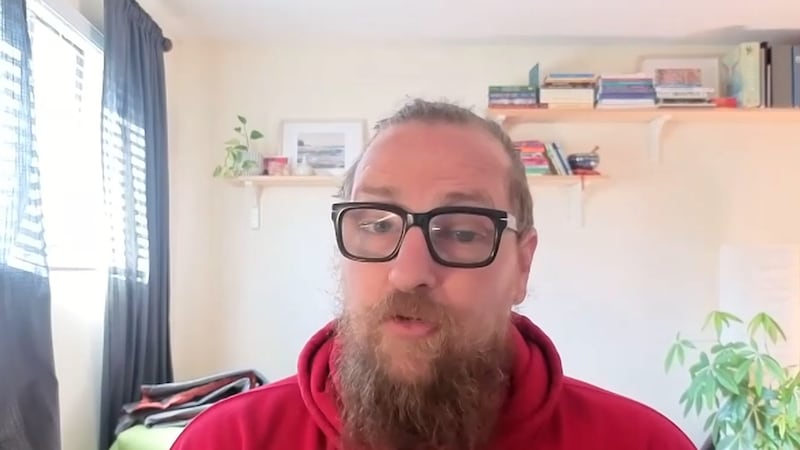
The tenured professor, who has spent 10 years at the London, Ont., university, says he decided not to use proctoring software because he believes it does not prevent cheating.
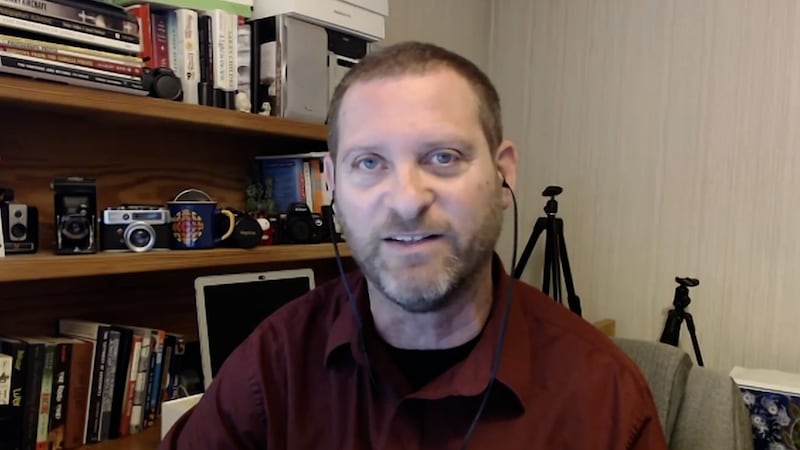
“The availability of these AI tools has never been greater. They’re incredibly easy to use,” said tech expert and commentator Carmi Levy.
“And an unproctored exam online is almost like an invitation to use these tools,” he said.
Levy says technology has left post-secondary institutions playing catch-up, which could affect their academic credibility.
“All schools need to figure this out and they need to do it quickly, because otherwise their very brands could be at risk of being compromised. If you cannot trust that the integrity of the degree that you grant is unimpeachable, then the value of that degree is diminished on the open market,” he said.
Shelley says he decided not to use the exam results toward final grades, even though administrators instructed him otherwise — a compromise to his integrity he was not willing to make.
“The message I received is that we don’t trust your judgment. We don’t care about your ethics. We care about getting marks out to students because that’s what they paid for, and we’re going to turn a blind eye to concerns about cheating,” he said.
Shelley says that in the end, and against his wishes, Western decided to include the multiple-choice portion of the exam in final grades.
CTV News asked Western for an interview to address Shelley’s allegations. The university declined.
Instead, Western provided the following statement, but only after an earlier version of this story had been published.
Western is aware of Dr. Shelley’s claims of cheating during a final exam.
We take all measures to protect academic integrity, and we have robust policies in place to address scholastic offences.
Any student found to have committed a scholastic offence should expect appropriate consequences for their actions.
Together with instructors, Western investigates suspected instances of cheating or academic dishonesty when there is some kind of tangible evidence with which to investigate. To date, Dr. Shelley hasn’t shared any such evidence, and we continue to encourage him to do so.
Leaders at the university have been fully engaged in this matter to find an appropriate resolution for all students in this course.
— Western University

