Chris Van Brockhoven booked his trip to Vancouver last summer in the hopes of attending a World Cup match, but after learning the cost of admission, his group felt forced to pivot.
“We were flabbergasted at how expensive the tickets are and how much people are seemingly paying for them,” he said in an interview.
All four men in his group entered the FIFA selection draws, but he said when they were given the opportunity to buy about a month ago, the prices were “crazy.” He said he has also been trolling social media and resale pages, but the tickets he has seen are about $2,000 each.
“We’d pay that for a season ticket over here for a top English club. We just can’t justify that sort of spend,” said Van Brockhoven, who lives in London, England.
Van Brockhoven and his friends aren’t the only ones to balk at the high price of World Cup fandom, with fellow supporters and experts citing high ticket and accommodation costs. Instead of a boost, hotel bookings for next month are down in Vancouver compared to last year, in a phenomenon also playing out in other host cities.
Jarrett Vaughan, an adjunct professor at the University of British Columbia’s Sauder school of business, said “one of the biggest challenges that visitors have when coming to Vancouver is just simply the cost.”
He highlighted the accommodation industry, which he said is likely pricing some visitors out of the market.
“Hotel accommodations are very expensive in Vancouver no matter what’s happening, and so you then add this layer of visiting guests and this added pressure drives, obviously, room rates higher,” he said.
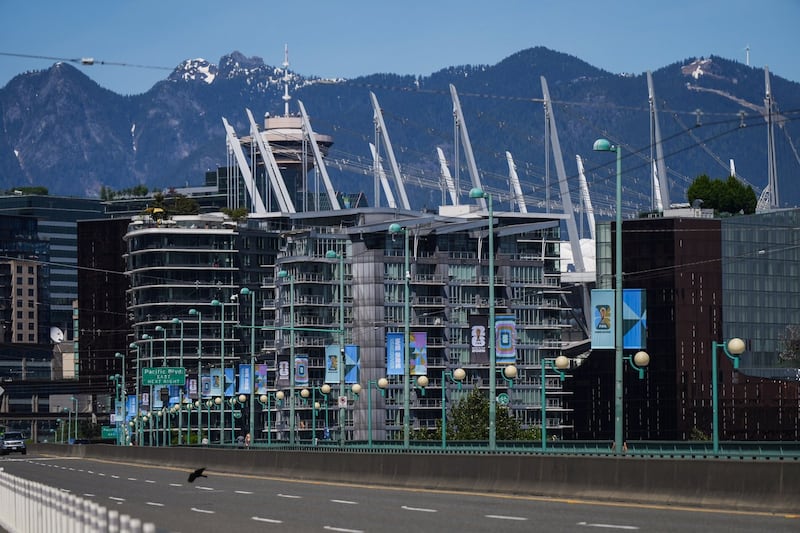
To become an Airbnb host in Vancouver, the listing must be your principal residence and you must obtain a City of Vancouver short-term rental business licence and register with the province.
Vaughan said the application process is likely a deterrent for many, as it costs about $1,200 annually and “there’s significant risk because you might not be able to rent it out.”
World Cup Facebook forums are filled with people listing their homes for rent during the games, seemingly under the table.
Vaughan said that’s not surprising.
“What people do is they kind of black market or grey market or backdoor the system by renting out your place in exchange for tickets or renting it on Facebook and taking the kind of the insurance risk on something like that,” he said.
“This is where I think the misstep is from the provincial and local governments is to open up the economy rather than continue to restrict it like they’re doing currently, which is why hotel rates are so high, which is why we’re gonna see fewer visitors than we should because it’s so unaffordable to come here.”
Destination Vancouver says June hotel bookings in the city are down 20 per cent this year when compared with the same time in 2025. However, it said in a statement that it remains hopeful they fill up closer to kickoff.
“Data is dynamic and we’re optimistic of a late surge,” it said, noting that air arrivals to Vancouver between June and August are up six per cent from last year.
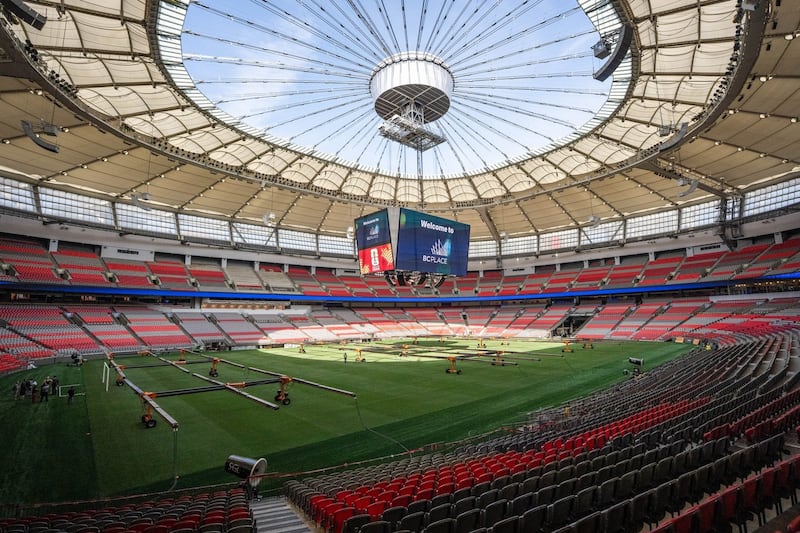
The British Columbia Hotel Association did not immediately respond to requests for comment.
The American Hotel & Lodging Association cited disappointing bookings in a report earlier this month after surveying hoteliers across host cities in the United States.
It “found that anticipated demand has not translated into strong hotel bookings and that domestic travellers are outpacing international visitors,” with 80 per cent of respondents saying hotel bookings were tracking below initial forecasts.
Luana Carcano, a lecturer at Simon Fraser University Beedie school of business, said “basic economics” says hotel prices will not decrease as the tournament nears.
“When supply is structurally constrained and demand is event-driven, hotels have no incentive to discount,” she said.
“Stack that on top of ticket prices, and the total cost becomes hard to justify for most people.”
She said FIFA has significantly raised ticket pricing for this World Cup, capturing “maximum value from the highest spending fans,” which she called rational from a revenue standpoint. But it narrowed the pool of people who could attend.
“High prices shift the visitor mix toward wealthier tourists who spend more per day. This is good for premium businesses, but it squeezes out casual fans and the local middle-income family who would have filled seats and supported local businesses.”
Carcano noted the cost of flights and the fuel crisis also adds to the total cost.
“The economic implications for Vancouver are layered. Flights are the final straw in an already stacked cost equation,” she said.
After hotels that cost upwards of $900 per night, tickets between $500 and $2,700 and a heavily surcharged flight, and the “total trip for an international fan easily exceeds $10,000 to $15,000,” Carcano said.
“At that level, this stops being accessible sport tourism, which changes who comes, how long they stay and how broadly the local economy benefits,” she said.
Van Brockhoven said his group was luckily not affected by high accommodation costs, which he credits to booking almost a year in advance.
“There was plenty available, and I wouldn’t say they were astronomical,” he said, noting that their Airbnb costs will work out to about $125 per night per person for the four members of his group.
Vancouver is among 16 cities across Canada, the United States and Mexico that will host a combined 104 games during the expanded 48-team tournament, running June 11 through July 19. Toronto is hosting six matches.
Shushan Vardanyan, a Vancouver mother of a nine-year-old soccer fan, has been trying to find discounted youth tickets in the hopes of bringing her son to see a match, but has been unsuccessful.
“The prices are crazy,” she said in an interview.
“Soccer is an affordable sport. It’s meant to be an accessible sport and it’s also an inspiration and encouragement for young athletes to attend.”
She said her family booked vacation around the Vancouver dates, hoping to score some tickets, and they remain optimistic that prices will drop as the tournament nears. However, she said, if they don’t, she and her son will try to find other ways to take part in the action.
Both Canadian host cities have announced various fan events and activities for those without tickets to enjoy the matches.
Vancouver’s main fan event outside the stadium will be the official FIFA Fan Festival at the Pacific National Exhibition. It will feature live match broadcasts as well as interactive activities, cultural programming and a live concert series with artists like Flo Rida, Simple Plan and Arkells.
Van Brockhoven said that with their airfare and accommodation already booked, his group is now planning to make the most of it and though they too are holding out hope that ticket prices will drop at the last minute, they also have tickets for the fan festival.
While free entry is an option, they didn’t want to take the risk of being turned away so they bought tickets to attend on June 17 and 18.
“The whole reason we’re coming over was to see the football,” he said.
“It’s not going to stop us watching the games and enjoying the atmosphere. We’re just hoping that fan zones are going to be as good as they are in England and other places.”
This report by Brieanna Charlebois, The Canadian Press, was first published May 20, 2026.

