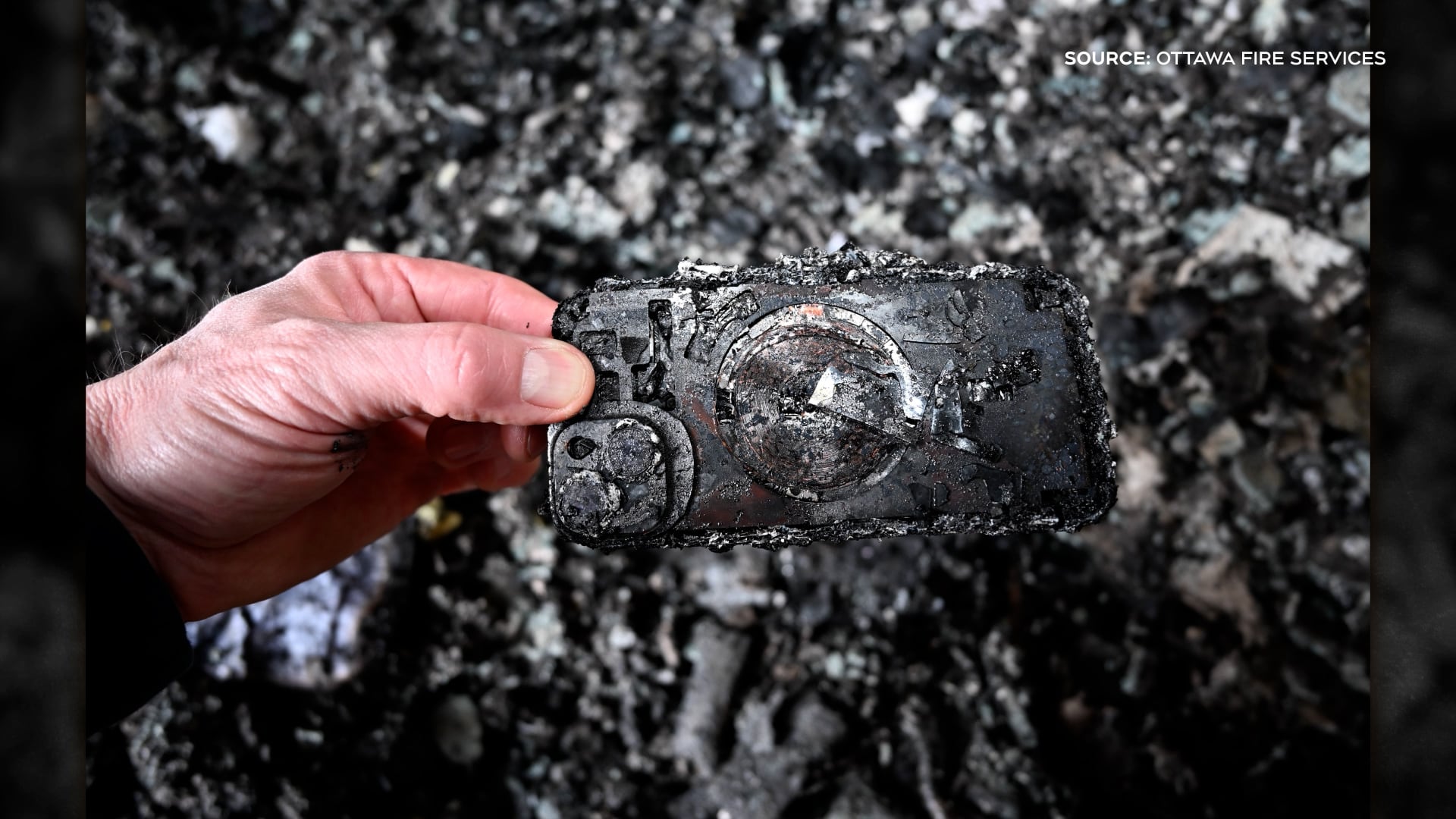
Ottawa Fire Services says 10 fires so far this year have been linked to lithium-ion batteries.
The figures come from a response to an inquiry from Barrhaven West Coun. Davil Hill, following a CTV News Ottawa story in March.
“With lithium batteries, being an active part of most Ottawa residents’ day-to-day lives, it would be valuable for council to better understand the impact these devices have on the Ottawa Fire Services,” Hill wrote.
The response, filed for the May 28 emergency preparedness and protective services committee, says there have been 54 fires linked to lithium-ion batteries since Jan. 1, 2024. There were 19 fires in 2024, 25 in 2025, and 10 so far this year. These fires account for approximately 1.5 per cent of all fires in Ottawa, the response says.
Of the 54 fires, Ottawa Fire Services says one involved an electric vehicle and five were related to e-bikes or e-bike batteries. Twenty-three of these fires caused significant damage to homes, while 31 were able to be contained with minimal spread.
Recent fires involving lithium-ion batteries include a blaze in Stittsville in March caused by a lithium-ion battery in a power bank, a fire on Pelham Crescent in Richmond in mid-February, and another in Orléans in January that was caused by a dog chewing on a battery-powered heated glove. An e-bike was also being investigated in connection with a fire in Centretown in March that claimed three lives.

The response from Ottawa Fire Services said there are several factors that can put people at risk of battery fires, including leaving devices plugged in long after they’re charged, charging them on soft surfaces such as beds or couches, or in extremely cold places, such as unheated garages. Low-quality, aging, or damaged batteries also pose risks, as does leaving batteries near flammable materials.
“Ottawa Fire Services continues to actively monitor risks associated with lithium-ion batteries and has incorporated prevention and education programs which promote safe charging practices, responsible recycling and the sharing of real-life examples of fire incidents to educate, not alarm, the public,” the response prepared for committee said.
Ottawa Fire Services said it has also made targeted equipment purchases, such as lithium-ion specific extinguishers, and the Safety Division stays up to date on evolving fire suppression methods, including a current review of the potential need for additional equipment.
“New battery designs, improved battery management systems, and advancements in materials are helping reduce the risk of failures such as thermal runaway, which is the primary mechanism responsible for lithium-ion battery fires,” the response said.
Ottawa Fire Services also said Ottawa has a lower volume of battery-related fires compared to other major cities, such as Toronto, where a higher concentration of high-rise buildings increases the chances someone might bring an e-bike inside to charge, thus increasing the likelihood of a fire.
All lithium-ion related fires are reported to the Ontario Fire Marshal, which formalized the requirement in provincial reporting in 2023. Hill had asked for data from prior to 2024, but OFS said the last two years were the only full data sets available.
Proper disposal of old batteries
Aging and damaged batteries pose a higher risk for fires, but these items cannot go in the regular garbage.
“When damaged or improperly disposed of, batteries can explode and catch on fire. They can also overheat when they are compressed in garbage trucks or in landfills,” the City of Ottawa says.
Proper disposal of batteries is crucial for preventing fires.
The city says, when it is time to get rid of batteries, cover the terminal with tape or place them in a bag then search the City’s Waste Explorer to find drop-off locations that accept batteries.
You can also bring your used batteries at a Call2Recycle collection box, available at many retailers across the city.

