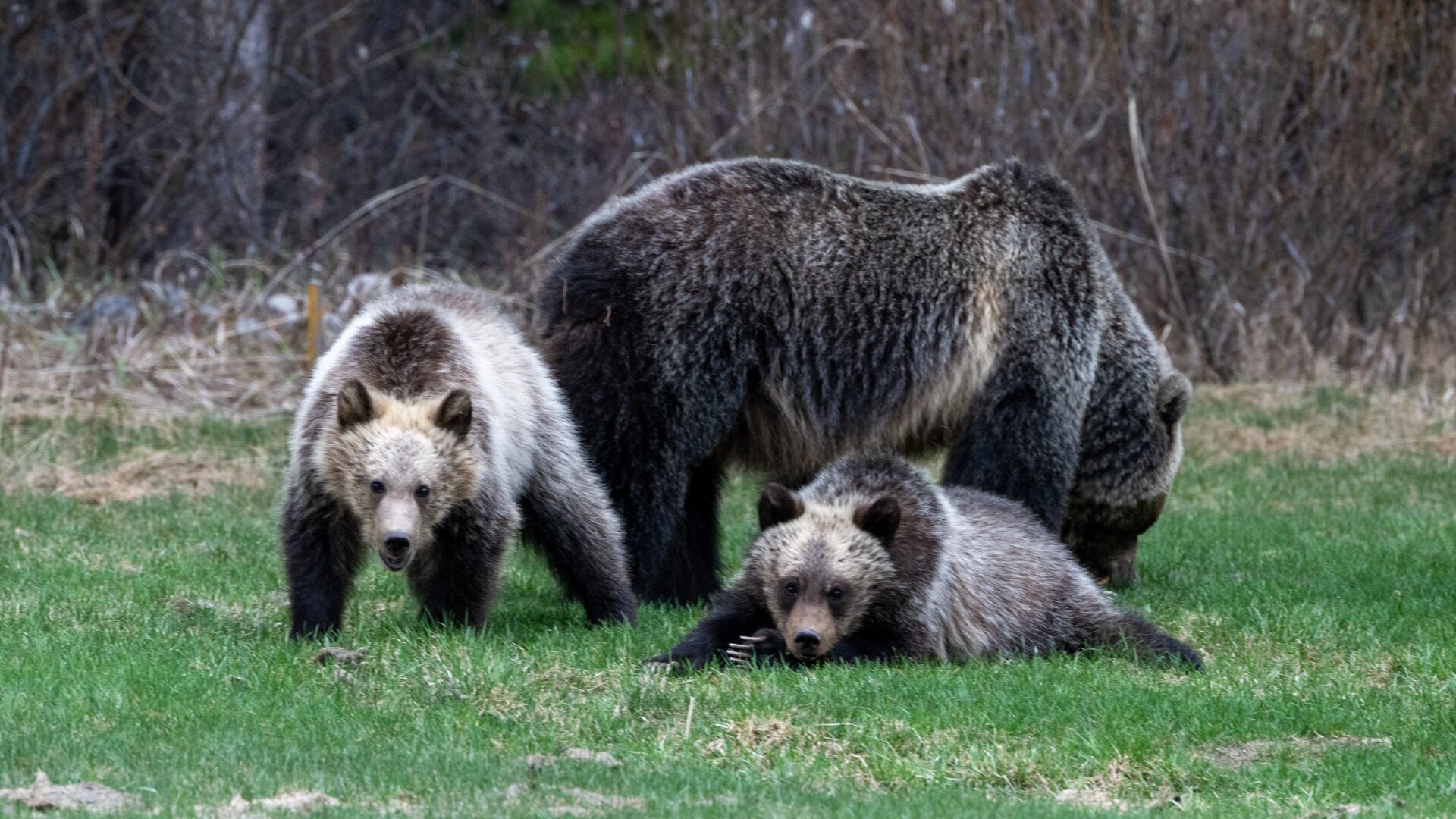
A grizzly bear cub was hit and killed by a train in Banff over the weekend.
Parks Canada says it received a report that a cub had been struck by Eldon siding, near the Protection Mountain Campground, on Sunday evening.
“The bear was known to Parks Canada and was one of two cubs that has been seen with well-known female Grizzly Bear 142,” said James Eastham, a spokesperson for Parks Canada, in a statement.
Eastham said Parks Canada staff responded to the site and removed the bear’s carcass.
He said Grizzly Bear 142 and her remaining cub have since been seen “behaving normally” in the area.
Eastham said a no stopping zone was temporarily put in place along the Bow Valley Parkway to help “give the bears space” and “reduce disturbances” while they frequented the area.
“The zone was removed on May 19 after monitoring indicated the bears had moved out of the immediate area,” he said.
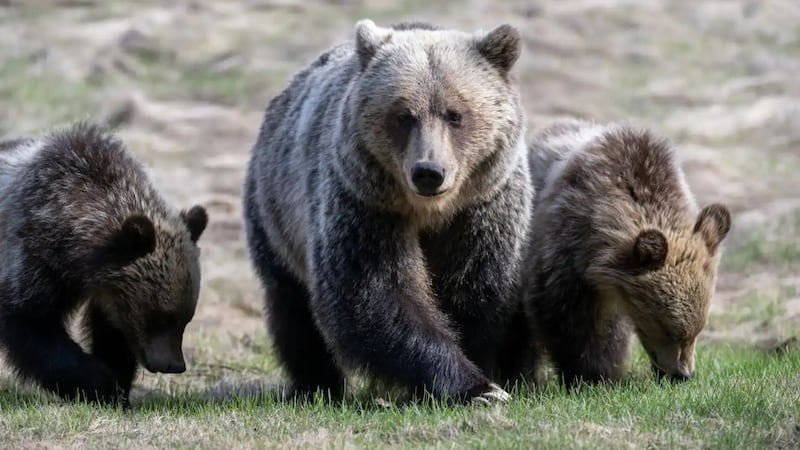
Parks Canada estimates there are 691 grizzly bears in Alberta, including 65 grizzly bears in Banff National Park.
Grizzlies are currently designated as a threatened species in Alberta.
Parks Canada notes on its website that the biggest threats to the bears are habitat fragmentation and loss caused by an increasing human population, along with accidental human-caused mortality along transportation corridors (roads and rails).
A study released in 2020 examining 646 wildlife deaths on railway tracks in Banff and Yoho national parks in Alberta and British Columbia found that train speed was one of the biggest factors.
The study, published in Nature’s Scientific Report, looked at animals killed by trains between 1995 and 2018, including 59 bears.
The research concluded that effective mitigation could address train speed and the ability of wildlife to see trains, especially at curves in tracks near water.
“This research has helped inform how Parks Canada has created and enhanced 50 km of alternate travel routes for bears near high-risk areas of the railway near Morant’s Curve and Five Mile Bridge,” Eastham said.
“This work was completed using chainsaws, brushers and hand tools to thin the forest along existing wildlife trails away from the railway.
“Parks Canada is monitoring the effectiveness of the routes with remote cameras. While it is too early to make a scientific statement of success, the preliminary results from the mitigated locations are promising.”
Eastham says an above-average snowpack that remains in the area has left limited habitat for bears to forage.
“The rail corridor at the valley bottom provides a convenient way for bears to travel and contains some of the limited vegetation currently available for bears to feed on.”
After the death of the cub, Parks Canada wildlife staff investigated the site and determined that there had been no large grain spills in the area.
“Parks Canada works closely with CPKC to manage and remove attractants along the tracks through a variety of methods,” Eastham said.
He pointed to a joint research project with CPKC Rail, the University of Alberta and the University of Calgary in 2016 to better understand of the root-causes of bear-train collisions and develop solutions to discourage bears from using high-mortality risk zones.
“As a result, the agency has taken a number of management actions,” Eastham said.
Between 2015 and 2024, there were four grizzly bear mortalities on the CPKC railway lines in Banff National Park and none in Yoho National Park.

