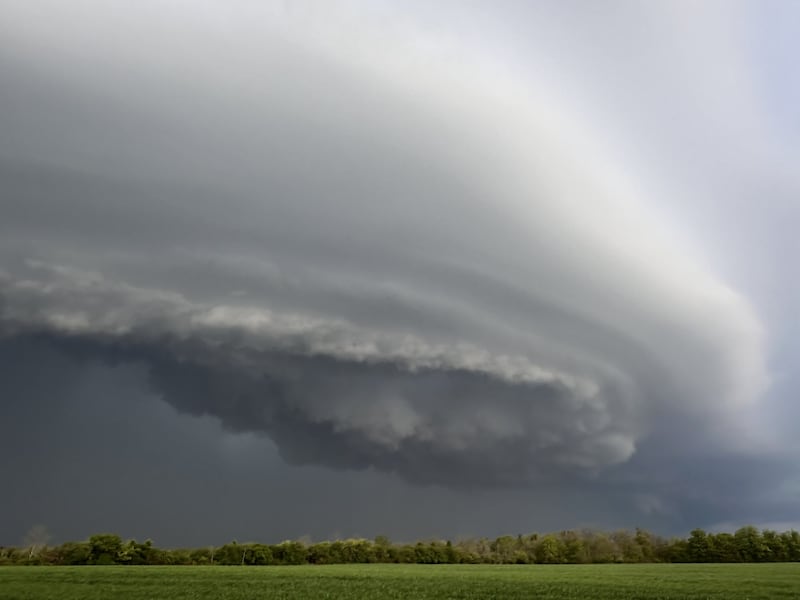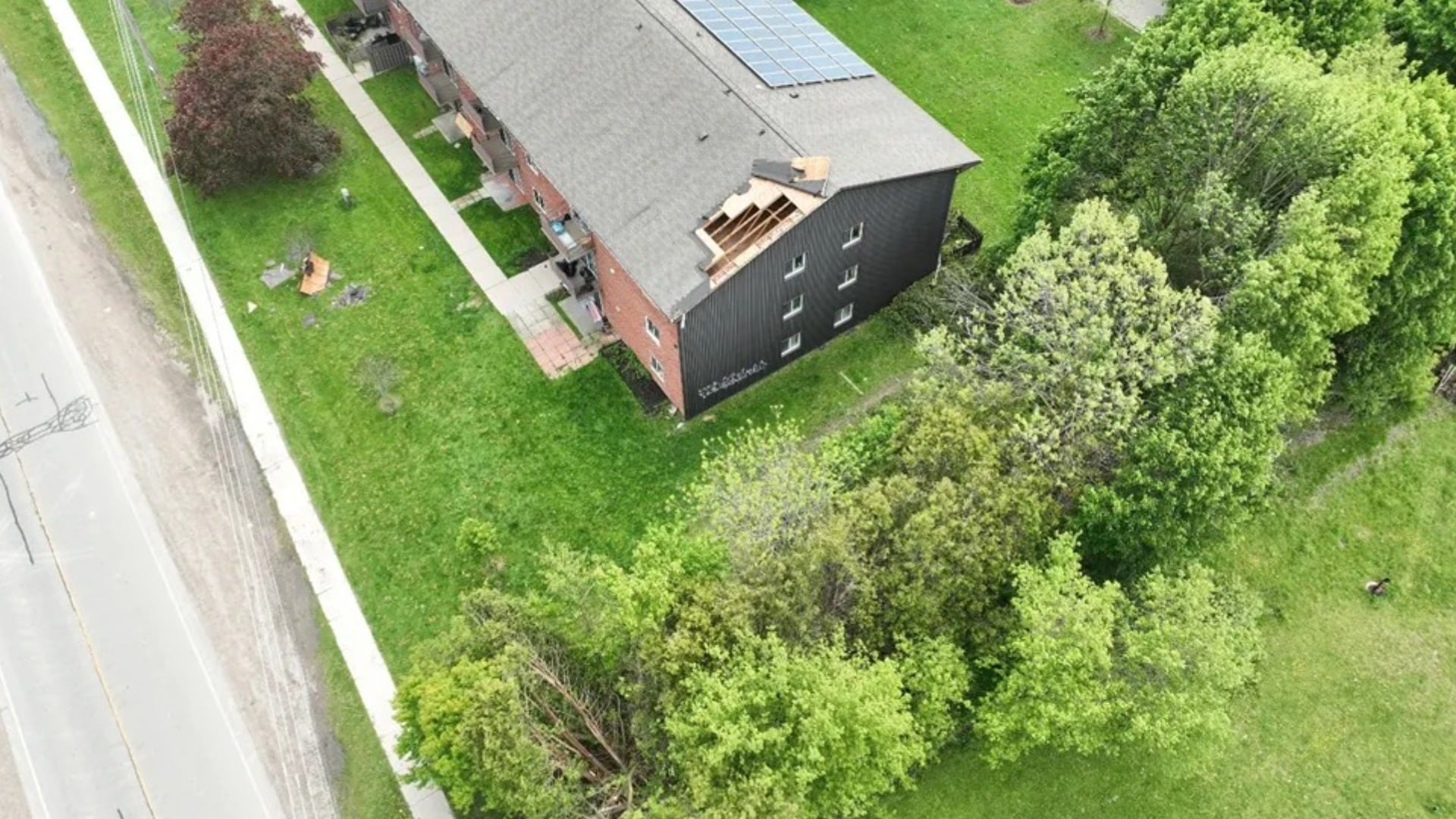
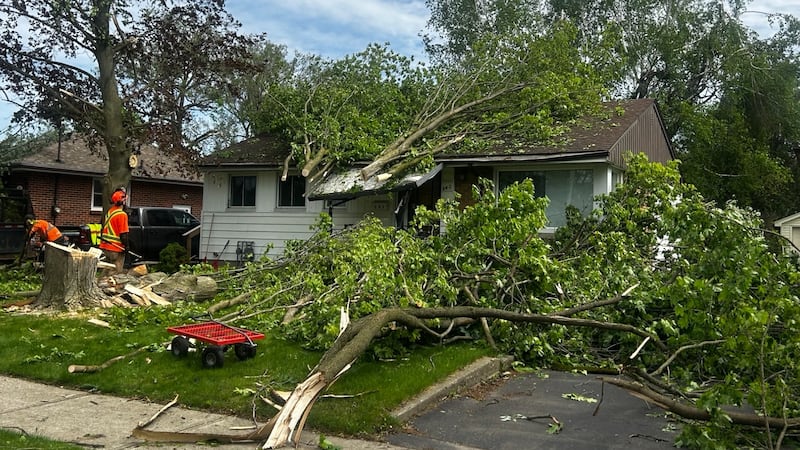
Damage done to trees and structures in east London earlier in the week was the result of a downburst, the Northern Tornadoes Project said Thursday.
According to Western University’s Northern Tornadoes Project (NTP), teams surveyed damage seen across east London following Tuesday’s powerful storms that swept through the region in the early evening.
The organization confirms that the damage in east London was caused by an EF-1 downburst, with winds of 145 km/h.
The NTP said more information on the downburst will be provided as soon as possible.
On Wednesday it was confirmed that a tornado touched down in Derwent, located just southeast of London.
Researchers are still working to determine the tornado’s track and intensity.
Tuesday’s storm led to power outages, significant tree damage including downed and uprooted trees and damage to cars, including an overturned semi-truck.
Separating fact from fiction
The NTP is cautioning people however of images circulating on social media that appear to depict funnel clouds in London. The organization said it is unable to confirm their authenticity and veracity.
“We believe that is because there were actually no funnel clouds to be seen,” the NTP said. “The one tornado that has been confirmed so far, southeast of London, had no apparent funnel cloud. Just rotation at cloud base and rotating dust and dirt at ground level. That is uncommon with tornadoes in southern Ontario but does often happen in regions with drier environments - and it can occasionally happen here.”
What’s the difference?
So, are tornadoes and downbursts the same weather event? Not exactly, the NTP says.
A tornado is a violently rotating column of air that extends between a cloud base and the surface. When occurring over water, it is called a waterspout.
A downburst on the other hand is a downdraft caused by showers of thunderstorms that descends towards the surface and moves outwards.
Microbursts on the other hand are brief but intense downbursts that affect an area less than or equal to four kilometres in diameter.
These storms are categorized on the Enhanced Fujita or EF scale. The scale ranges from EF-0 to EF-5 and rates storms based on wind speeds and the severity of damage they cause.
EF-0 winds range from 105 – 137 km/h whereas EF-5 winds are in excess of 322 km/h.