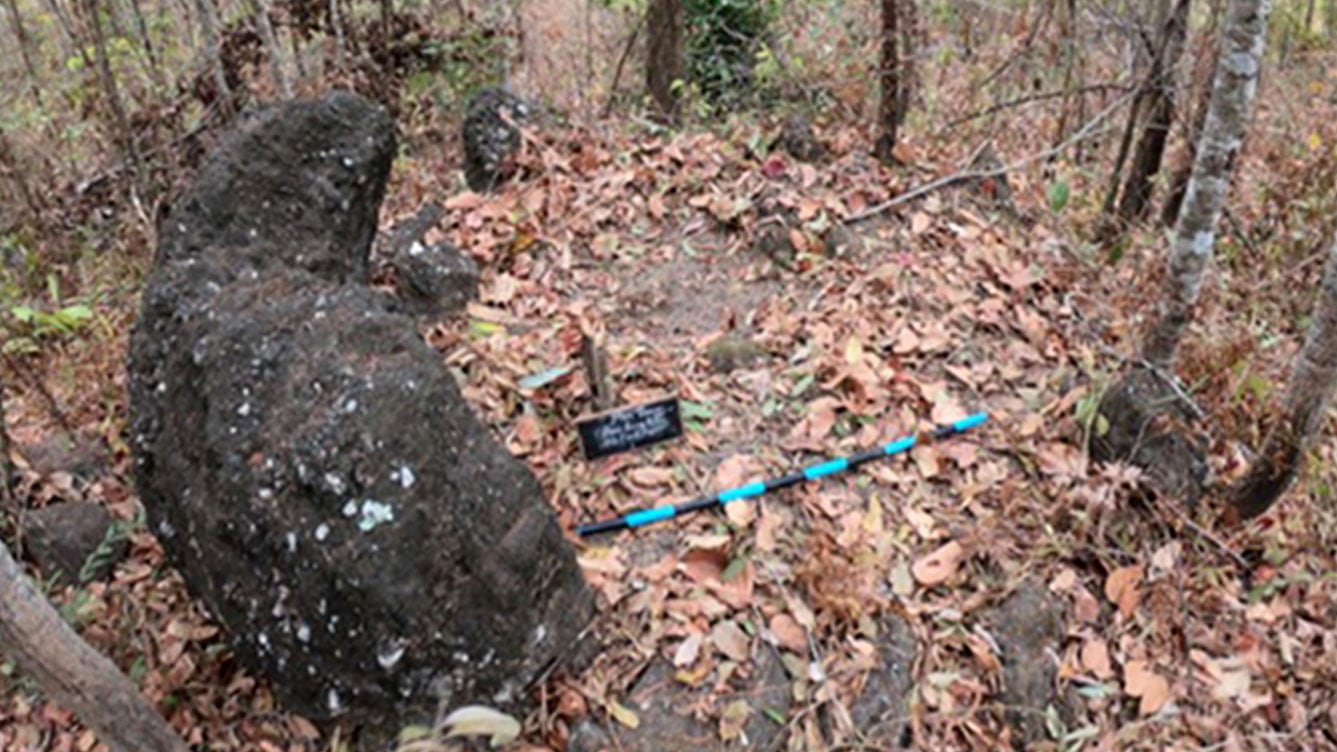
A giant stone jar in Laos may finally be giving up some of its ancient secrets.
Archeologists say the massive vessel, excavated at a remote site in northern Laos, contained the remains of at least 37 people, strengthening long-held theories that the famous “Plain of Jars” was tied to burial rituals.
The findings were published online by Cambridge University Press on Tuesday, about “Jar 1” also dubbed as “death jar,” an unusually large stone container at Site 75 on the Xieng Khouang Plateau.
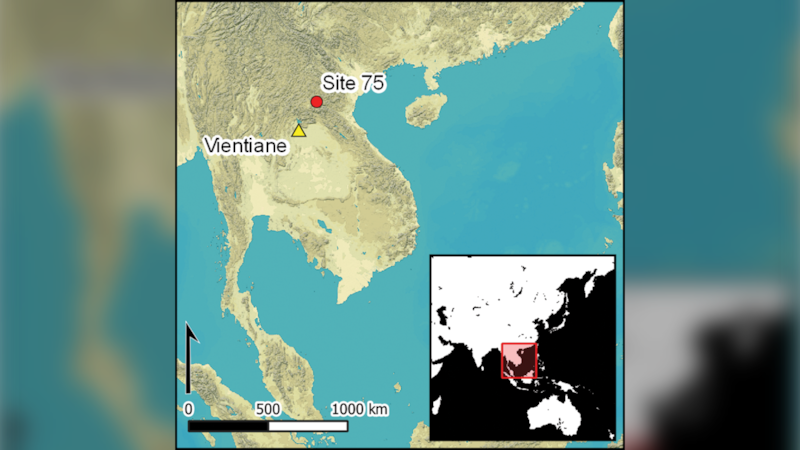
The Plain of Jars, scattered with hundreds of giant hollowed stone vessels, has puzzled researchers for nearly a century. Scholars have debated whether the jars stored food, water or human remains.
The new excavation offers some of the clearest evidence yet for a funerary purpose.
Researchers found skulls, long bones and teeth packed inside the jar, along with glass beads, pottery, an iron knife and a small bell.
Radiocarbon dating suggests the jar was used between about AD 890 and 1160, possibly across several generations.
Bones tell story of repeated burials
The remains appeared to have been carefully arranged rather than dumped randomly, researchers said.
The bones were largely disarticulated, suggesting bodies may have decomposed elsewhere before selected remains were placed inside the jar in a secondary burial ritual.
The study says the jar likely served as “an ossuary for the collection of secondary burials.”
Some skulls and jaws were found close together, hinting that a few individuals may have been placed in the vessel shortly after death.
Researchers also found signs of ritual tooth removal, a practice seen elsewhere in ancient Southeast Asia.
Trade links stretched across Asia
Some of the biggest surprises came from tiny glass beads recovered inside the jar.
Chemical analysis suggested several beads originated in South Asia and Mesopotamia, modern-day Iraq, indicating the remote Lao highlands were connected to vast trade routes spanning Asia.
The study said the finds point to “a dynamic engagement with regional and inter-regional trade spheres.”
Researchers believe the jars may have stood along important overland trade routes linking China, Southeast Asia and beyond.
Despite decades of study, many mysteries remain, including who built the jars and why the tradition eventually disappeared.

