

This is part three of a four-part investigative series exposing corruption at Canadian airports by CTV News’ investigative unit, W5.
An Air Canada employee accused in Canada’s largest gold heist had been on police radar for years before millions in gold vanished from Toronto Pearson International Airport.
A W5 investigation has uncovered intelligence reports, court records and exclusive data that raise troubling questions about how airport employees with alleged links to organized crime, drug trafficking and violence were able to retain access to restricted areas at Canada’s busiest airport.
Parmpal Sidhu is one of two Air Canada employees accused in the gold heist that saw more than $22 million in gold and foreign currency stolen from a cargo facility at Pearson airport in 2023.
Police sources tell W5 that Sidhu’s name surfaced in three separate airport drug investigations dating back to 2008.
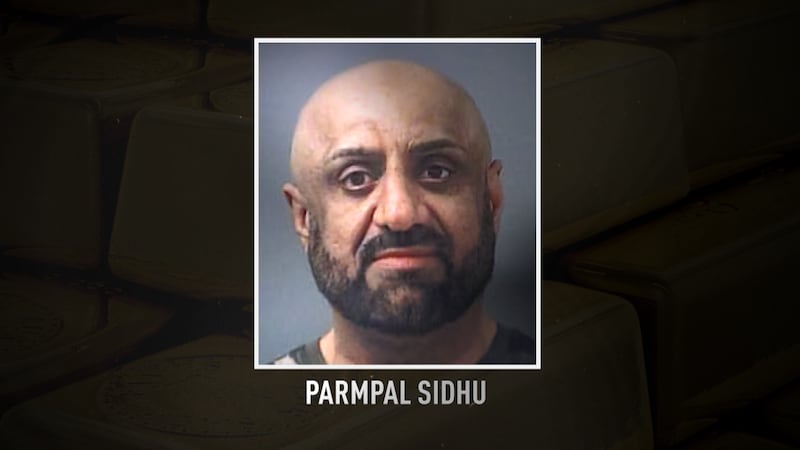
W5 also obtained a sensitive 2012 intelligence document alleging that Sidhu was the leader of an international drug trafficking ring moving large quantities of narcotics through Pearson and infiltrating “legitimate government organizations for the purpose of carrying out their criminal activities.”
W5 could not determine whether the intelligence document was ever shared with Air Canada.
But Sidhu kept both his job and his airport security clearance until after the gold heist.
His case is one of several uncovered by W5 involving airport employees who retained access to restricted areas despite serious allegations, criminal investigations or repeated security concerns.
W5 EXCLUSIVES
- Part one: Luggage-tag switching scheme involves flights from Canada to countries where drug smuggling can carry death penalty
- Part two: Investigation reveals security gaps and organized crime at Toronto airport: ‘You could walk out carrying a cruise missile’
- Part three: Air Canada employee accused in Canada’s largest gold heist had been on police radar for years
- Part four: Whistleblowers say organized crime has infiltrated Canada’s largest airport
Employees tied to major investigations kept airport access
In another case uncovered by W5, Air Canada baggage handler Levi Davis was charged in 2025 after an innocent elderly Canadian was detained in Bermuda when drugs were linked to luggage travelling under his name. The passenger was released after it became clear he was the victim of bag-tag switching.
The charges against Davis were later withdrawn for reasons that remain unclear.
But W5 learned Davis had also been implicated in a separate cocaine smuggling investigation dating back to 2010 that involved allegations of bag-tag switching at Pearson airport. He was never charged in that investigation and he kept both his job and his security clearance.
- If you have information on airport corruption or a story idea, send a confidential email to avery.haines@bellmedia.ca or joseph.loiero@bellmedia.ca
Pearson employee arrested in massive drug bust
In Australia in 2025, Canadian Mani Dhaliwal was arrested in one of that country’s largest drug smuggling busts.

Dhaliwal was employed at Pearson airport at the time of his arrest and worked in a security office that liaised with the RCMP on criminal investigations, including drug trafficking cases.
Police sources tell W5 that, despite what they described as multiple red flags in his background, Dhaliwal still obtained the sensitive airport position prior to the bust.
According to those sources, Dhaliwal had previously been kidnapped over an alleged drug debt, was shot at during a violent home invasion, and his sister-in-law was arrested in a drug, fraud and theft investigation.
W5 was told information linking Dhaliwal to the drug trade existed before he was hired into the security role.
When asked about Dhaliwal’s employment at the airport’s security office, Toronto Pearson responded that; “As a matter of policy, airport workers in security-sensitive roles are required to obtain and maintain a valid Transportation Security Clearance issued by Transport Canada. We are not in a position to comment on individual employment matters.”
Then there is the case of Devon Lloyd McLean, a Pearson jet fueler later convicted in a major cocaine trafficking conspiracy connected to the airport.
Before his 2018 conviction, McLean had twice been charged with drug offences. He had also been caught attempting to pass through Pearson security carrying an empty ammunition magazine and had been a victim in a shooting incident that left his girlfriend dead.
Despite all of that, he retained both his job and his airport security clearance.

W5 asked Transport Canada, which is ultimately responsible for approving and revoking security clearances at Canadian airports, about employees with questionable histories and ties to organized crime being able to possess and maintain their clearances.
In a statement, they said: “Individuals are approved only when Transport Canada is satisfied that the applicant does not present a risk to transportation security. Decisions must be evidence-based, proportionate, and legally sound. They are based on information that partners can provide to Transport Canada and can meet the disclosure requirement to the applicant.
“Decisions to grant, suspend, cancel or deny are made within the parameters for which Transport Canada can make these decisions, assessing for risks to transportation security. Further, they are based on the information that law enforcement partners can share with Transport Canada.”
‘Enablers of organized crime’
Ulisses Botelho says none of these cases surprise him.
The retired RCMP organized crime investigator recently worked inside the Security Intelligence Background Section, known as SIBS, the unit responsible for investigating airport employees and advising Transport Canada on whether security clearances should be revoked.
“Our job is to identify those potential corrupt employees that are enabling organized crime groups,” Botelho said.
He says employees flagged by investigators were often still permitted to maintain access to restricted airport areas.
“When they get to us, at our level, they’re deemed as being potentially a risk to those prohibited areas,” he said.
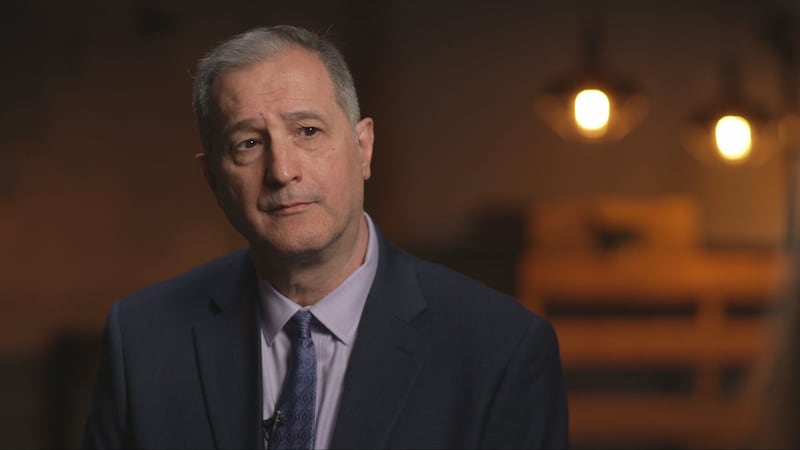
Botelho says SIBS investigators would prepare detailed reports outlining concerns and pass them to Transport Canada, which ultimately decides whether airport employees keep their restricted access cards.
Botelho says there was a “concerning” number of employees who maintained clearance despite serious concerns raised by investigators.
“I was still seeing people there who were targets from when I was investigating organized crime back in 2007, 2008, that still had passes and access to prohibited areas in critical infrastructure,” he said.
When asked directly whether Transport Canada sometimes allowed airport workers with organized crime connections to keep security clearance, Botelho answered bluntly.
“It happens,” he said.
“If you want to associate with organized crime, if you want to engage in illicit activity, if you are violent, you can do many other things without having that restricted airside card. If even one person associated to organized crime is enabling them behind the scenes in these prohibited areas, that’s one too many.”
Thousands flagged, but approved anyway
W5 has collected exclusive data from Transport Canada showing how widespread the issue may be.
Over a five-year period, more than 125,000 security clearances were approved across Canada’s four largest airports.
More than 7,500 of those employees were flagged for some type of security concern but still received clearance allowing access to restricted airport areas.
Transport Canada would not disclose how many of those flagged employees were considered high-risk or had alleged links to organized crime.
In a statement provided to W5, they did note that “adverse information is broad” and that “it refers to any information that domestic or foreign security partners provide to Transport Canada on any applicant. Not all adverse information necessarily leads to a refusal, suspension or cancellation (for instance, a driving-related offence from over 20 years ago).”
Botelho says even while working inside the system, he could not get answers about how many employees were categorized as the most serious threats but granted security clearance anyway.
“I asked, how many of those numbers were ... mission critical, in other words, enablers of organized crime. Nobody can give me a straight answer,” he said.
Botelho says insider corruption is essential to organized crime operations moving drugs through airports.
“Without it, it doesn’t exist,” he said.
Asked how serious the problem is at Canadian airports, Botelho does not hesitate.
“It’s huge,” he said.
Read parts one and two:

