TORONTO – Passengers arriving at major ports of entry in Canada will now be asked about their travel history and any symptoms that could be related to Ebola, as the virus continues to spread rapidly in parts of Africa.
At a news conference Friday, Canada’s chief public health officer described the situation as “serious and evolving,” while addressing questions about potential travel restrictions on countries where the virus is currently circulating.
“It’s important we look at how effective things like travel bans are,” said Dr. Joss Reimer, when asked if Canada would implement any travel bans. “We need to be looking at whether there is any evidence the outbreak is currently escaping the area it is concentrated.”
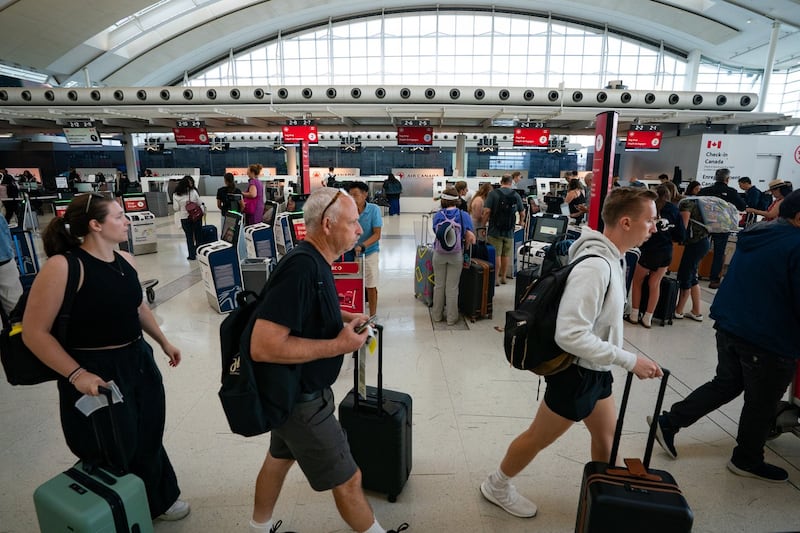
Reimer said that any travel ban would ultimately be a cabinet decision, with the Public Health Agency of Canada providing advice. She declined to say whether she would personally recommend restrictions.
In addition to enhanced screenings at ports of entry, travellers returning to Canada who have been to the affected regions are being asked to monitor their symptoms for at least 21 days. Testing will only be done on people with symptoms, as was the case with a person in Ontario who had recently returned from Ethiopia and had symptoms “consistent with a range of illnesses.”
Reimer says they were tested “out of an abundance of caution” and the tests came back negative.

“We are not testing all people who have travelled to areas that might have Ebola, rather testing is reserved for those people who have symptoms,” she said. “One of the helpful things about Ebola is it is transmitted only by people who are showing symptoms or by contaminated objects or samples ... so that is something we are able to reserve for people who are presenting symptoms.”
On Friday, the World Health Organization raised the public health risk from the current Ebola outbreak from “high” to “very high” in the Democratic Republic of Congo. WHO head Dr. Tedros Adhanom Ghebreyesus said the regional risk in Africa was “high,” but it remained “low” globally.
There is no proven vaccine for the rare species of Ebola at the centre of this outbreak, which kills about a third of those infected. There have so far been 177 suspected deaths and 750 suspected cases associated with this outbreak.
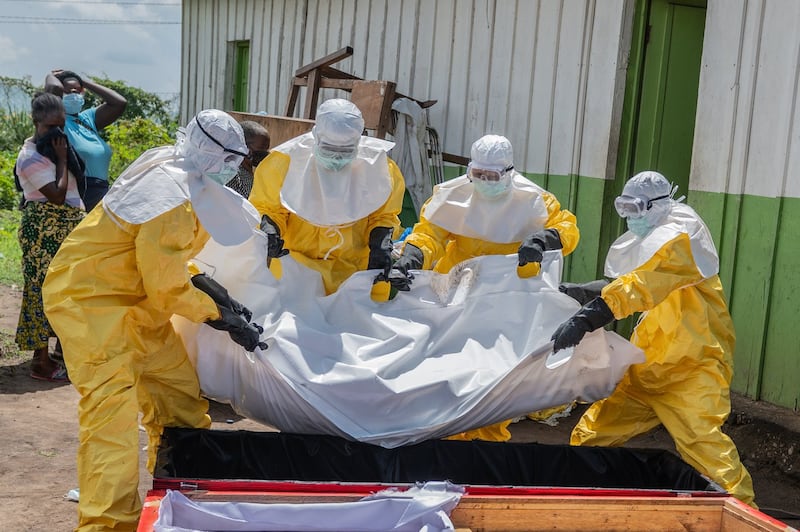
“The challenges in the early part of this outbreak is that it’s been difficult to detect and has probably been circulating for weeks to months,” said Dr. Rob Fowler, a former consultant for the World Health Organization. He adds this specific strain of Ebola is also harder to diagnose with typical testing machines, and as a result, the full-scale of the outbreak in central Africa is likely unknown.
Still, Fowler says the risk to Canadians remains low.
“Frankly, this is not a disease that is at all likely to be spreading within the Canadian context,” he said, noting Ebola is a virus that spreads very differently than other pathogens like measles and Sars-CoV-2, the virus that causes COVID-19. “I think for sure, there’s a heightened attention to the virus and it’s potential for spread through travel, but the risks to places outside endemic regions are very, very low.”
On Monday, American officials suspended entry into the United States for 30 days for non-U.S. passport holders who had recently traveled to the Democratic Republic of Congo, South Sudan or Uganda. The measure forced an Air France flight bound for Detroit to divert to Montreal after a passenger from the DRC had boarded the plane in error.
The passenger was assessed by a public health officer in Montreal, determined to have no symptoms and returned to their point of origin.

