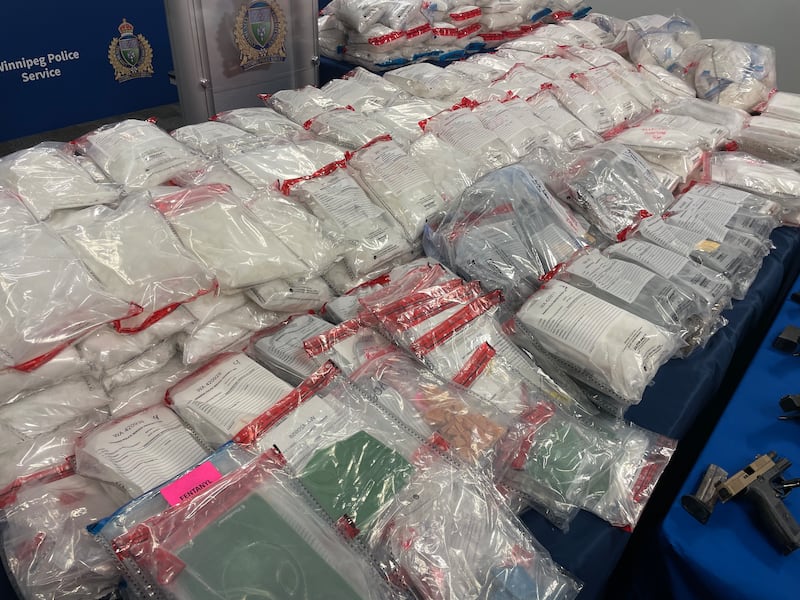
WINNIPEG – More than 500 kilograms of illicit drugs, including meth and cocaine, have been seized in what investigators are calling the largest drug bust in Manitoba’s history.
Dubbed “Project Puma,” the two-year, multi-province investigation led to the arrest of 33 people and the seizure of drugs with an estimated street value exceeding $37 million.
Among those arrested are suspects allegedly connected to international criminal organizations, raising alarms for law enforcement experts about the growing convergence of organized crime networks in Canada.
“Officers identified a core network of individuals with international connections to the upper echelons of organized crime groups in Canada, including the Hells Angels, Wolfpack Alliance and Mexican cartels,” said Winnipeg Police Insp. Josh Ewatski at a Winnipeg Police press conference Wednesday.
Police allege the network played a major role in distributing illicit drugs across Manitoba and other provinces.
For former RCMP senior operations officer Calvin Chrustie, the alleged collaboration between these groups signals a troubling shift in Canada’s organized crime landscape.
“The Hell’s Angels, the Wolfpack Alliance and the cartels. In my opinion, in my experience, those are three very concerning convergences,” said Chrustie, who is a senior parter at the Critical Risk Team. “It’s not just the one, it’s the convergence of the three.”
Chrustie said criminal networks moving drugs into Canada have expanded rapidly in recent years, particularly with the rise of fentanyl trafficking.
He added that the issue extends beyond public safety and policing concerns.
“It’s not all about the money,” he said. “There’s a heavy influence in there in terms of Iranian organized crime networks, historically, with those groups.”
“When I listened to the press release, they talked about northern communities, rural communities, and I presume Indigenous communities,” he said. “Those aren’t a pathway strictly for profit, those are the pathways to economic security interest.”
“So, you’re seeing more and more of the criminal networks following these economic security paths, not just the public safety (and) profit paths and I think that’s really concerning.”
Investigators working on Project Puma say the drugs were imported into Canada through commercial transport vehicles, before being stored mainly in Alberta and Ontario.
From there, police allege the drugs were moved into Manitoba and northwestern Ontario through mail and courier services, commercial transport trucks and private vehicles outfitted with hidden compartments.
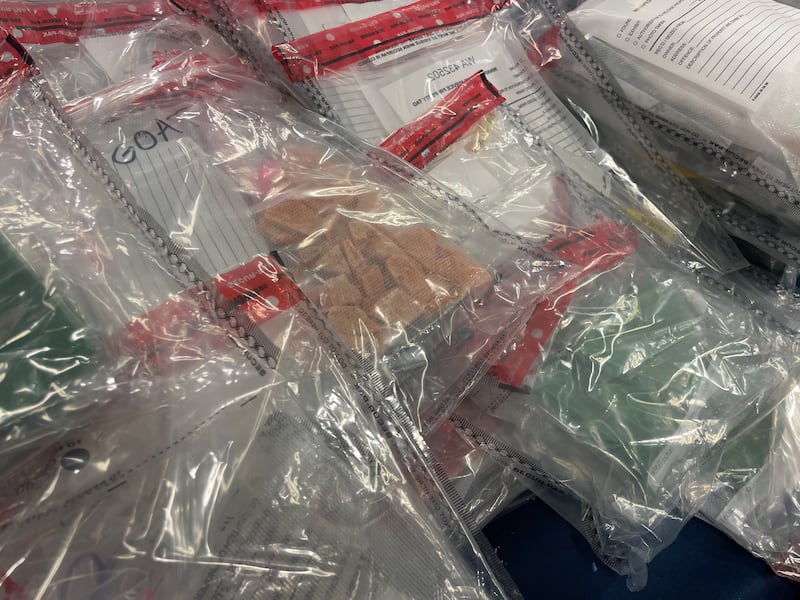
During their investigation, police seized 339 kilograms of methamphetamine, which had an estimated street value of $16.9 million, along with 175 kilograms of cocaine valued at approximately $17.5 million and 11.25 kilograms of fentanyl with an estimated street value of $2.7 million.
In addition to the drugs, 14 firearms, seven vehicles, approximately $825,000 in cash and more than 1.35 million illicit cigarettes were also seized.
‘Very well spread’
Former Ontario Provincial Police (OPP) commissioner and CTV News public safety analyst Chris Lewis said cartel influence is becoming increasingly widespread across Canada.
“Certainly, there’s been a number of drug busts and all sorts of intelligence information across many provinces, particularly B.C., because of the large ports and international shipping of drugs and precursor chemicals through ships,” he said.
“Winnipeg is no exception, and Toronto, I mean, that’s just been coming in through border points, by tractor trailers and on an aircraft – actually in the major airports. It’s a huge issue.”
Last year, the federal government designated seven transnational criminal organizations, including some based in Mexico, as terrorist entities.
Meanwhile, the U.S. administration has repeatedly claimed cartels are operating in Canada.
Retired RCMP officer Sherry Benson-Podolchuk said the seizure of drugs in Manitoba is a major win for law enforcement.
“When they realize they are losing $37 million worth of profit and their drugs, they are not going to want to work here again,” she said. “They will try some place else.”
But, Benson-Podolchuk warned the bust could trigger retaliation and increased violence.
“I’m concerned there will be further violence because people aren’t getting their drugs now and the price will go up, so there’ll be more violence,” she said.
“You don’t think there’s going to be some sort of payback for Canadians who are traveling to Mexico or other places where they have their sticky little fingers? There will definitely be some payback and as a society, we need to be very much aware of that.”

