Anxiety and mental health diagnoses continue to rise in children and youth and experts are calling it a global crisis.
“One in four, or one in five – approximately between 20 to 25 percent of young people – are diagnosed with a mental health condition at any given time. But with mental health a lot of times it’s not curing that, it’s treating it as a lifelong challenge,” says Michael Cooper, Mental Health Research Canada Data and Partnerships vice president.
Mental wellness expert Julie Cass says she has noticed a few things over the past ten years that are impacting the mental health of young people.
“The first thing is as parents we are more stressed out. Our home environments are more stressed out; kids absorb that energy. In fact, they absorb energy more than they absorb words, so they feel that,” says Cass.
Cass explains there is a lot more being thrown at children these days, which means adults need to do a lot more to help them regulate.
Cooper says it’s a global issue, not just one Canada is facing.
“We published a report in 2024 called the Generation At Risk with Bell Lets Talk with a number of the mental health organizations and frankly there are 1.25 million youth in this country aged 12 to 24, I believe was the age we looked at, that are struggling with their mental health and about 60 percent of them aren’t getting the help they need,” adds Cooper.
A study out of Harvard University, in collaboration with Boston University and the Boston Medical Center, found an alarming trend with kids and mental health struggles. The study was conducted between 2014 and 2023 and involved two million children and youth.
“By 2023, we saw 15 percent or one in seven primary care visits included a mental health need and I think most notably we saw a really stark increase in anxiety related visits – nearly a 300 per cent increase over 10 years and those increases were especially concentrated in teens, especially female teens,” says Megan Cole Brahim, associate professor and division director at Harvard Medical School Department of Population Medicine.
Researcher Cole Brahim says there are a number of contributing factors.
“Exposure to social media, constant access to screens and digital technology, heightened academic pressures, competitive pressures, as well as a lot of disruptions we saw during the pandemic. At the same time, we do know that there is an increase in screening at the same time which is a good thing,” says Brahim.
Cass adds research shows there is a direct correlation between increased screen time and anxiety levels.
“I find it very interesting that anxiety is on the rise and we have a generation of children that are more connected through technology and less connected emotionally and I don’t think we can ignore that,” says Cass.
She says anxiety can present itself physically, emotionally and mentally – anything from panic attacks to lack of motivation.
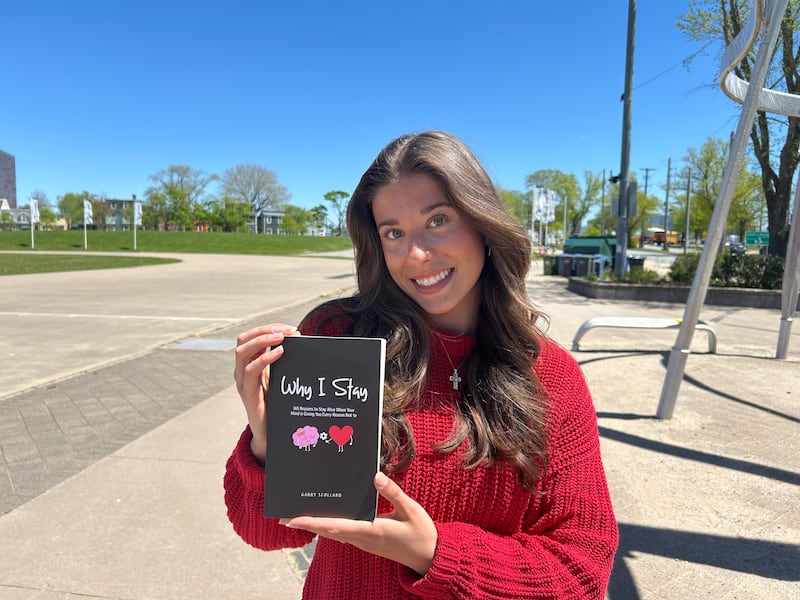
Gabby Scollard, 23, knows it all too well. She has struggled with her mental health for most of her childhood and it was the hardest during her high school years.
“I was caught with depression, anxiety, all of it and I started writing down reasons to stay alive in my bedside journal just out of desperation and once I recovered, I thought ‘Wow, maybe this could help someone else that’s really struggling,’” says Scollard.
During her recovery, she wrote her first book ‘Why I stay, 365 reasons to stay alive when your mind is giving you every reason not to.’
“When I was younger, I couldn’t regulate myself, I didn’t have the tools, and recently in the last year or two, as a 22-year-old, I started going to therapy and I really found my faith and leaned into that. I think a lot of our problems can come from zooming in on our own lives so that we don’t see the bigger picture, making room for something bigger than us,” says Scollard.
Anxiety is a topic many people can relate to, and these experts say there are also many things you can do to help yourself.
“I think we have to go back to the roots, back to the basics of human connection, emotional connection and getting back into our bodies and getting outside and time for creative play,” says Cass.
Brahim says over time primary care providers have also become equipped to screen and diagnose these conditions.
“The real kind of important take away for us is the increasing need to really think about how health-care systems can better address the growing needs that we are seeing in the pediatric mental health space. I think a lot of that really starts with better equipping and prepping pediatric primary care providers such that they have the staff and the tools and the resources they need to screen diagnosis and really treat children comprehensively,” says Brahim.
Scollard is currently working on her third book that focuses on anxiety. She says there are days she still struggles and will go back to read her own words from her book. She encourages young people to get help when you need it.
“Don’t wait until your drowning to seek help. I think that was my downfall. If you notice the signs and symptoms or even those around you, it can be scary to get help but taking that step really releases the hold that it can have on you,” adds Scollard.
The studies only capture the number of young people that have come forward to seek help, so these experts explain there are still others struggling in silence. They encourage people to reach out to professionals if you are struggling.

