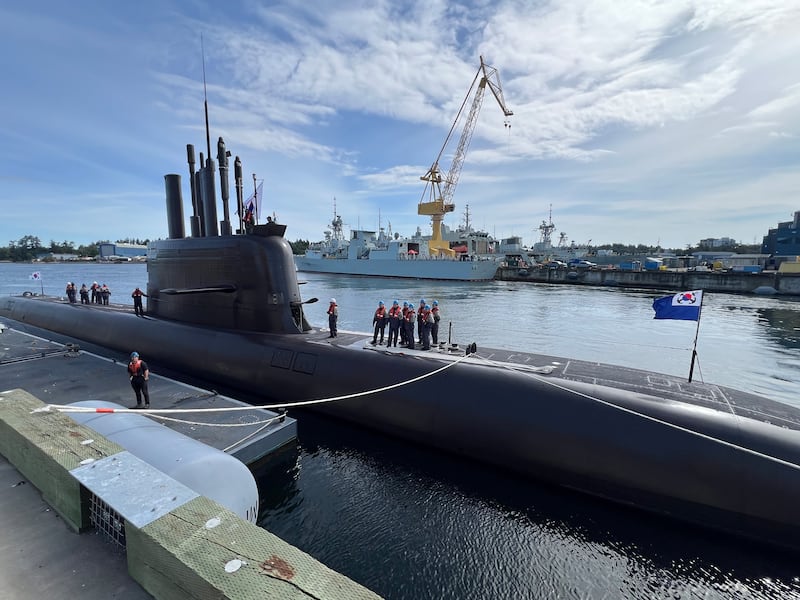
VICTORIA, B.C. – Promising to usher in a new era of middle power might, the Republic of Korea Navy arrived in Canadian coastal waters this weekend.
The crew of roughly 40 South Korean submariners arrived on board the South Korean-made, KSS-III submarine at CFB Esquimalt on Monday. They opened the hatch of the diesel-electric submarine and gave CTV National News a tour inside.
A bid is in place for Canada to purchase 12 KSS-III submarines from South Korean ship building giant Hanwah.
The only other finalist, vying to deliver Canada’s next generation submarine, is from a joint German-Norwegian bid by TKMS.
Ottawa will announce the winner of the contract this summer, which could come with a price tag of $25 billion.
During the tour inside the South Korean-made submarine, now stationed at CFB Esquimalt, no photos or videos were allowed to be taken.
Citing security concerns, the South Korean navy asked journalists to hand over their phones before entering the tour of the modern, war-ready submarine.
After climbing down the ladder, CTV National News was greeted by the submarine’s commanding executive officer who showed us the captain’s quarters which is stationed near the sub’s central control room, the main hub for both its weapons deployment and navigations.
The captain’s cabin was modest, with a small bed, lockers for storage and a tight single washroom. Officer’s quarters had three bunks stacked, one on top of the other, with one small desk and additional space for limited storage.
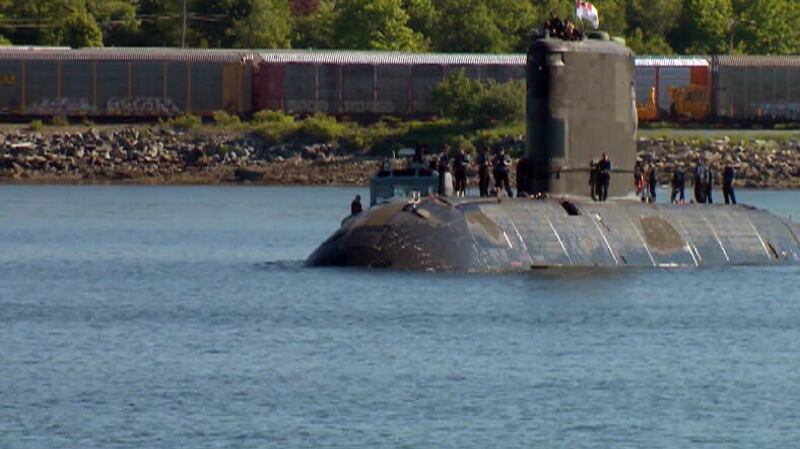
If you’re the type who gets claustrophobic, jumping on board a submarine might not be for you, though the two Canadian submariners who travelled with the South Korean Navy during part of their journey to Canada remarked that the KSS-III is spacious for a submarine. They also noted how clean it was and that it was also void of the rust found frequently inside Canada’s aging Victoria-class submarines.
The South Korean KSS-III is 89 metres in length, weighs 3,600 tons, can carry up to 50 personnel and stay submerged for up to three weeks. It also has the capacity to deploy both anti-ship and land-attack cruise missiles.
When asked to compare the KSS-III with Canada’s Victoria-class Submarines, 2nd Petty Officer Jake Dixon told a cluster of media that “it’s kind of like buying a brand-new Tesla but you’re coming out of a ‘99 Honda Civic – the Honda Civic works well, but sometimes you’ve got to know how to start it in the morning.”
There are critics who will say the petty officer was being polite with that statement. Canada’s four Victoria Class subs were first built in the ‘80s, they were purchased used from the United Kingdom in the ‘90s and only one of the submarines is currently operational.
The Royal Canadian Navy’s command team of Maritime Forces Pacific are quick to point out that Canada has the most coastline in the world to protect, and three oceans to navigate, with only one operational, aging sub.
“I do not have enough (submarines) to patrol and protect Canada like we should, which is why we’re investing,” said Rear-Adm. David Patchell of the Canadian Maritime Forces.
Canada has operated submarines for more than 100 years, though the high-ranking naval officer tells CTV National News that, in his opinion, Canada has never been a submarine nation. That will change, he says, with the purchase of 12 modern submarines.
“One submarine is not enough. Twelve is a good start to have a submarine at sea in all three of Canada’s oceans, 365 days a year,” added Patchell.
Currently, Canada’s navy has approximately 200 submariners. They will need at least 1,000 strong to operate a fleet of 12 submarines.
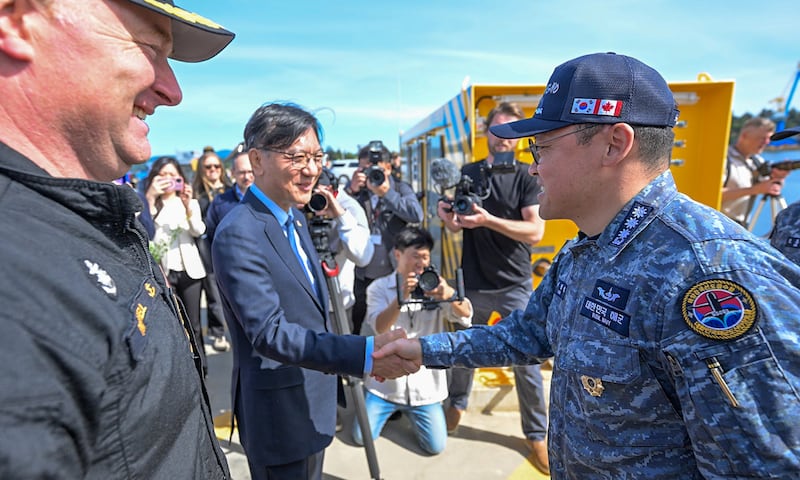
Speaking one-on-one with CTV National News, the Republic of Korea’s ambassador to Canada says his country is working hard to build its longstanding relationship with Canada. It’s a relationship that dates back to Canada’s contribution during the Korean War.
“This is all about democracy and freedom” said Ambassador Lim Ki-Mo, who went on to tell CTV National News, “middle powers need to work together, and Korea stands ready to work together with Canada.”
In increasingly contested waters across the Indo-Pacific, as well as the Arctic Ocean, the Canadian Government appears focused on forging friendships as it rekindles historic military alliances.
With a decision expected as early as this June, whoever Ottawa chooses to deliver Canada’s next generation submarine, will be able to play an integral role in shaping the country’s navy for decades to come.