As severe weather season continues, researchers are sounding an alarm about the proliferation of AI-generated images of tornadoes, warning that such fakes can cause significant confusion and harm during genuine extreme weather events.
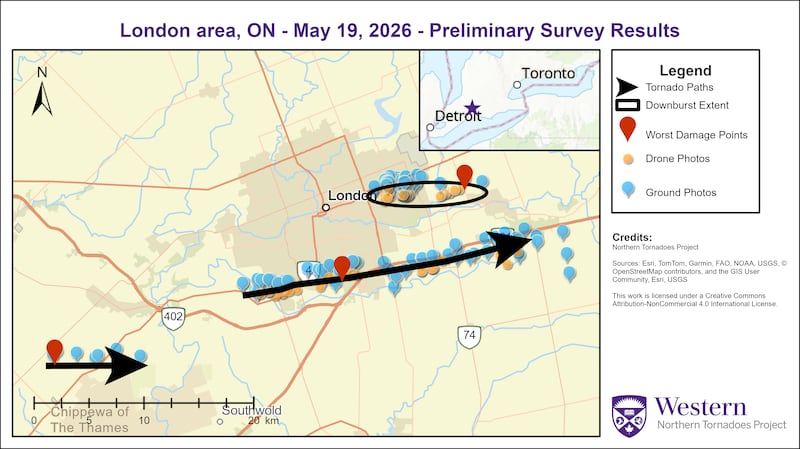
The caution comes as the Northern Tornadoes Project (NTP), a Western University-based storm tracking and research team, has confirmed two tornadoes and a downburst impacted the London region on May 19.
PHOTO GALLERY: High-speed storm sweeps through southern Ontario
Dave Sills, project director for the NTP, expressed deep concern over the circulation of non-existent tornado images during and after the May 19 storms.
“We had four different images of tornadoes circulating during the event and after the event,” Sills said. “And it just causes all kinds of problems.”
Sills highlighted the critical implications for official weather warnings.
“For Environment Canada, who’s trying to issue tornado warnings in real time, if they see something like that and issue a tornado warning based on a false image of a tornado, that’s a big problem,” he explained.
He fears those posting the AI-generated visuals may not fully grasp the complications they create, including potentially diverting emergency resources and impacting public trust.
Sills likened the act to “basically the equivalent of yelling bomb in an airport, right? You can’t do this.”
Adding to the concern are the psychological impacts on individuals who experience extreme anxiety during storms. The NTP collaborates with a social scientist who studies these effects, noting that some people exhibit “something approaching PTSD after these events. Every time there’s a storm, afterwards, their anxiety goes through the roof,” adding that fake images can exacerbate these fears.
London police acknowledged the seriousness of disseminating false information during emergencies.
“Creating or sharing false information during emergencies, including AI-generated images, can contribute to confusion, impact public trust, and potentially divert emergency resources,” a spokesperson stated. “While each situation is unique, there may be circumstances where these types of actions could be subject to review under existing criminal laws, police said.
Amidst the warnings about digital fakes, the NTP has confirmed the reality of the storms that did occur. Following multiple damage surveys, the project has verified two tornadoes and a downburst touched down in the London area on May 19.
The first confirmed event was an EF-0 tornado that touched down near Melbourne, southwest of London, around 5:30 p.m. With estimated wind speeds of 115 km/h, it tracked west for approximately 7.87 kilometers, causing damage to trees and a farm structure. No injuries were reported from this brief event.
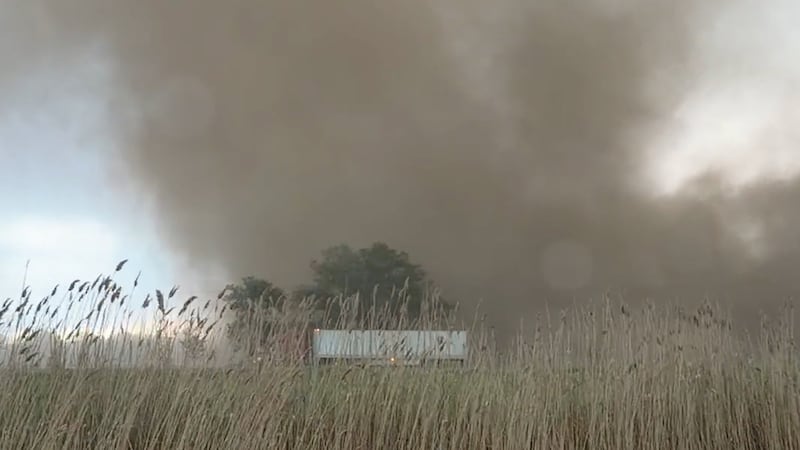
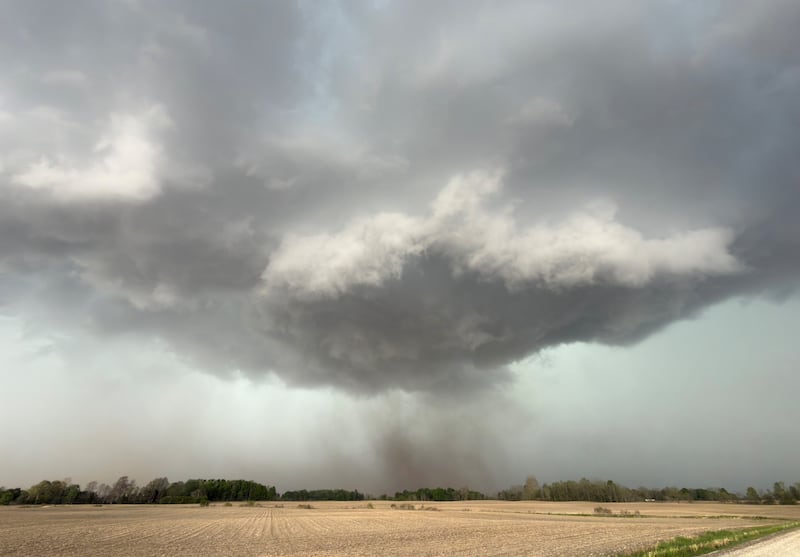
Later, around 5:45 p.m., a more significant EF-1 tornado touched down, tracking for 26.2 kilometers from the Lambeth area across south London towards Mossley. This tornado, with estimated winds of 145 km/h, caused damage to power poles, houses, several farm buildings, and a toppled transport truck. No injuries were reported.
Simultaneously with the second tornado, an EF-1 downburst occurred. Starting around 5:55 p.m., this intense burst of wind caused damage to power poles, trees, houses and an apartment building as it moved eastward through London and into the Dorchester area. The downburst was estimated to have winds of 145 km/h and covered an area approximately 9.9 kilometers long and up to 1.1 kilometers wide.
Sills urged the public to exercise caution and verify information before sharing, particularly during stressful weather events. The NTP continues to investigate and provide official confirmations of storm damage, emphasizing the importance of relying on verified sources to avoid misinformation.

