


OTTAWA - Former environment and climate change minister Steven Guilbeault will resign as an MP, CTV News has learned.
Guilbeault confirmed to CTV News he will tell Liberal caucus about his decision on Wednesday and will provide no further public comment until then.
Confirmation of Guilbeault’s resignation comes after CTV News first reported Tuesday that earlier in the week, Guilbeault was considering resigning from the Liberal caucus over his climate policy concerns, according to four sources in the federal government.
The sources pointed to Guilbeault’s disagreement with the federal government’s rollback of Trudeau-era climate policies and the most recent iteration of the memorandum of understanding (MOU) with Alberta aimed at building a new pipeline.
On his way into a cabinet meeting Tuesday morning, Prime Minister Mark Carney didn’t reply when asked by the Globe and Mail’s Marieke Walsh if he expected Guilbeault to resign.
CTV News posed the same question to Industry Minister Melanie Joly earlier Tuesday, who said: “I’m a good friend of Steven’s, I worked a lot to bring him into politics, and he will always be a good friend.”
“But we’re also dealing with an energy crisis right now, which is affecting the price of gas across the country,” Joly also said. “Things are happening thousands of kilometres from where we are. So, in these circumstances we need to be able to protect our energy sovereignty and be able to support our allies.”
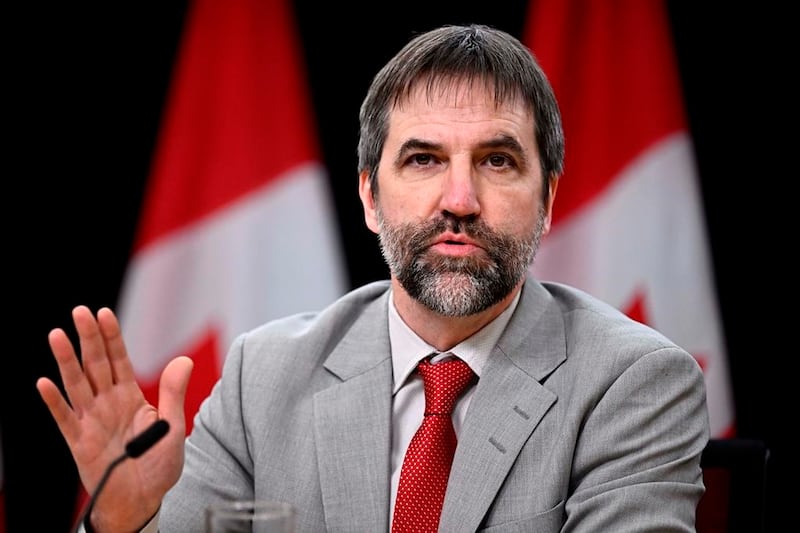
Climate policy rollbacks
Guilbeault is not alone in his concern about climate policy rollbacks.
More than a dozen Liberal MPs wrote to the prime minister in April to express worry over changes to methane and clean electricity regulations in Alberta, moving the $130-per-tonne effective price on carbon target beyond 2030, as well as any possible public money going toward a new pipeline.
Sources close to Guilbeault say he was disheartened that the changes agreed upon in the MOU could put the federal government’s 2050 climate targets out of reach. According to analysis from the Canadian Climate Institute, the MOU and corresponding rollback of the oil and gas emissions cap, and aforementioned regulations, risk those 2050 targets.
Speculation over Guilbeault’s political future ramped up after Carney and Alberta Premier Danielle Smith agreed earlier this month to elements of an energy deal that could see construction of an oil pipeline begin as early as the fall 2027 if specific conditions are met.
In November, Guilbeault resigned from Carney’s cabinet just hours after Carney and Smith signed the initial MOU. He had been serving as minister of Canadian identity and culture at the time.
In a letter posted to social media announcing his resignation from cabinet last fall, Guilbeault stated that while he understands the prime minster’s efforts in the face of “profound disruption,” he remains “one of those for whom environmental issues must remain front and centre.”
Then, in an interview with CTV’s Power Play with Vassy Kapelos in, Guilbeault said the energy deal makes it “impossible” for the federal government to reach its 2030 emissions targets.
Guilbeault previously served as environment and climate change minister from 2021 to 2025 under former prime minister Justin Trudeau. Before becoming an MP in the 2019 federal election, Guilbeault was a longtime environmental activist who worked for Greenpeace for a decade and helped found Equiterre, a major environmental advocacy group in Quebec.
The previous Liberal government under former prime minister Justin Trudeau committed to reducing greenhouse gas emissions by 40 to 45 per cent below 2005 levels by 2030, 45 to 50 per cent by 2035, and achieve net-zero emissions by 2050, but the Carney government has been far less explicit about those commitments.
Speaking to CTV’s Power Play on Wednesday, Liberal caucus chair James Maloney said he had not yet spoken to Guilbeault about his resignation, but defended Carney’s environmental record.
“Prime Minister Carney’s climate credentials, I think, are unimpeachable,” Maloney said, later insisting that there is “no dissent” within the Liberal caucus.
“We have a big caucus with lots of different views. We always have. We have wide-ranging discussions and wide-ranging views, but at the end of the day, we come out united,” Maloney added.
Environment and Climate Change Minister Julie Dabrusin, meanwhile, said Tuesday on her way to cabinet that the Liberal caucus “cares deeply about the environment, fighting climate change, and also about how we’re going to build our country in this moment.”
Asked how she is dealing with any dissent among caucus members over environmental policies, Dabrusin said there are “a range of opinions,” but that it “makes (them) stronger.”
A February 2026 report from the Canadian Climate institute concluded Canada is on track to be roughly just halfway to the 2030 emissions reductions targets.
Earlier this month, Carney said Canadians can expect an update on the Liberal government’s climate plans.
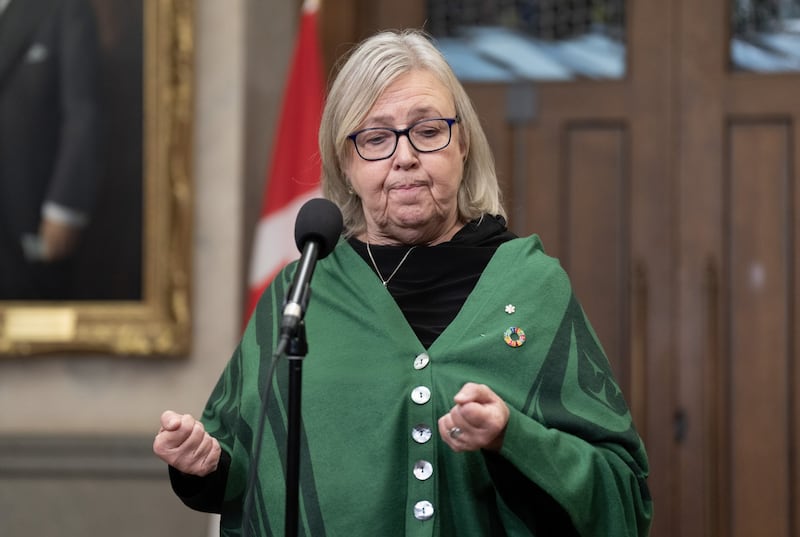
Green Party leader calls resignation ‘heartbreaking’
Green Party Leader Elizabeth May called Guilbeault’s decision to resign “heartbreaking.”
“It’s a blow to the Parliament itself, to our ability as Canadian MPs to do our work, and obviously he’s been a very important part of Canadian climate policy,” May said in an interview with CTV’s Power Play on Tuesday.
May also confirmed she spoke to Guilbeault earlier Tuesday, saying “a few tears were shed.”
Last fall, May voted to support the Carney government’s federal budget after Guilbeault assured her that tax credits for enhanced oil recovery would not be in the budget or added to it afterwards.
Now, May says Carney is “not the person I thought he was going to be.”
“I thought he was going to be a strong prime minister for climate. I bought into that. I was hopeful, and I’m absolutely feeling devastated,” May added.
What will resignation mean for Liberal majority?
The Liberal government currently holds a majority with 174 seats.
But with Guilbeault’s pending departure, along with the upcoming departures of Nathaniel Erskine-Smith and Jonathan Wilkinson, that majority could be impacted by the results of future byelections.
Erskine-Smith said he is committed to vacating his seat after running for Ontario’s Liberal leadership, while Wilkinson has been appointed to be Canada’s new ambassador to the European Union.
With files from CTV News’ senior political correspondent Mike Le Couteur

