OTTAWA – Canada’s privacy commissioner and key representatives from major tech companies are adding their voices to calls for significant amendments to the Liberals’ contentious bill, which proposes a revised “lawful access” regime that’s meant to make it easier for law enforcement to access digital evidence.
Testifying on Tuesday, representatives from two of Canadians’ most-used technology companies – Google and Apple – and other experts sounded alarms about implications for Canadians’ use of encryption services, overbroad new ministerial powers and the security risk of retaining metadata.
Bill C-22, titled the “Lawful Access Act, 2026,” seeks to force electronic service providers to update their systems to assist law enforcement and Canada’s national intelligence agency CSIS in accessing online evidence as part of investigations.
The federal Liberals have asserted, with the support of police and national security agencies, that the system needs improvements in order to keep up with increasingly sophisticated criminal use of technology.
Though, critics have expressed reservations about potential cybersecurity, data collection, civil liberty and global trade implications as the bill has moved through Parliament for a second time.
Speaking before the House Public Safety and National Security Committee, Privacy Commissioner Philippe Dufresne told MPs on Tuesday that while the current version of the bill is improved from an initial attempt that the government walked back, amendments are still needed as the Liberals did not act on all his previous feedback.

As it is currently drafted, Bill C-22 seeks to widen the scope of what law enforcement can obtain from electronic service providers and make the process for accessing the requested material easier, so long as a warrant has been granted.
To assist investigations, the legislation seeks to require internet and phone companies to confirm to law enforcement if they provide service to a particular suspected person or account.
From there, if police can demonstrate reasonable suspicion that a crime has, or will be committed, police could seek a production order to obtain subscriber information, such as a name, address and phone number. Dufresne is calling for the definition of subscriber information to be narrowed “to avoid capturing information that could attract a heightened expectation of privacy.”
“It’s important that this bill balance the need for police forces to have the tools they need, and to protect Canadian privacy, and we can do that. It’s not a zero-sum game between privacy and security,” he said.
Echoing this, Apple Inc. senior director of user privacy and child safety Erik Neuenchwander told MPs that while the tech giant and maker of myriad devices Canadians use every day supports law enforcement efforts to keep them safe, they are committed to encryption technology “for the same reason, to keep Canadians safe.”
“Our users trust Apple with their most sensitive information, they expect and deserve the strongest protections. That is why we are so concerned about the threat to encryption posed by C-22. As drafted, this bill allows the government of Canada to force companies to break encryption by inserting back doors into their products, something Apple will never do.”
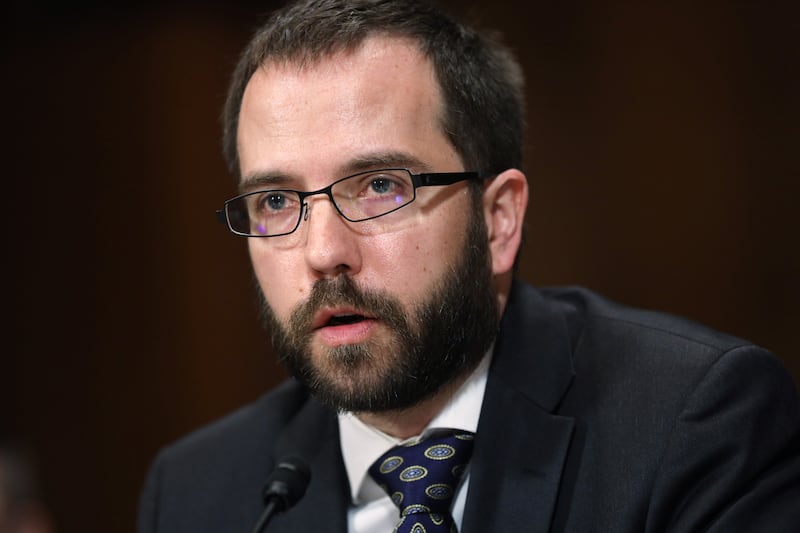
Neuenchwander urged MPs to make amendments to “explicitly prohibit any requirement that would weaken, bypass or undermine end-to-end encryption.”
Bill C-22 also proposes to allow Canadian police to seek information from foreign electronic service providers, such as major social media companies and OpenAI. Though, the legislation does not authorize the search or seizure of content information, such as browsing or social media history.
Speaking on behalf of Google, director of government affairs and public policy Jeanette Patell said their business is similarly built on users’ trust and, as a result, the technology giant “has significant concerns with several elements” of the legislation.
“It goes well beyond lawful access regimes in other G7 democracies and risks creating new surveillance infrastructure that would introduce serious security vulnerabilities, undermine user trust, and hinder our ability to innovate and offer pro-privacy technologies,” she said.
“In today’s rapidly evolving threat environment, we believe it is critical to find ways to support law enforcement’s important work without engineering vulnerabilities into products and services that weaken security for everyone.”
The bill also seeks to grant the public safety minister new powers to impose monetary penalties when electronic service providers fail to comply and compel them to develop and maintain specific capabilities that would facilitate the requirements of the new system.
These new powers also drew strong criticism from Google on Tuesday, with Pattell calling these measures “alarming, but also unnecessary,” as they would effectively grant the minister “powers to issue secret orders” that would also prohibit them from disclosing these orders.
“As written, this could give the government the power to secretly force companies to redesign products to include invasive surveillance capabilities, and to do so without sufficient safeguards or oversight,” she said.
The bill does not prescribe what kinds of companies would be considered electronic service providers, as those specifications would come through regulations, though it’s likely that big tech and telecommunication companies would be included.
As part of a line of questioning about this element of the bill and the complexity of the subject matter broadly, Liberal MP and committee member Marcus Powlowski said Tuesday that as a “boomer,” he is “still trying to figure out this bill.”
Opposition parties pushing for amendments
The concerns Tuesday’s witnesses expressed align with those raised by both the Conservatives and New Democrats, which have signalled an intent to propose amendments to the Liberal bill, along these lines and beyond.
“We need to get the best bill possible,” said Conservative MP and public safety critic Frank Caputo.
Accusing the government of leveraging their new majority standing to try to “ram” Bill C-22 through committee, Caputo said opposition MPs need clarity that so far is lacking from the Liberals, and has been difficult to ascertain from witnesses, given the limited amount of time they’ve been given to question experts.
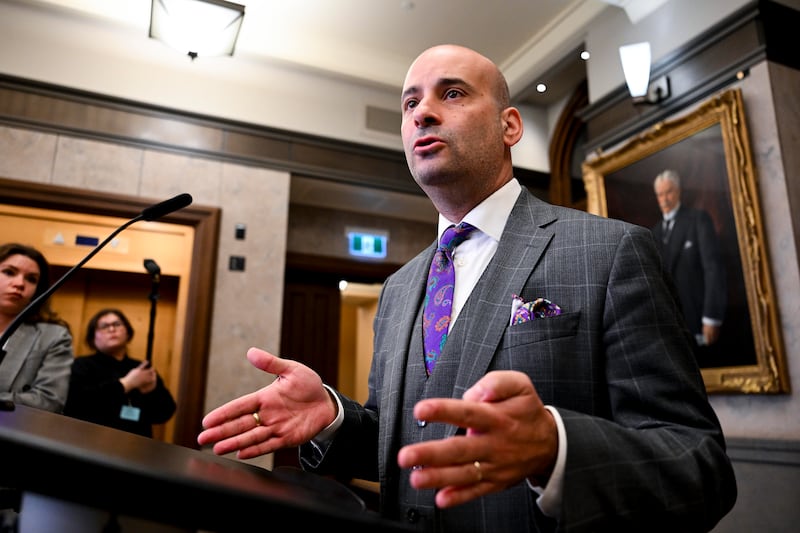
“The government is using these cute phrases like ‘encryption neutral.’ Canadians want to know that their end-to-end encryption won’t be targeted,” he said. “They need to know what sorts of metadata are going to be kept. Why are they going to be kept? For how long? And what types?”
NDP MP Jenny Kwan has also submitted what she described as “a whole slew of amendments” she’s hoping are considered, although her party has no members on the committee.
“While there’s been some improvements to [the bill] they also brought in a new component on metadata… which is deeply concerning,” Kwan said Tuesday, also voicing hesitation about the implications for allowing governments access to encryption services, and what vulnerabilities that could open for malicious actors.
“I understand that we need to modernize the laws in terms of lawful access in this digital age… however, we also need to make sure that you strike the right balance,” she said.

Kwan said if the changes the NDP want to see aren’t made, the government won’t have found the right balance between empowering law enforcement and respecting civil liberties.
Already Liberals’ second attempt
Public Safety Minister Gary Anandasangaree tabled this revised version of the “lawful access” legislation in March, telling reporters at the time that he felt the bill balances the needs of law enforcement and privacy rights.
Bill C-22 is the Liberals’ second attempt at passing legislative changes on this issue in this Parliament, after the first version faced major pushback from civil liberty groups, over concerns the initially proposed search powers were overly broad and intrusive.
When he presented the reworked bill – backed by police forces who have been pushing for an improved regime virtually their entire policing careers – the minister said Canada is falling behind its Five Eyes intelligence allies on this front and called on the other parties to cooperate in helping pass the legislation “expeditiously.”
MPs agreed to pass the bill from second reading to committee stage on April 20, and the House Public Safety and National Security Committee began hearing from witnesses on Bill C-22 in early May.
Over a pair of marathon hearings during their last sitting week parliamentarians heard from numerous witnesses, including senior RCMP and CSIS officials, as well as Meta and the Canadian Centre for Child Protection. The committee is expected to wrap up its study this week and begin the clause-by-clause process in which amendments can be moved, and if supported by the majority, approved.
As committee nears the end of its study on the bill, MPs heard from a final barrage of witnesses Tuesday afternoon, with more testifying into the evening.
Among them is OPP Commissioner Thomas Carrique, who will be speaking on the behalf of the Canadian Association of Chiefs of Police, an organization that has already advocated strongly in favour of an expeditious passage of Bill C-22.
What amendments may be moved, and ultimately approved, remains to be seen, but MPs have a narrowing window if the Liberals want to see this legislation passed before the House rises for the summer in three weeks.

