Nearly half of Canadians say they have used artificial intelligence chatbots for medical advice over the past year, but most still want human doctors to remain responsible for diagnosis, prescriptions and care decisions, according to a new survey.
The poll by Liaison Strategies found 46 per cent of Canadians had turned to AI for health advice in the last 12 months. At the same time, Canadians were cautious about handing over too much authority to the technology.
The survey found 68 per cent would rather wait two weeks to see a human doctor than receive an immediate diagnosis from AI, while only 13 per cent said they would be comfortable with AI diagnosing them and prescribing medication without a doctor involved.
Nearly half of respondents, 47 per cent, rated their access to a family doctor or clinic as poor.
“We know that half of folks have turned to AI, and a lot of it is because of reduced access to primary care,” Bolu Ogunyemi, president-elect of the Canadian Medical Association, said in an interview with CTV News Channel Wednesday. “Unfortunately, especially in rural and remote areas, access to primary care is difficult.”
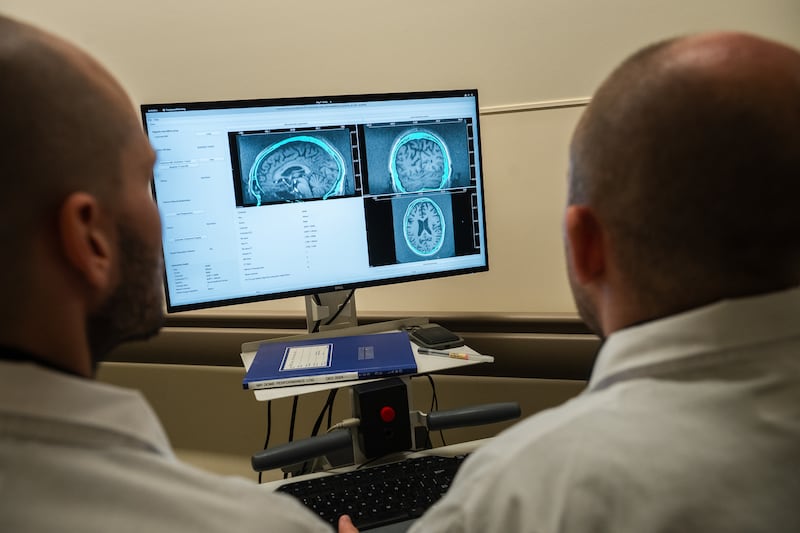
The survey suggests Canadians may be more open to AI serving as a support tool rather than replacing doctors entirely.
Forty-two per cent said they were comfortable with AI scanning X-rays or skin for cancer before a doctor reviews the results. Thirty-one per cent said they would be comfortable with an AI note-taker during a doctor’s appointment.
The poll also found 39 per cent supported sharing anonymous health records with researchers to improve AI systems.
Ogunyemi, who works as a medical dermatologist, said he already sees patients using AI tools to assess skin lesions before seeking medical care.
“With AI, you can actually take a picture and upload it, as well,” he said. “So, I see a lot of folks that are, you know, really, really worried or really concerned.”

He said AI can sometimes incorrectly alarm patients, while in other cases it can falsely reassure them that a serious condition is harmless.
“So, I recommend folks proceed with caution,” Ogunyemi said, adding that AI cannot replace the relationship between doctors and patients.
“There’s no substitute for seeing a doctor, and specifically, a doctor that knows you,” he said. “A lot of medicine is not just about the science, but it’s about having that relationship with patients … that can’t be replicated.”
Still, Ogunyemi said AI has the potential to improve parts of the health-care system if used responsibly.
“I agree with the respondents in the survey (who) think that this can be an aid rather than a replacement,” he said. “There’s lots of ways it can help both in day-to-day interaction and in planning health-care human resources more broadly, but it’s more an assistant rather than a replacement.”
Liaison surveyed a random sample of n=1,526 Canadian adults from May 4 to 16, 2026, using Interactive Voice Recording (IVR) technology. To ensure a representative sample, participants were reached through random digit dialling across both landline and cellular phone networks. The sample was weighted to ensure a representative national sample, with a dedicated Quebec oversample included. For the total sample, the margin of error is +/-2.51 percentage points, 19 times out of 20.

