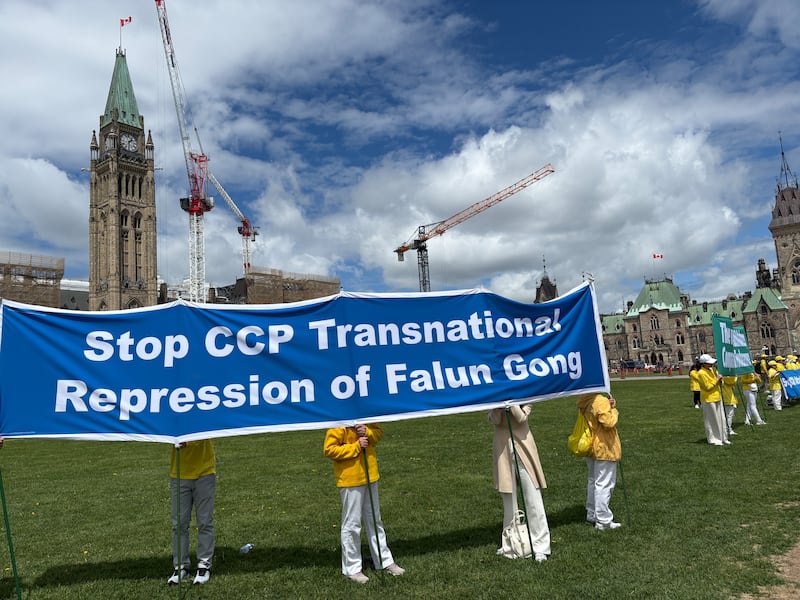
OTTAWA -- Human rights advocates plan to protest on Parliament Hill when China’s top diplomat Wang Yi arrives to meet his Canadian counterpart.
The demonstrators, many of whom are members of the Chinese diaspora, are urging Foreign Affairs Minister Anita Anand to bring their concerns about transnational repression to Wang and to tear up a police co-operation agreement between the RCMP and China’s Ministry of Public Security. (MPS)
One of the protesters, Lizhe He, a Canadian citizen, is also pleading with Anand to advocate for the release of his brother who was arrested in July 2023.
“My brother is suffering in a Chinese prison for practising Falun Gong. He was abducted from our family home by Communist Chinese police.”
The Toronto man said his brother is serving a seven-year prison sentence in China “simply for having information on his phone” about the spiritual discipline that combines meditation and moral teachings.
“We know nothing of his safety and health. That silence is a form of torture,” says He.
He wants Anand to demand the release of his brother and all other imprisoned Falun Gong practitioners.
“Send Beijing a clear message – transnational repression will not be tolerated in Canada,” He said during a Thursday news conference on Parliament Hill.
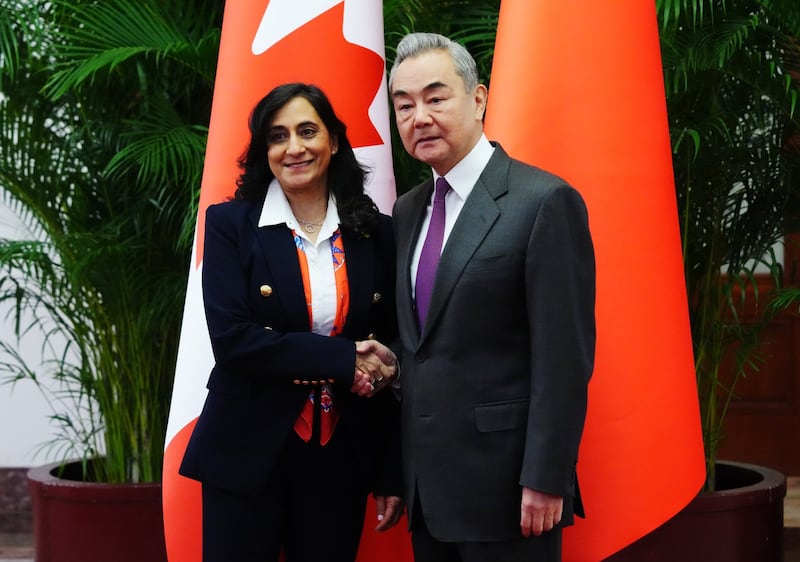
Human rights scolding
Wang will meet with Anand on Friday morning, afterward he will speak with Prime Minister Mark Carney. Wang and Anand are expected to discuss the updated Canada-China partnership, trade, investment and global security, according to a statement released by Global Affairs.
During Wang’s last visit in 2016, he berated a reporter who asked him a question about China’s human rights record.
This time, Wang is not expected to take questions from journalists.
Wang’s three-day visit comes as pressure mounts on the Carney government to release the co-operation agreement between the RCMP and the MPS. The memorandum of understanding (MOU) was signed by the prime minister and Chinese President Xi Jinping in January during Carney’s state visit to Beijing in January. Its details have not been disclosed.
The document Carney approved is a renewal of an agreement that his predecessor Justin Trudeau first signed a decade ago. While it has Liberal signatures, the drafting of the memorandum began under Conservative Prime Minister Stephen Harper.
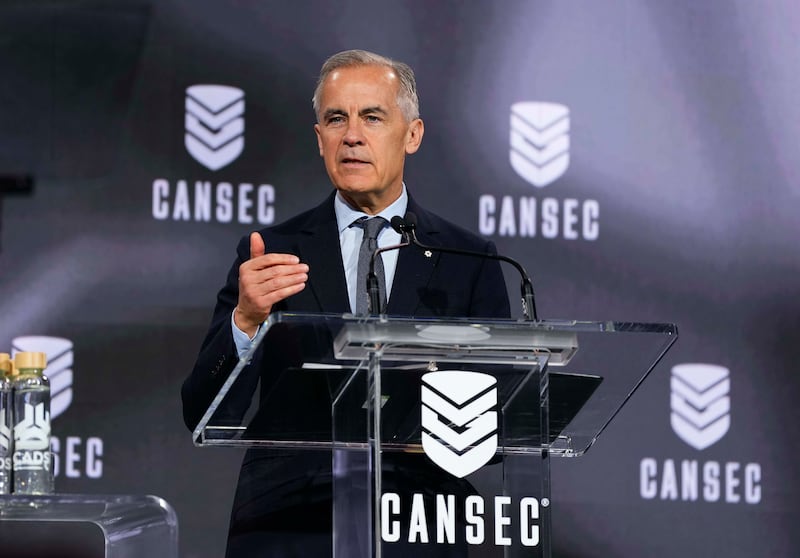
Carney refusal
CTV News asked Carney why he will not show Canadians the agreement.
The prime minister said that his government “doesn’t make a habit of releasing security documents with other governments for reasons of operational security.”
“That is standard practice for this government and previous governments as well, and I don’t see a reason to change that,” Carney said during a media availability at a defence and security trade show.
The agreement covers the terms under which the two national police forces will work together on investigations and what information they may share.
Toronto human rights lawyer Joel Etienne says the security agreement with China could allow Chinese police to act in a manner that violates the constitution.
“Canadians have the right to full disclosure from Canadian police when you’re dealing with Canadian courts. But in so far as the MPS is involved, we don’t have the right to know what they’re doing to us in this country,” Etienne said.
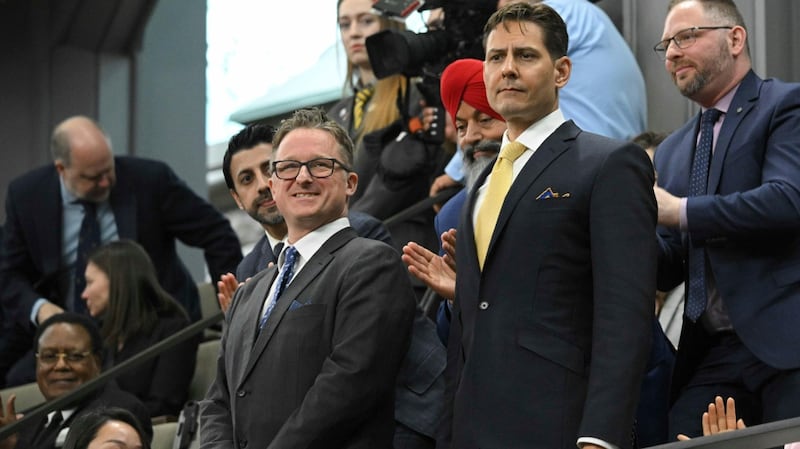
A decade of controversy
The first police agreement between China and Canada was signed in 2016. Since then, diplomatic relations soured when the “two Michaels” Spavor and Kovrig were detained in 2018.
In 2022, Safeguard Defenders exposed the presence of secret Chinese police stations operating on Canadian soil as part of its investigation into how China uses its state police to carry out transnational repression. Safeguard Defenders also detailed how Beijing launched a global campaign nicknamed “Operation Fox Hunt,” to make international arrests to silence dissent in overseas Chinese communities.
Most recently during the trial of former RCMP officer William Majcher, the court heard testimony about how three Chinese police officers, could not be located for six hours by their Canadian counterparts during a visit to Vancouver in 2018. There were concerns that the officers evaded their escorts in order to participate in foreign interference to intimidate diaspora members.
At Majcher’s trial, court documents show that at least 25 people living in Canada may have been coerced to return to China.
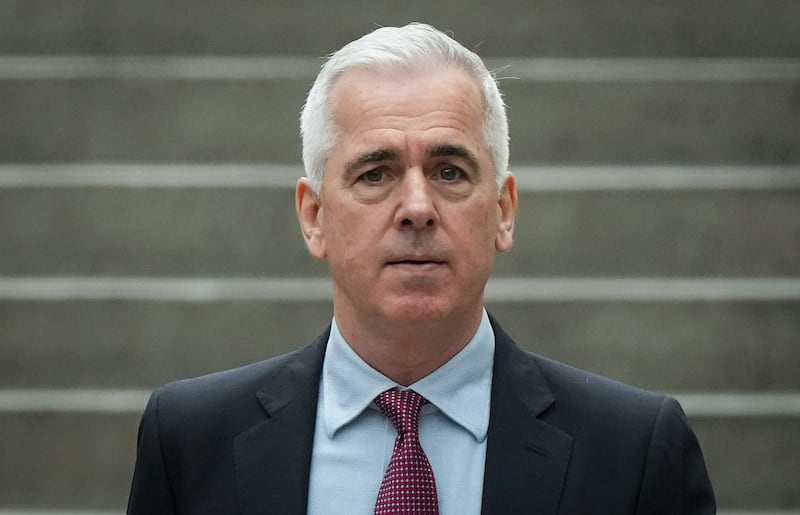
MPs demand transparency
This week, Conservative MP Frank Caputo, who sits on the Standing Committee on Public Safety, demanded government transparency and for the police co-operation agreement to be released without redactions.
“The prime minister called Beijing Canada’s greatest security threat. That was during the election. Despite this, within a year he signed a memorandum of understanding with Communist China as it relates to security. I’ve been asking for the (MOU) for over five months, but the prime minister has refused to disclose it,” Caputo said during question period.
NDP MP Jenny Kwan also called for the MOU’s release in a social media post.
Calls to scrap the agreement
David Matas, a human rights lawyer who has represented Falun Gong practitioners in Canada, says disclosure isn’t enough.
“The issue is whether it should be there at all,” he said, adding that making it public won’t resolve the issue.
“In principle, there shouldn’t be co-operation with a state that doesn’t have the rule of law and uses its criminal justice system to basically go after people it’s targeting politically.”
Critics say the agreement between the RCMP and MPS also undercuts confidence in Canada’s ability to counter foreign interference for some in the Chinese diaspora.
Lizhe He says he was thrown into a Chinese prison two decades ago and survived torture. He is also a follower of Falun Gong. After his release, he was granted asylum in Canada. Should he be targeted again by the Communist police again, he does not believe the RCMP would be able to protect him. But he hopes Anand or Carney will hear his pleas.
“Canada helped me reach freedom, but Beijing’s repression follows us to Canada. … Talking business or trade is good but remember Canadian values. Remember human rights.”

