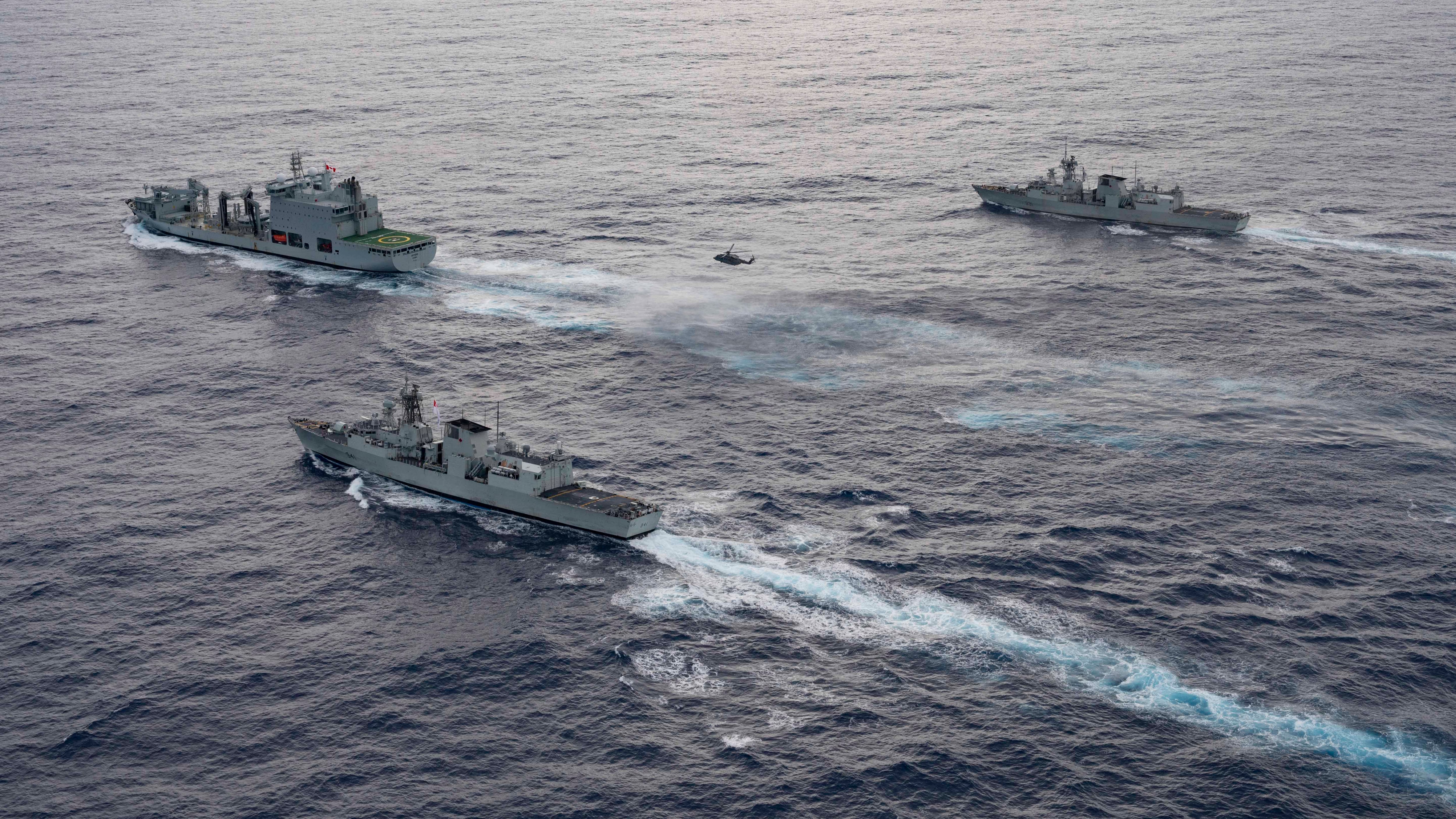
Canada will send two warships and a long-range patrol plane to Hawaii for next month’s Rim of the Pacific (RIMPAC) war games, the world’s largest multinational naval exercise, which is expected to draw more than 25,000 military personnel from 31 countries.
The Royal Canadian Navy intends to use the occasion to showcase some of its most recently acquired capabilities.
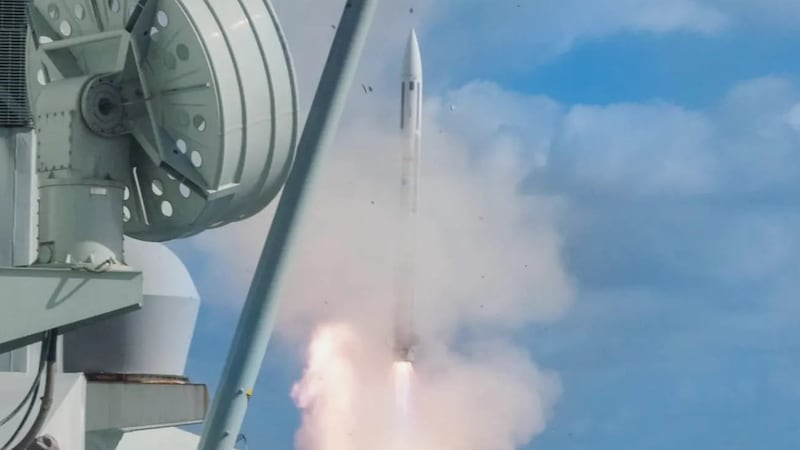
HMCS Regina, one of the two Canadian frigates destined for RIMPAC, will conduct a live firing of the Evolved Sea Sparrow Block II missile, the naval service’s modern air-defence weapon.
The upgraded missile variant “represents a significant advancement over its predecessor,” says Lt.-Cmdr. Linda Coleman, a spokesperson with Canada’s Maritime Forces Pacific.
“Unlike the earlier version, which relied heavily on the ship’s radar for guidance, the new system can guide itself to its target using its own onboard radar, improving accuracy and response time against airborne threats,” Coleman said in an emailed statement.
The first shipment of the new defensive missiles arrived in Canada in 2023, but the weapons were not expected to be fully operational aboard the Halifax-class frigates until last December, according to the Department of National Defence.
The missiles, built by U.S. defence manufacturer Raytheon, are still being introduced into service as part of an ongoing fleet upgrade.
Meanwhile, the second frigate slated to join the exercise, HMCS Ottawa will spotlight an upgraded submarine detection system that is being implemented across the Halifax class. The system comprises a suite of next-generation sensors designed to detect and deter modern submarines and torpedoes.
RIMPAC will provide the first real-world test of the Underwater Warfare Suite Upgrade, according to Coleman.
Components of the system include active intercept sensors and a towed low-frequency sonar array that National Defence says will increase the detectability of targets in open-ocean and near-shore environments.
The low-frequency sonar capability, Coleman said, is the most notable upgrade included in the package, “allowing the ship to detect submarines at greater distances and with increased effectiveness.”
The fleet-wide upgrade is expected to be complete by 2034.
“RIMPAC provides a valuable training environment for these systems,” Coleman said, noting the navy will also send the replenishment ship Asterix and a team of clearance divers to the exercise.
“Throughout the exercise, Canadian sailors will take part in co-ordinated anti-submarine warfare exercises, working alongside allied ships and aircraft to locate and track submarines,” she added. “This hands-on experience helps ensure crews are fully prepared to operate these advanced technologies in real-world scenarios.”
800 personnel deploying
Unlike the navy, the Royal Canadian Air Force will not trial any new capabilities at RIMPAC, according to Maj. Anne Côté, a spokesperson for Canadian Joint Operations Command.
The air force will send a CP-140 Aurora patrol plane and two CH-148 Cyclone helicopters to participate in the war games, which run from June 24 to July 31 in and around the Hawaiian Islands.
Additional Canadian Armed Forces personnel, including a fleet cyber protection group and medical emergency response teams, are also assigned to the exercise in land- and sea-based roles.
“These combined assets are expected to represent over 800 deployed Canadian Armed Forces personnel, which highlights Canada’s ongoing commitment to promoting security and stability in the Indo-Pacific region,” Côté said in an emailed statement.
This year marks the 30th iteration of the biennial RIMPAC exercise, with Canada participating in all instances as a founding member alongside the U.S. and Australia.
Following a final planning conference last month in California, the U.S. Navy announced that 31 nations would participate in RIMPAC 2026, which will coincide with that country’s 250th anniversary on July 4.
The U.S. Pacific Fleet, which has hosted RIMPAC since its inception in 1971, says this year’s exercise will feature approximately 40 warships, five submarines and 140 aircraft.
It said the war games will reinforce collective security through a range of exercises in anti-submarine warfare, air defence, missile proficiency, mine clearance, amphibious assaults, disaster response and gunnery training.

