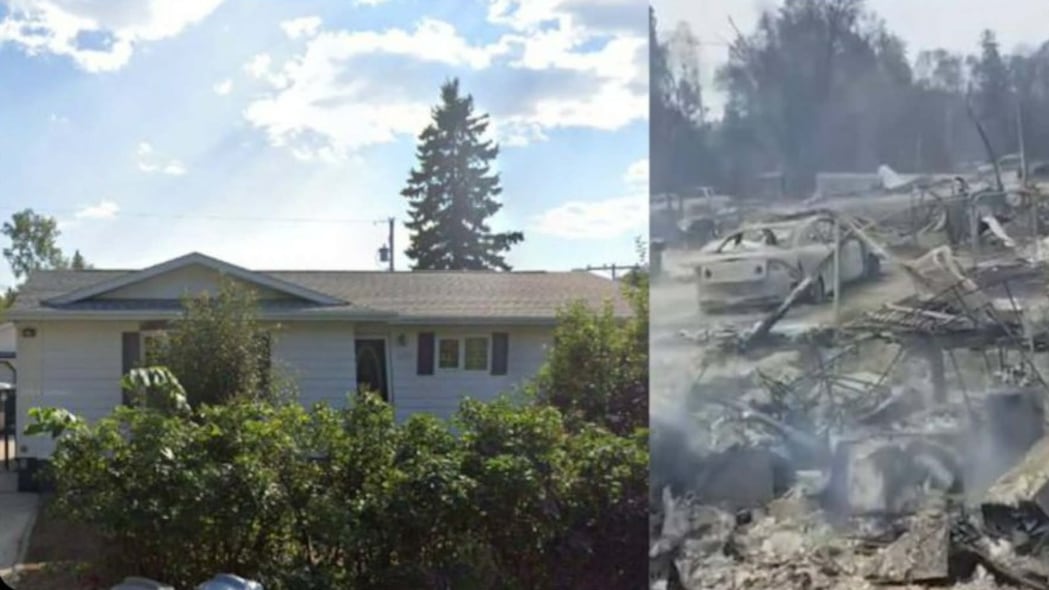
Linda Lowe watched her home burn in real-time as a fast-moving wildfire tore through Denare Beach, Sask., last year.
“It was devastating,” she said.
Lowe felt helpless, as her doorbell camera showed her the unthinkable. At first, there was smoke; then came the fire, which she says quickly engulfed her property.
“There were these weird, I call them ‘ash’ going by, but my husband said, ‘no, those are fireballs,’” she said.
“You could see our pontoon boat… the cover that fitted snug was just flapping in the wind.”
Then came the alerts.
“Our security system started going off saying ‘break-in’ in the garage and then our cameras went off,” Lowe said.
The reality of what was happening set in quickly for Lowe.
“I remember just feeling that utter sickness and despair when we were watching our home cameras that night. We knew that we were going to lose everything.”
Lowe and her family evacuated to Brandon, which is Manitoba’s second largest city. They were there for two months.
When Lowe returned to the community for the first time in late July, she couldn’t believe what she saw.
“It was completely incinerated,” she said. “There was nothing left but a big, gaping hole.”
“Our vehicles looked like a movie warzone when we finally did get home to walk through. There was nothing left except four or five panels of our fencing, which was wood, and we couldn’t believe that stood through the whole thing.”
“It was gut-wrenching,” she said.
While cleanup efforts have transformed much of the community, Lowe says rebuilding has been slow.
Her ready-to-move home is expected to arrive within weeks, but she recently learned her insurer will not cover the cost of rebuilding the basement. She is also still waiting for a foundation to be poured.
“Our insurance hasn’t given us the go ahead to proceed with foundation, so there’s lots of different hurdles,” she said.
Lowe’s home and business in Denare Beach, which is about 780 kilometres northwest of Winnipeg, were among more than 200 structures completely destroyed in the wildfire.
2025 was the second worst wildfire season in Canadian history, with more than 6,000 wildfires in nearly every province and territory, burning over 8.3 million hectares of land.
Over 85,000 people were forced to evacuate. By summer’s end, more than 33,000 of those evacuees were from Manitoba.
‘A horrible feeling’
For Noelle Drimmie, the memories are still fresh.
She and her family were out of their home for nearly a month as fires threatened her home city of Flin Flon, Man., located about 750 kilometres northwest of Winnipeg.
“I think as a community, we’ve had a sort of collective PTSD experience this past week, remembering where we were and what we were doing, and that feeling leading up to being evacuated,” she said. “I know for a lot of us, we didn’t think it would actually happen.”

The experience changed how she prepares for wildfire season.
Drimmie has been documenting her belongings and creating a plan in case another evacuation order comes this year.
“We’re a bit more prepared than last time,” she said. “We were definitely scrambling to make sure we had our bags packed. I am reminding my husband to go fill up the car with gas every evening just in case.”
“We just don’t know… and we realize how quickly things can change,” she said.
As Manitoba’s wildfire season ramps up, that uncertainty is becoming all too familiar for Drimmie.
According to the province’s wildfire map, 19 fires were burning as of Saturday, including four classified as out of control. Several of those fires are located roughly 80 kilometres south of Flin Flon.
“We are hopeful, but very worried at the same time,” she said.
The Manitoba government says fire danger levels across much of the province remain high to very high.
Meanwhile, a wildfire near Norway House Cree Nation prompted local leaders to declare a state of emergency on Friday. Residents have been advised to remain prepared to evacuate on short notice if conditions worsen.
Fire season ramping up
Wildfire expert, Mike Flannigan says the transition from winter conditions to hot, dry summer weather has happened quickly this year.
“We’re starting to see lots of lightning,” said Flannigan, who is a professor of wildland fire at Thompson Rivers University in Kamloops, B.C.
“We’ve got both ignition sources kicking into gear, so I expect things to be quite active in the next seven to 10 days.”
While Flannigan hopes the 2026 wildfire season won’t be as severe as last year’s, he expects it to be an especially active one.
He is urging residents in fire-prone areas to stay prepared and report any signs of wildfire immediately.
“When in doubt, call 9-1-1 and they’ll direct you to the right place, but if you see a fire, report it right away so we can deal with it,” he said.

