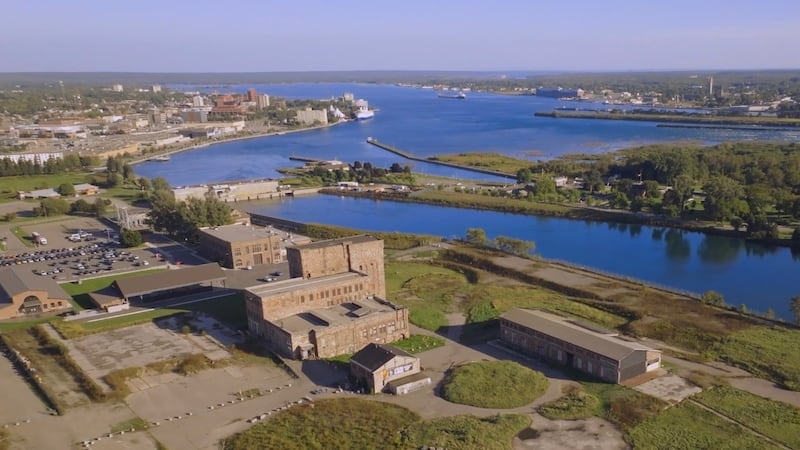
A landmark industrial tower that has stood empty for decades will be transformed into a hotel, conference centre and cultural destination under a new joint venture between two First Nations and a Canadian redevelopment company.
Garden River First Nation, Batchewana First Nation and BMI Group have signed a trilateral memorandum of understanding to develop the property at the historic Mill Tower in Sault Ste. Marie’s Canal District.
The 1895 St. Mary’s Paper Mill Tower, an example of Richardsonian Romanesque industrial architecture, is to be adaptively reused as a public gathering space. The site is known as Baawating, the rapids of the St. Mary’s River, and has long served as a meeting place for the Three Fires Confederacy of Ojibway, Potawatomi and Odawa peoples.
Batchewana First Nation Chief Mark McCoy said the project represents more than restoring a landmark.
“This project represents more than the restoration of a historic landmark; it is an opportunity to create a space that reflects our shared commitment to economic development, cultural revitalization, and meaningful collaboration,” he said in a news release Monday.
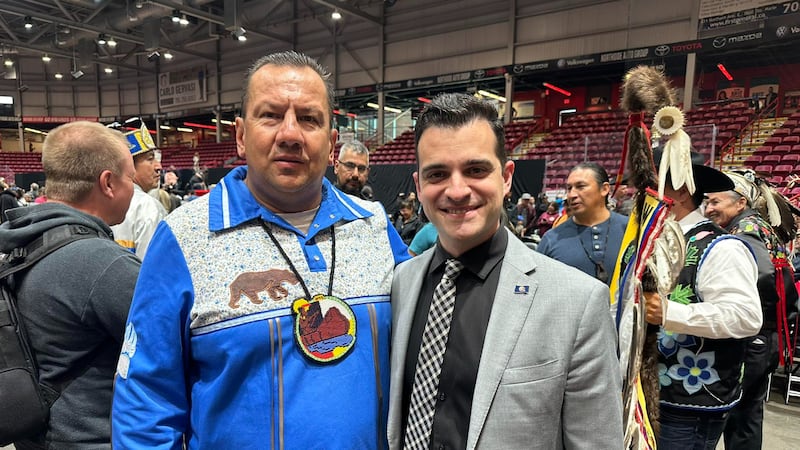
McCoy added that by working with Garden River First Nation and BMI Group, the community is helping ensure the site once again becomes a place of gathering, learning and opportunity for generations to come.
Renewed presence at ‘the place of the rapids’
Garden River First Nation Chief Karen Bell described the agreement as reflecting a renewed presence within lands that have always held deep meaning to her people.
“For generations, our ancestors lived, travelled, gathered, and exercised stewardship throughout Baawating, ‘the place of the rapids,’” Bell said.
“This area is not only historically significant to our Nation, but spiritually and culturally connected to who we are as Anishinaabe people.”
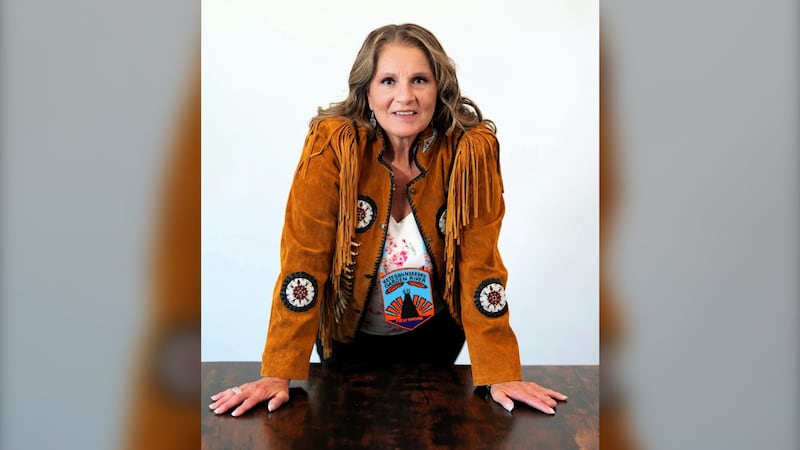
Bell added the opportunity to once again occupy the space creates a place where members and future generations can stand, look across the landscape and sacred waters, and reflect on the enduring relationship her people have maintained with the territory since time immemorial.
She recalled a vision carried by Chief Shingwauk that future generations would continue to return to Baawating and remain connected to the lands and waters that shaped them.
“That vision was not simply about presence, but about responsibility.”
— Garden River First Nation Chief Karen Bell
Bell said her Nation carries a sacred responsibility to exercise stewardship of the land and water.
“We carry a sacred responsibility to exercise stewardship of the land and water — to care for them, protect them, and ensure they remain healthy and abundant for generations to come,” she said.
Bell said the project provides an opportunity to carry that responsibility forward while creating spaces that reconnect her people to place and reaffirm their role as caretakers.
Bell added that prosperity and longevity remain a priority as Garden River First Nation looks to the future.
“We see this partnership as creating meaningful opportunities for employment, economic participation, skills development and long-term community benefit, while demonstrating that economic growth and stewardship can move together in balance,” she said.
BMI Group CEO Paul Veldman said the MOU formalizes a partnership built on shared vision, shared development and shared opportunity at a site close to the company’s heart.
“We are honored to work alongside Garden River First Nation and Batchewana First Nation to return the Mill Tower to public life,” said Veldman.
The Mill Tower joins BMI’s broader portfolio of heritage adaptive reuse hospitality developments, including the redevelopment of Stratford’s historic Queens Inn to a 31-room Marriott Tribute Hotel and the renovation of the Quebec Lodge to The Lodge at Red Rock.
Darrin Spence, BMI’s director of Indigenous initiatives, described the project as a milestone partnership between the two First Nations.
“This project is much more than the redevelopment of a historic site; it also represents a milestone partnership between Batchewana First Nation and Garden River First Nation,” Spence said.
He added that building meaningful relationships with Indigenous communities and fostering economic reconciliation is why he joined BMI.
“I am incredibly honoured to have helped facilitate this opportunity to build prosperity for our people.”
— Darrin Spence, BMI Group’s director of Indigenous initiatives
BMI group said further details are to be shared jointly by the partners as planning progresses.

