Warning: Graphic content.
This is part three in a multi-part series. Read parts one and two here.
A Ukrainian-based seller of suicide kits who boasted about “regularly” shipping to Canada has taken down his website after being approached by W5 and the mother of an Ottawa student who died after consuming the poison he sold.
But automated messages on other sales platforms indicate that Leonid Zakutenko may not have completely wrapped up his business and the teen’s mother – Susan Dallin O’Grady – wants legal changes to ensure young Canadians can no longer access his deadly products.
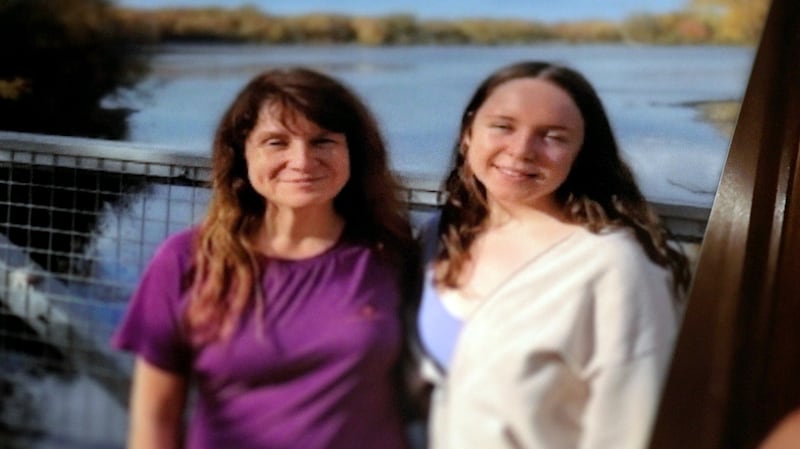
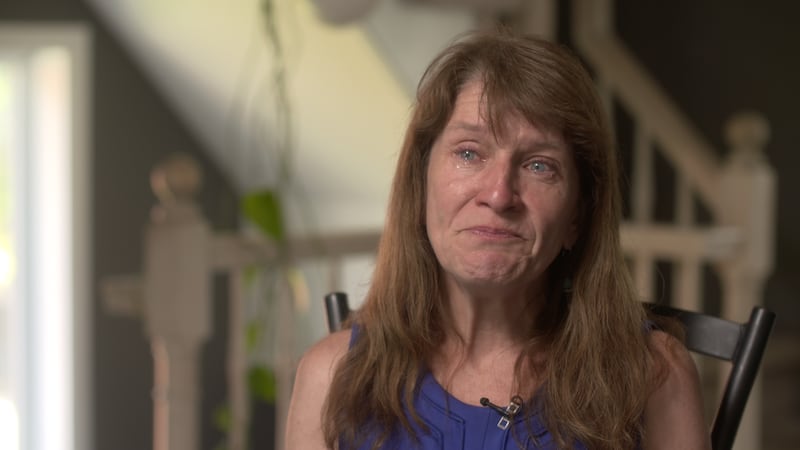
“It’s so hard to believe that she’s not going to walk through that door,” O’Grady said amid tears in an interview with W5 as she discussed losing her daughter Anneka to suicide in April.
“It’s a loss that you could never outlive. Because she was supposed to outlive me.”
O’Grady remembered her daughter as “brilliant and kind” during her interview with W5.
Anneka was headed for a career as a genetic counsellor in Ottawa, she said. But behind the scenes, the 22-year-old student was depressed, and worried that research funding cuts would deny her a job.
“She lost hope, I guess, because there were too many things going wrong at the same time,” O’Grady said.
As her parents faced shock and grief from her death, they found out Anneka got the job after all.
“I guess they did find the funding, and they sent her a job offer the very next morning, like literally less than 12 hours, after she passed,” O’Grady said. “It was heartbreaking to find that out.”
O’Grady wanted to dig deeper into what happened, so she called her bank and got Anneka’s credit card statements.
On March 23, there was a charge for about $124 Canadian dollars from Monobank, which is a financial institution in Ukraine she didn’t recognize.
That amount works out to $3,879.60 in Ukrainian currency. When you include service charges, it’s within pennies of what is sold on a Ukrainian-based website that uses Monobank for transactions, and sells a poison known as “SN.”
- For tips on the sale of SN or any other story, contact Jon Woodward.
That’s the same poison that an Ontario court heard on Friday was often sold by Kenneth Law to people as young as 16 years old.
Last week, Law pleaded guilty to aiding and abetting suicide for his role in sending more than 1,000 similar packages to Canada and around the world.
Prosecutors read out dozens of names in court, describing the awful circumstances family members faced when finding the bodies of their loved ones or the panic and pain that set in when some of those who had taken the poison realized too late, they did not want to die.
Law was arrested in 2023 and while statistics show that SN deaths dropped substantially after that point, they didn’t stop. Some 29 deaths connected to the chemical were recorded in 2024 and 2025, the statistics show.
Zakutenko first faced scrutiny for selling that chemical when he was approached as part of a British Broadcasting Corporation (BBC) expose in 2024.
Two years later, he confirmed in communication with W5 that he “regularly” sells to Canada but denied that he bore responsibility for any death, saying he was selling the product as part of its legal use as a meat preservative.
“Any salesperson could be prosecuted for selling a suit, because a potential buyer could hang himself with a tie,” he said.
Typically, when it’s used as a meat preservative, the SN concentration is around six per cent. Zakutenko’s website advertised the preservative in the 99 per cent purity range.
Zakutenko declined to comment about Anneka’s death to W5 but offered to speak to her mother, who sent him a series of messages inquiring about what she had ordered and when.
“I am truly heartbroken for you and my thoughts are with you and your family during this incredibly difficult time,” Zakutenko wrote back.
O’Grady said hearing those words from the person who sold her daughter the substance was “horrible.”
“My daughter’s life was worth $123 Canadian to you? Or probably less because of shipping,” she said.
O’Grady said she also learned that Anneka was just 17 when she first accessed an online forum that recommended the Ukrainian’s website and whose users often encourage suicidal behaviour.

Protecting children on the internet is one of the goals that the Canadian government has identified in trying to pass an online harms bill.
But it’s been slow going since it was introduced in 2021, then again in February 2024, including a setback when bill died on the order paper after the dissolution of Parliament in January 2025.
University of Calgary law Prof. Emily Laidlaw has consulted recently on a new version of the bill and said the larger goal is to regulate social media companies and hold them accountable for major harms, including child sexual abuse material, intimate images shared without consent, and counselling self harm.
But she said there is an option for the new regulator to look at smaller sites if there’s a significant risk of harm like what happened with Anneka.
“That’s the intention of the bill, is that it would make things better and potentially avoid what happened to that girl,” she said.
NDP MP Gord Johns, who has advocated for online harms legislation in the past, said it’s long past time for there to be an online regulator for Canadians.
“The online world can’t be this lawless space where corporations can exploit children without any consequences, and that’s what is happening right now,” he said.
A spokesperson for Canada’s heritage minister said in a statement the government is committed to “act swiftly to better protect children from online harms.”
Late last week, a few days after his conversations with O’Grady, Zakutenko’s website went offline.
“We decided that since there’s a problem, we need to do something about it. It would be better if we ceased to exist as a web version, so that no one could find us anymore,” he said when reached by W5.
But he added that he “despised” the journalists who questioned his sales and hinted there could be more to come.
“People are so inventive you can’t even imagine; people will still come up with new ways to play Russian roulette,” he said.
O’Grady is hoping the website is truly gone. In the meantime, she has a message for parents.
“Hopefully, we can help people by reducing the easy access to this toxic substance. But even if one person hears this story and talks to their kid, and says, ‘How’s it going, and know that people want to help you. Trust me people really want to help you.’
Then it’s worth it,” she said.
If you or someone you know is in crisis or struggling with mental illness, here are some resources that are available.
- Canada Suicide Crisis Helpline (Call or text 988)
- Centre for Addiction and Mental Health 1-800-463-2338)
- Crisis Services Canada 1-833-456-4566 or text 45645
- Kids Help Phone 1-800-668-6868)
- If you need immediate assistance, call 911 or go to the nearest hospital.