James Moore is a former federal cabinet minister under prime minister Stephen Harper, and is a contributing columnist for CTVNews.ca.
Kerry-Lynne Findlay won the leadership of the B.C. Conservative Party this past weekend, and, as always, ‘expert’ voices of certainty emerged to declare that she can’t ever win the premiership of British Columbia.
They are wrong. Or, at the very least, they can’t possibly know the unknowable path ahead in B.C. politics. More on this in a moment.
Author George Will once said that “political prophecy is optional fallacy,” and he is right. I generally try to avoid making absolute assertions about what will happen in elections and leadership contests – at least publicly so.
Politics is not a predictable science. It is a complex coming together of people of diverse motives and passions making judgements within electoral systems that skew outcomes and reflect particular personalities in particular moments in time.
Past polls proved wrong
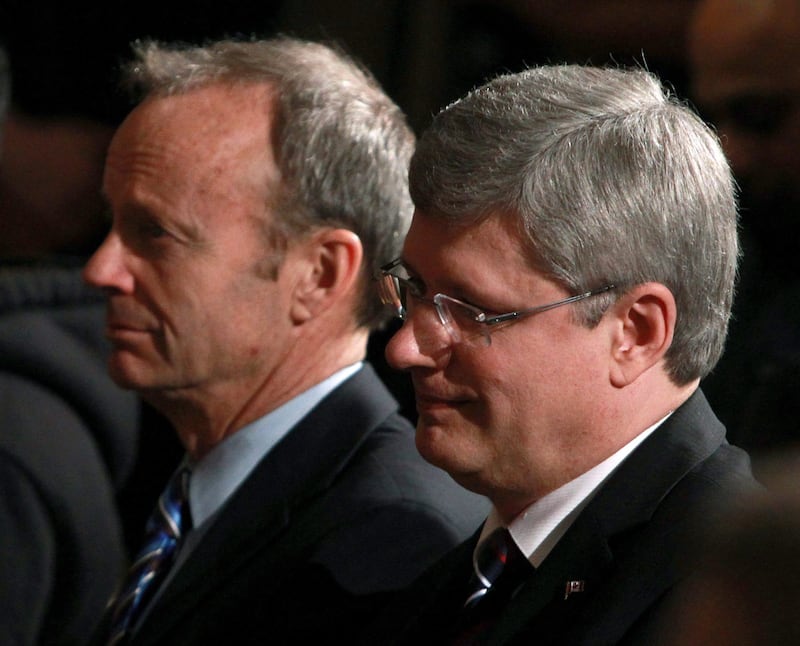
I recall, back in 2002, when Stephen Harper was running against Stockwell Day for the leadership of the Canadian Alliance Party – before the creation of the Conservative Party of Canada – and an award-winning journalist who appears weekly on highly visible TV political panels said aloud that the choice between Harper and Day was a choice between a slow death (Harper) and a quick death (Day).
A couple of years later, Prime Minister Harper and Public Safety Minister Stockwell Day sat next to each other in Parliament.
We all recall the venerable New York Times on November 8, 2016, less than an hour before polls closed on America’s east coast, forecasting with certainty that Hillary Clinton had an 85% chance to win the election based on their “models” and “on the latest state and national polls.” They were wrong.
Back in Canada, examples are everywhere of consensus opinion being wrong and people assuming they know more than they do and end up looking foolish in the open for all of us to see. Famously – in British Columbia at least – back in 2013, the Vancouver Province newspaper ran a photo of then-NDP leader Adrian Dix on the cover with the headline: “If This Man Kicked A Dog He’d Still Win The Election.” He lost the election to B.C. Liberal Leader Christy Clark, and no dog was harmed in the process. Adrian Dix and the NDP were so far ahead in the polls for so long that ‘expert’ observers forgot that voters often pay attention late in a campaign, they pay attention earnestly and seriously, and their judgements should never be presumed.
What was to be a landslide NDP win was turned upside down by voters. Christy Clark was elected premier, winning 44% of the vote, adding four seats to her caucus, while the NDP lost two seats and the election and the political pundits – especially the Vancouver Province – had to eat significant crow.
Expert electoral surprises
Examples are everywhere. Few predicted that Stéphane Dion would win the federal Liberal leadership over higher profile, better organized, better funded and caucused backed frontrunners Bob Rae and Michael Ignatieff in December of 2006.
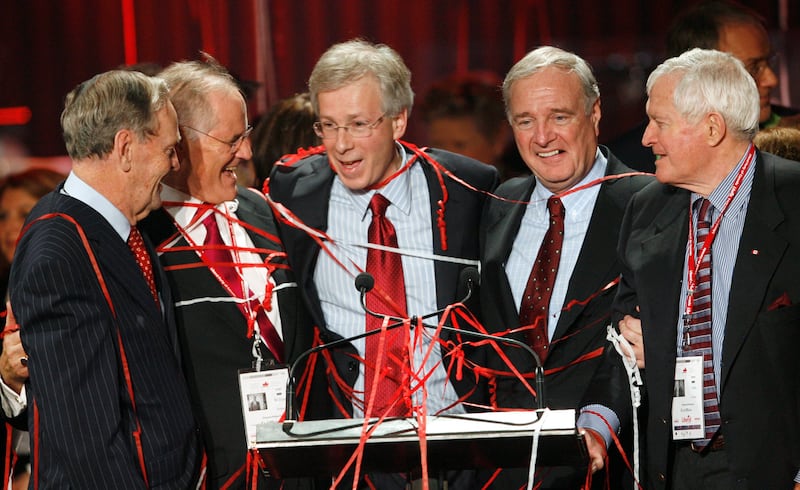
I was at that convention as an observer for the Conservative Party doing media panels, and it was remarkable how Mr. Dion – who finished third on the first ballot with just 17% of the vote – managed to emerge the victor. When almost 83% of party members do not want you as their preferred leader, his ability to chip away to victory was not foreseen by anyone.
Elite opinion said Rob Ford could never be elected mayor Toronto. In 1990, when Bob Rae and the Ontario NDP swept into power by defeating Premier David Peterson’s government, people were stunned. In 2015, few people predicted that Justin Trudeau would go from 36 seats to 184 seats on election day, emerging from third place to first place, and win a majority government. Growing their vote from 18% in 2011 to 39% and a strong majority was imagined until a few days before election day.
Elections offer surprises. Election campaigns expose leaders to an open-air, 24-hour news cycle that is a stress test of their judgment, presentation, style, strengths and weaknesses. Voters with all the information, opinion, videos, polls and content on high-definition screens a few inches from their faces for over a month during a campaign consume vast quantities of data, ideas and impressions, and make a decision that is, often, a surprise.
Back to Kerry-Lynne Findlay and British Columbia. Only a fool would assert in June of 2026 how voters will decide the next election which does not have to be called until October of 2028. Between now and then, everything can change – including the leadership of the governing NDP, the strength of the economy, the unemployment rate, the affordability crisis, the status of Canada-U.S. trade and Donald Trump’s belligerence to Canada, the progress (or not) of a coastal pipeline and what the B.C. reaction might be, global events, national events, court decisions, a referendum in Alberta, a referendum in Québec, a federal election, scandals in government, Prime Minister Carney’s popularity/unpopularity, whether or not a new party emerges in B.C. in the middle or the right, to name just a few possibilities.
Everything and anything can change, and my fellow British Columbians would be wise to tread lightly on their judgement of things to come.
A tough, resilient leader
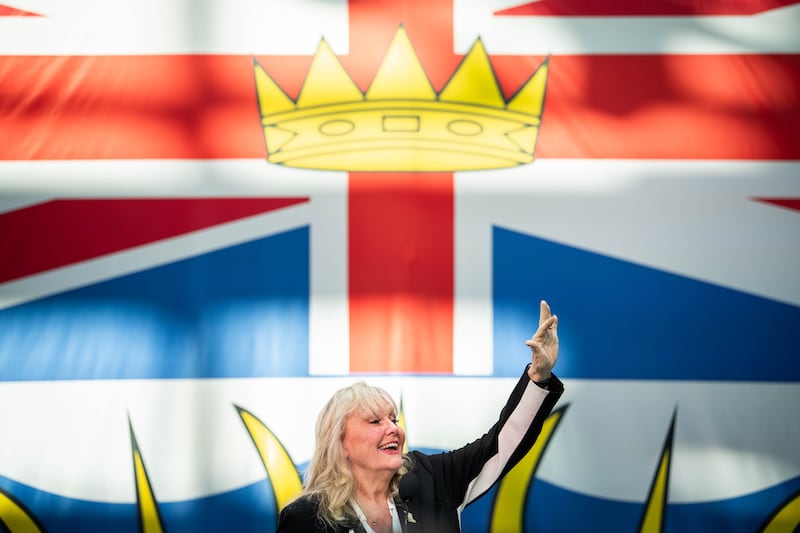
About Kerry-Lynne Findlay, a great deal can be said. In full disclosure, she is a friend and former cabinet colleague. Though I supported Iain Black in the leadership race, Kerry-Lynne has always been incredibly kind to my family, always been generous and her kindness to health challenges in my family were incredible.
She has real obstacles to success in front of her: caucus unity, caucus professionalism and discipline, fundraising, party infrastructure, fundraising, policy development, candidate recruitment, staffing and more. It will certainly be tough. But she is tough. She has been through a lot. She has been knocked down and she always gets up. She hasn’t seen an opponent that intimidates her yet: not a prime minister, not a premier, not electoral defeat, not elite opinion, not the snobs, not even cancer when it blindsided her family time and again. She is made of tough stuff.
On her best days, she is plain spoken, stoic, and firm. With the right choices, the right support and a committed team around her, everything in politics is possible.
B.C. politics has a long road in front of it with big Canadian consequences for our economy and for national unity. Those who rush to judgment about what is to come as a result of the B.C. Conservative leadership are ignoring all the lessons of Canadian political history.
Kerry-Lynne Findlay should not be underestimated, and the months ahead in West Coast politics will be fascinating for Canada.

