After the United States recently confirmed its first case of New World screwworm in livestock in decades, one expert says the flesh-eating parasite has currently not entered Canada.
The potentially deadly New World screwworm was previously declared eradicated south of the border in 1966 and a small outbreak from the Florida Keys was eliminated in 2017. But the U.S. Department of Agriculture said Wednesday a three-week-old calf in LaPryor, Texas, was infested.
U.S. Agriculture Secretary Brooke Rollins said the fly was not detected anywhere else in the U.S. and the threat to human health is extremely low. Officials also said the fly’s larvae don’t infest food, though they may harm livestock.
“There isn’t a situation with the screwworm in Canada,” Dr. Isaac Bogoch, infectious diseases specialist at the University Health Network and Toronto General Hospital, said in a Zoom interview with CTVNews.ca on Thursday. “We don’t have it here.”
The Canadian Food Inspection Agency (CFIA) said Thursday that it was working on a response to CTVNews.ca’s request for information about the situation with screwworm in Canada.
Canada could occasionally see “imported cases” through travellers and the trade of livestock, Bogoch said. These cases must be “identified quickly and eliminated so they don’t spread,” he added.
Risk for Canadian herd ‘very low’: cattle group
The Canadian Cattle Association (CCA) said it is monitoring the situation and is confident that U.S. agriculture officials are managing it properly.
“(O)ur focus is on … ensuring that the Canadian beef production system is safe, and we’re comfortable in the fact that the risk for infection in the Canadian herd is very low,” said CCA CEO Andrea Brocklebank in a Zoom interview with CTVNews.ca on Thursday.
Brocklebank said the industry imports a lot of cattle from the U.S., mainly from the northern states and not from Texas, where the calf with the screwworm was found.
Dr. Leigh Rosengren, chief veterinary officer for the CCA, says Canada has been making efforts to protect cattle from the screwworm and diseases, including strict border controls, such as requiring imports to have animal health certificates.
Bogoch said there’s no vaccine for screwworm because it’s a fly infestation rather than an infectious disease, bacteria, virus or fungal infection.
A Canadian traveller got the parasite after he was injured from a fall and developed an ulcer in his right shin in Costa Rica. He was treated in February 2025 in Toronto, according to Bogoch.
Although the parasitic flies could enter Canada, Bogoch said the pests thrive in tropical, hot environments and would not survive Canada’s colder climate.
He said human cases are rare and infestations would be faster to detect in people than animals, given a patient would likely seek immediate help after spotting larvae coming out of their body.
‘Decades and decades of work’
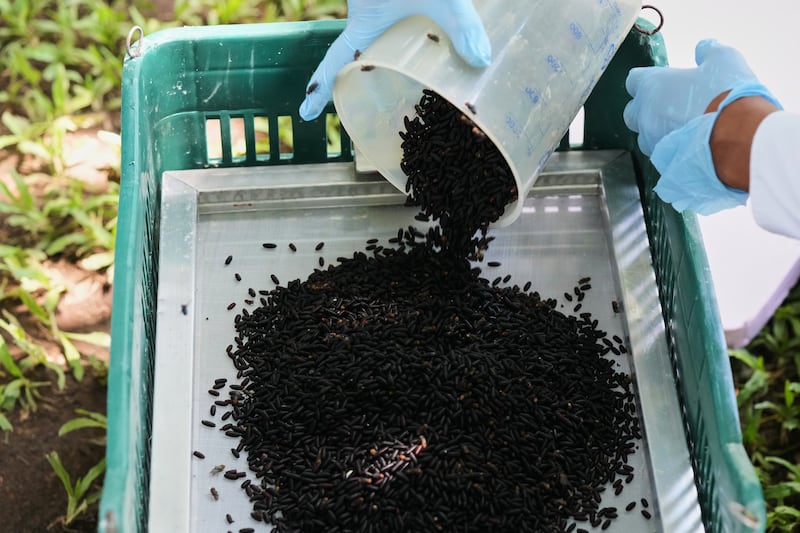
A “barrier” previously kept the screwworm at bay in the southern part of Panama and South America by breeding sterile flies and dropping them over a large area, Bogoch said. The barrier had prevented the pests from migrating north because they wouldn’t be able to produce offspring if they bred with the sterile flies, he said. But the screwworm has spread north to places including Costa Rica, Nicaragua, Mexico and now Texas.
“There have been decades and decades of work to ensure that this doesn’t happen, and this sterile fly technique has been extraordinarily successful, but obviously that barrier has been breached and it’s going to be very tricky to ensure that this fly is eliminated from these new areas,” Bogoch said.
With files from The Associated Press and CNN

