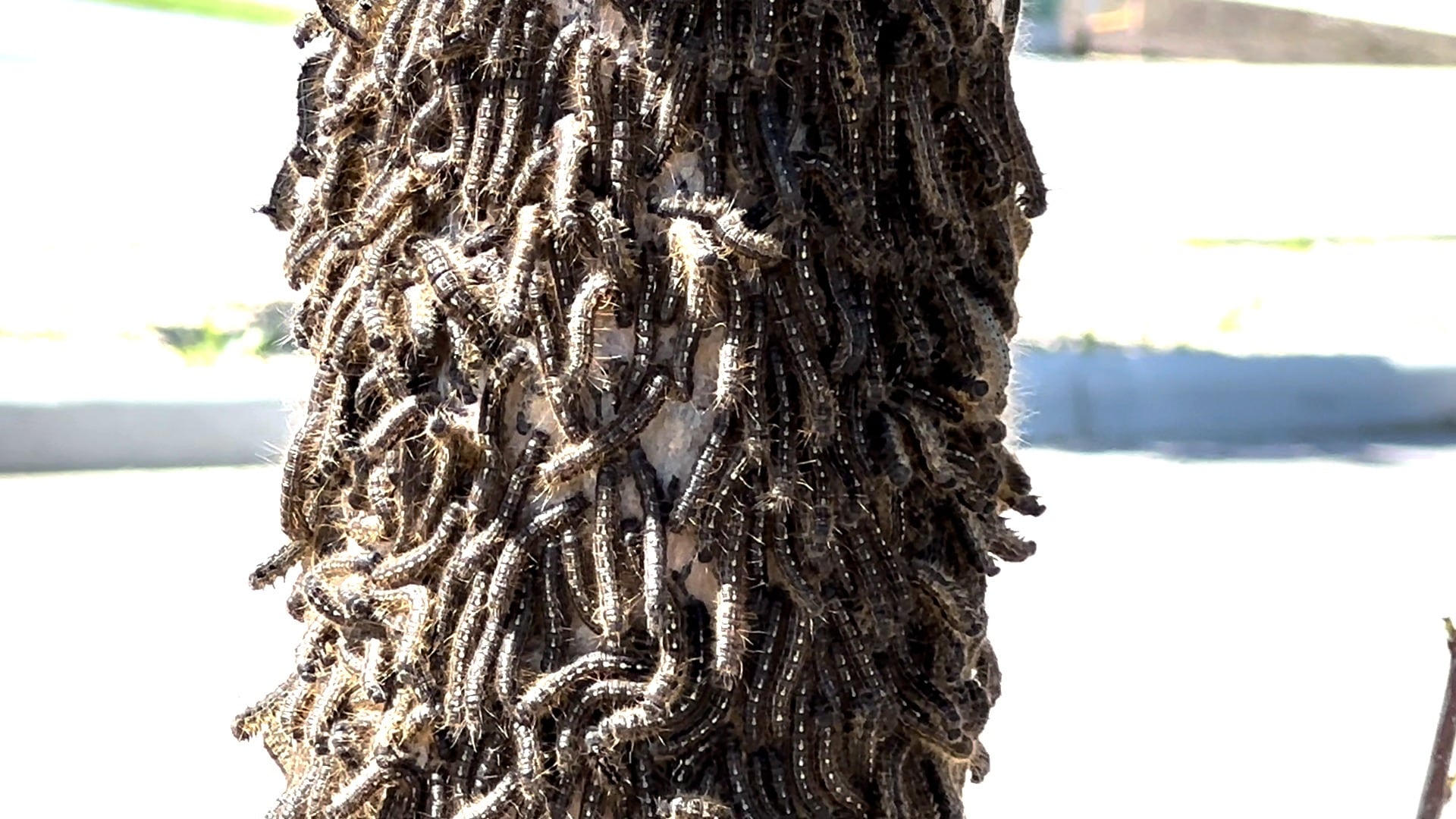
AIRDRIE, CALGARY AND OLDS, Alta. – Residents across Alberta are spotting clusters of forest tent caterpillars covering trees, sidewalks and trails as the province experiences one of its largest outbreaks in years.
The insects are stripping leaves from aspen, birch and other deciduous trees, prompting municipalities from Airdrie to Olds, Red Deer and Lacombe to issue public notices as caterpillar populations surge.
For Helen Shields, the outbreak became impossible to miss.
The Airdrie resident was relaxing in her backyard with her husband when she noticed something unusual on one of her trees.
“I happened to look up, noticed the black, abnormally large black spot in the tree, which I hadn’t noticed before,” she said.
“As I got up, I saw something moving, and I thought, ‘no, this isn’t good.’”
The caterpillars had gathered in a large cluster in the family’s tree.
Experts say the boom is part of a natural population cycle that typically returns every decade or so and periodically affects forests in different regions of Canada.
“It’s not entirely certain what causes them. But they seem to have this cycling effect,” said Ken Fry, an entomologist at Olds College of Agriculture & Technology.
“In any given region, whether it’s southern Ontario, northern Ontario, the Maritimes, the Prairies or the West Coast, it’s not always in synchrony. So right now, we have ours in Alberta.”
Hundreds of eggs
The scale of Alberta’s current outbreak is the largest seen in years.
Fry pointed to provincial aerial surveys conducted in 2025 by the Alberta Forestry Department that found forest tent caterpillars were responsible for roughly 70 per cent of defoliation recorded in Alberta’s northern forests.
“Roughly 1.7 million hectares of forest was affected. That’s a lot. So that’s much more so than normal in any given year,” he said.
The population can grow rapidly when conditions are favourable.
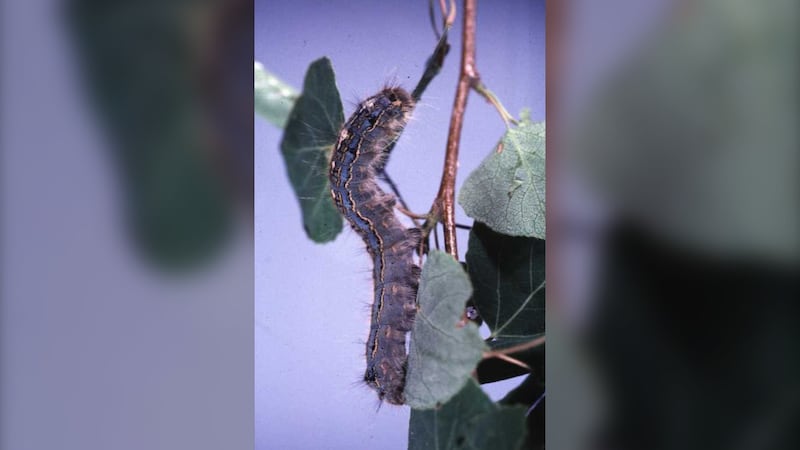
“The females will lay 100 to 300 eggs. And so, if you get a good overwintering survival, there’s good plant life, then you have 300 kids instead of just three,” Fry said.
“That population can build very, very rapidly in just a couple of years.”
Municipalities across Alberta have urged residents not to panic.
The City of Airdrie said residents may see caterpillars “on trees, sidewalks, trails and other natural areas,” adding that while the insects can cause noticeable defoliation, healthy trees typically recover.
‘They totally stripped the tree’
The Town of Olds has also advised residents that the outbreak is temporary.
“At this time, the town will not be undertaking large-scale treatment measures. These population cycles are temporary and typically resolve naturally over time,” the town said in a public notice.
“We understand they can certainly be a nuisance ... and we appreciate everyone’s patience as nature does its thing this spring.”
Shields said it is not the first time tent caterpillars have targeted her property.
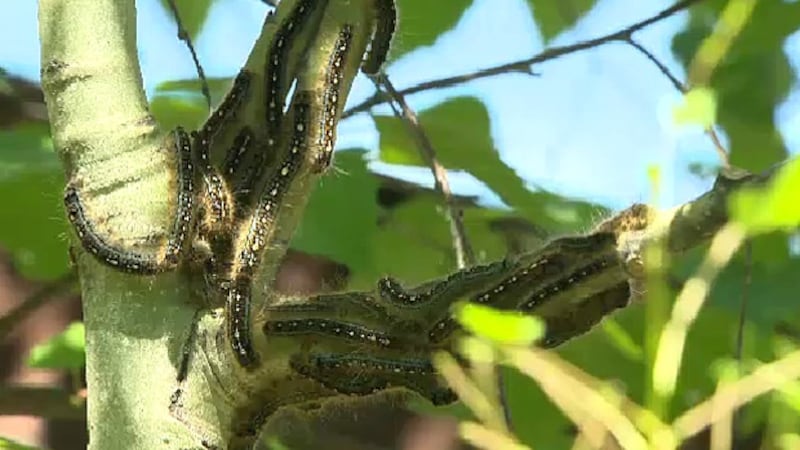
“I must be about 10 years ago, I think, that we had an issue before and, yeah, they totally stripped the tree.”
She also remembers dealing with a much larger infestation while living in Manitoba.
“They just cover the trees, inhale all of the leaves and move on,” she said.
“We’ve seen them cover the roads and crawl up the next tree.”
The family recently used an insecticidal soap spray to deal with the insects and continues to monitor its trees.
“We have an aspen and we have a birch, so we just keep an eye on it,” Shields said.
“If you can be proactive, you’ll save the leaves on your trees.”
Despite the dramatic appearance of bare branches and leaf loss, arborists say healthy trees generally recover.
“(The caterpillars) will defoliate the tree, but it won’t kill a tree,” said Blaine Jack, a certified arborist in Calgary.
“The trees will bounce back the next year even if they completely lose their leaves in one year.”
Caring for trees
Jack said homeowners should focus on maintaining tree health through routine care.
“You’ve got to make sure that you’re watering, doing all the normal precautions so that the tree is very strong and resilient to anything that comes.”
While the caterpillars may be unwelcome visitors for many residents, Fry said their presence is a natural part of the ecosystem.
“They’re all part of nature’s cycle. It’s just that, when they’re in great numbers, it can be somewhat discomforting for some folks,” he said.
He adds the caterpillars play a role in forest regeneration.
“Every 10 years when you get a little bit of thinning, that’s good for a forest. It helps keep it vibrant and enriched.”
The insects also return nutrients to the soil and provide food for wildlife.
“The excrement, we call it ‘frass,’ from all that feeding goes right back into the soil, so it’s great fertilizer. They are food for a lot of other animals.”
Fry said forest tent caterpillars are generally harmless to humans, although some people may experience minor skin irritation after handling them.
“Their hairs on their exoskeleton are a bit irritating,” he said.
“You wouldn’t want kids eating them or playing with them because they might get a bit of dermatitis or a bit of a rash from it.”
For now, Albertans can expect to keep seeing the caterpillars throughout June. Experts say outbreaks can persist for one to three years — and sometimes longer — depending on weather conditions, food availability and survival rates.

