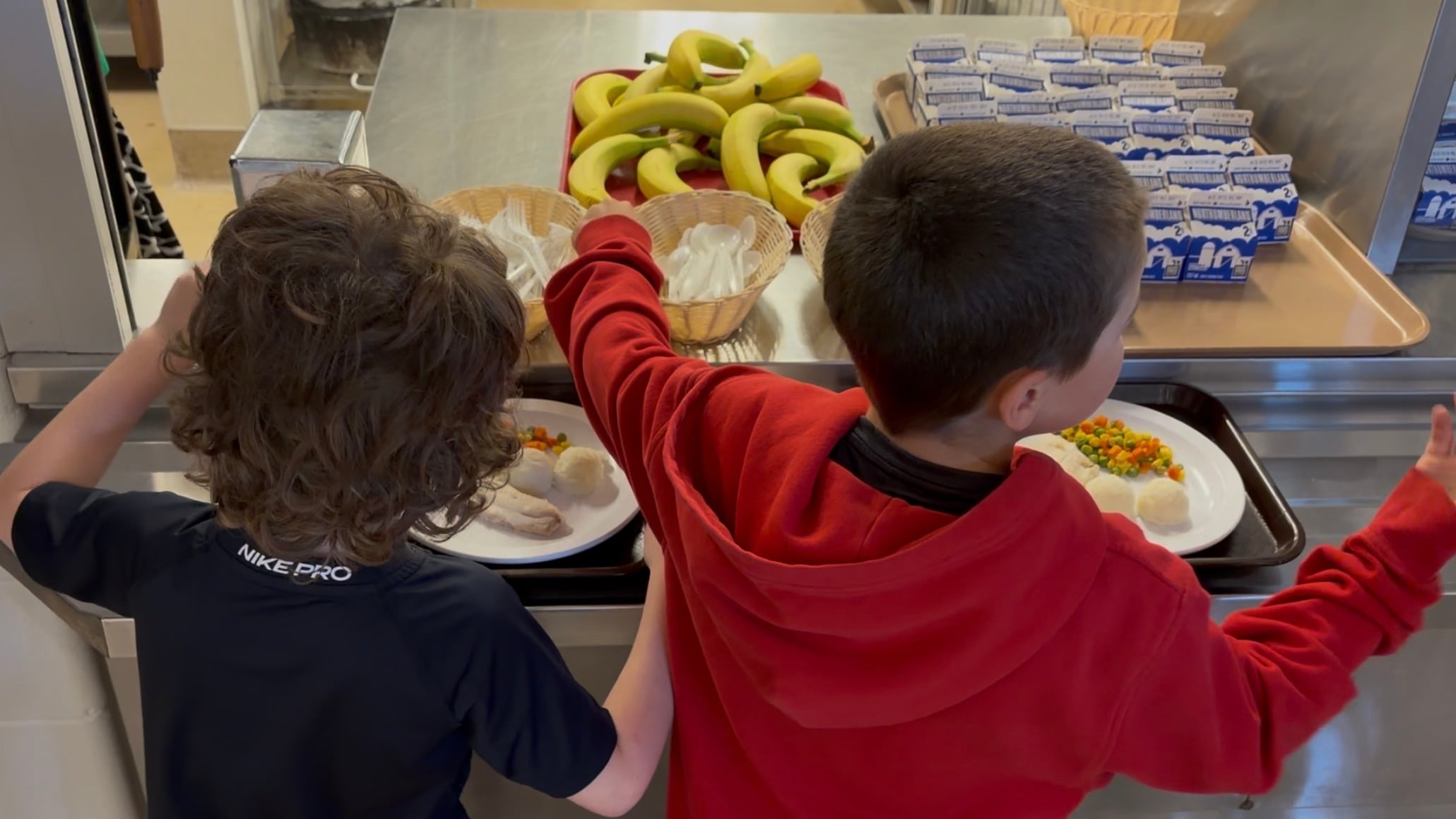
FREDERICTON, N.B. – On the menu Thursday at Fredericton’s École Les Éclaireurs: chicken pot pie.
A new face was also behind the cafeteria’s counter, handing out plates to the kindergarten to Grade 8 students.
New Brunswick Premier Susan Holt was seen slicing and scooping each plate and passing them to lined up students at the French school.
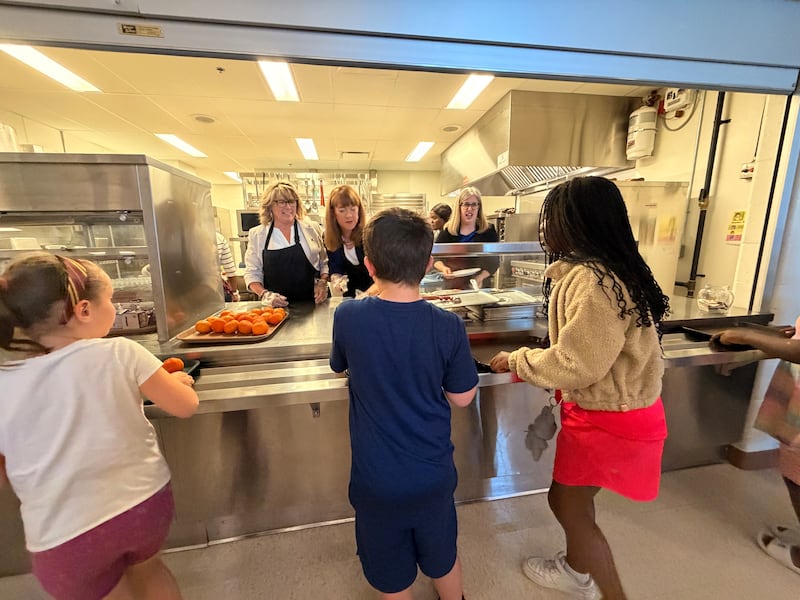
She was there to serve up a $26 million promise: making school lunches available to every child no matter what they can pay.
“We left the option of full price — seven or eight dollars — for families who prefer that, an affordable price of four dollars for kindergarten to Grade 8, and a fully subsidized price for families who really need it,” Holt told reporters.
The commitment comes the same week as N.B. was handed an “F” on its poverty report card by Food Banks Canada – the only province in the country to fail. Holt admitted the grade “hurts,” but she didn’t seem surprised.
“It reflects the reality that we know this is what we’re hearing on the ground from New Brunswickers, that they are struggling,” she said.
The program could save families between $900 and $2,000 annually, Holt said.
READ MORE: N.B. government spending $26M on pay-what-you-can school lunch program
Why the failing grade?
Food Banks Canada releases an annual poverty report card every year, marking each province on how they’re supporting people as they navigate affordability in their daily lives.
From how much of their income they’re spending on housing, how quickly they can access health care, their food security, and the number of people below the poverty line.
The province was handed an “F” for most of those measures, finding that 37 per cent of New Brunswickers are spending over 30 per cent of their income on housing, and 64 per cent of their income on other essentials – leaving no room for anything else.
45 per cent of people reported they feel worse off in 2025 than in 2024.
Stephane Sirois, the executive director of Feed NB, said the province deserves the failing grade.
“If you’re in school and you get an ‘F’ it’s because you missed out. You didn’t study enough. You didn’t do your homework or you missed out on something. So you deserve that,” he said. “And we’re here. And that doesn’t mean everything is bad, but there’s a lot of work to do. So I see this as a call to action and a reality check.”
Some of the recommendations cited in the report card include legislative moves like a rent cap, reviewing social assistance rates and increasing the minimum wage – currently at $15.90 – and see it move closer to the living wage of $24.77.
“We need to do something. It’s not normal that if you’re working full-time that you need to access a food bank. That’s not normal,” Sirois said. “We need to start working on the real issues. I think we’re reaching that critical mass where enough people are like, ‘hey, like, we need help here.’”
Pay-what-you-can school lunch part of the solution
Alex Boyd just returned to Fredericton after spending several days in Ottawa speaking to MPs and senators about the situation facing New Brunswickers.
The Greener Village food bank executive director says most were eager to ask questions and listen to possible solutions. But time will tell if it will spark action.
“No one was saying, ‘oh yeah, everything’s just fine,’” he said. “They know that there are things that need to change. And so we’re presenting options that we think are going to move the needle. There was a receptiveness there.”
He says making “tweaks” to social programs like employment insurance and social assistance, could make a big difference in someone’s life.
“So now we need to say, ‘hey, let’s not worry about the grade. Let’s figure out how we just become better.’”
The lunch program is one positive step forward, Boyd feels.
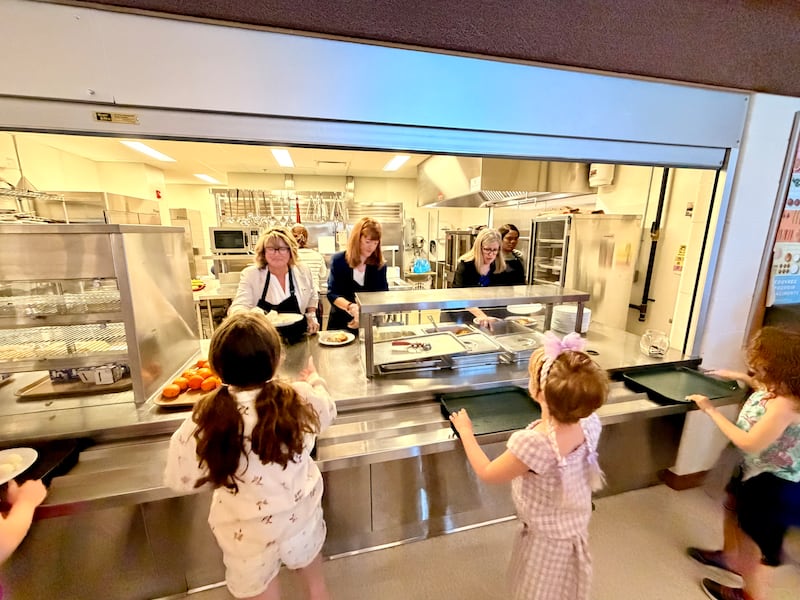
It’s a matter of ensuring a child has enough nutrition to fuel their brain, focus on their education and ultimately, break the poverty cycle.
Boyd calls it a “realistic” step towards improving the situation in N.B.

