VICTORIA, P.E.I. - As summer approaches, road trips are back on the calendar for many Canadians, but higher fuel prices are changing the budget before some travellers leave home.
When Landon Duffy, 21, and Amber Campbell, 23, started planning their cross-country road trip last fall, diesel was about $1.60 per litre on P.E.I. Duffy estimated the round trip would cost nearly $4,500 in fuel. Now, he says it could be closer to $7,000.
“It definitely does put some pressure on costs,” Duffy said. “I mean, there’s a lot more evenings I’m working to pull it off.”
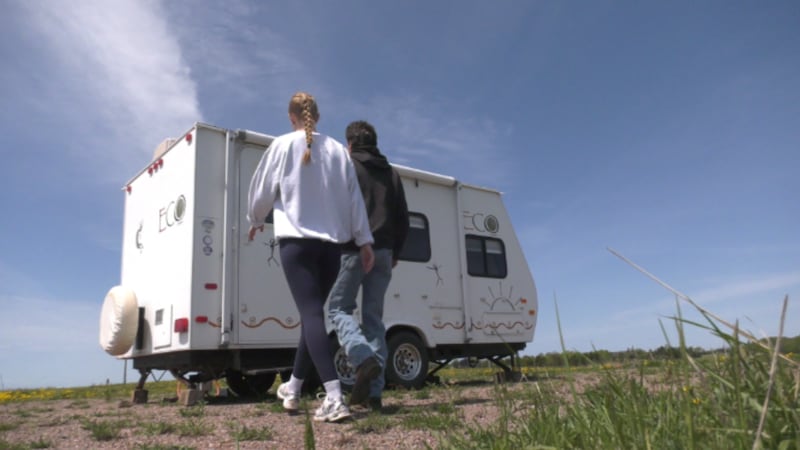
The young couple plans to head west, driving from the Island to B.C. before looping back through parts of the U.S., including Oregon, Washington and Montana. After saving up, they bought a used camper specifically for the six-week trip.
Duffy said he wanted to pay cash and avoid buying something that would depreciate quickly. Size was also part of the calculation. While he would have liked to go a little smaller, he said more compact, fuel-efficient campers were often pricier because more buyers were looking for them.
“Initially, you would want the biggest and the best,” he said. “But the extra three litres per hundred kilometres you go by sizing down in a camper makes a great deal of a difference when you’re doing 10,000, 15,000 kilometres on the road.”
Eleonore Hamm, president of the Recreation Vehicle Dealers Association of Canada, said added fuel expenses can weigh on people considering this lifestyle for the first time.
“That’s definitely, I think, a potential concern for people newer to the industry,” she said.
New RV unit sales in Canada were down 16.5 per cent in the first quarter of 2026, compared with the same period last year, according to RVDA data provided to CTV News.
Motorhomes, which can be larger and more expensive, saw the steepest drop, falling nearly 48.5 per cent.
Trailer sales also dipped, but less sharply, falling 13.4 per cent.
While sales are softer than the association would like to see, Hamm said fuel is not the only factor. A long winter may have delayed some camping purchases, while more pre-owned RVs on the market could also be playing a role.
She added higher prices may not keep people who already own RVs off the road, but they could change the way they travel.
“They may stay closer to home. They will perhaps go for shorter trips, maybe not quite as frequently,” Hamm said. “Our campground operators are telling us that they’re very busy. Their bookings are strong.”
Back in their camper, Duffy and Campbell said they’re excited, and a little nervous, to get going.
Travelling across Canada is something Campbell has always wanted to do. While the ballooning cost has added stress, she said it’s worth it.
“I’m excited to just see more of where I’m from.”

