After a long winter, Canadians can expect a warmer-than-normal summer, with uncertain precipitation outcomes, according to forecasters.
Environment and Climate Change Canada released its summer outlook Friday, comparing expected temperatures this summer with the 1991 to 2020 average, to show whether conditions are likely to be above, near or below normal.
The outlook presentation, which included a map of the country shaded in varying tones of red, indicated a tendency toward warmer conditions this summer compared with Canada’s temperature during the 30-year period.
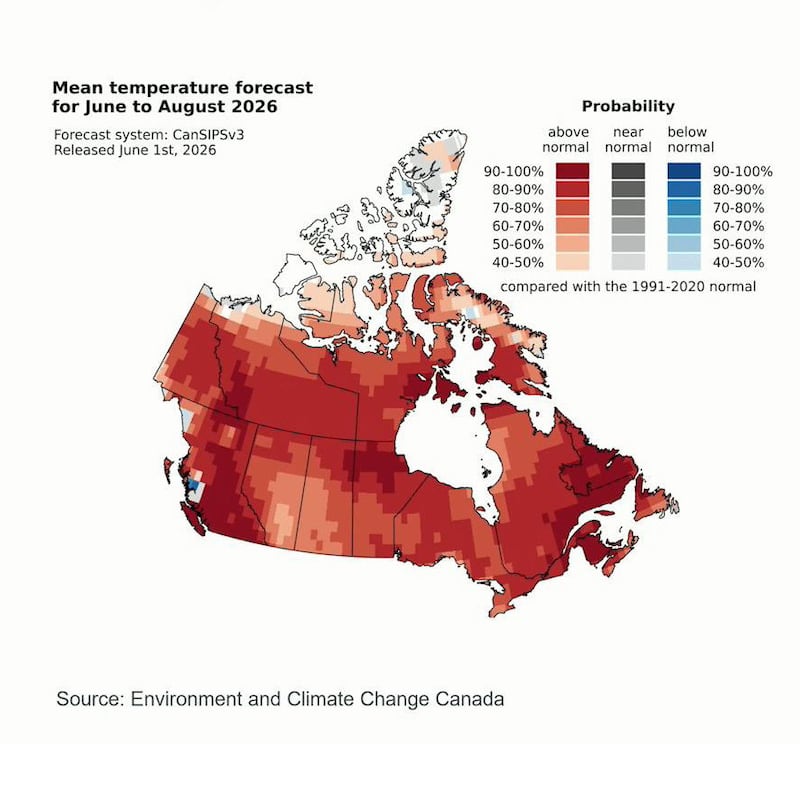
This summer, the strongest warm signals for the country are found in British Columbia, Yukon, along the mainland portion of the territories, the northern parts of the prairies, and Atlantic Canada.
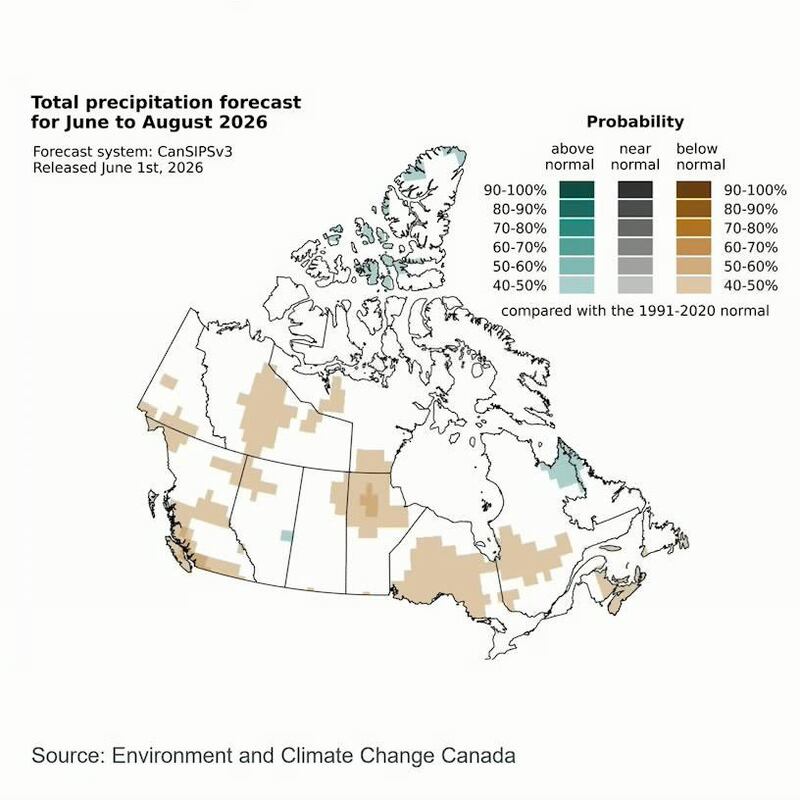
While forecasters were confident about what to expect in terms of temperature, they said the data used to forecast long-range precipitation was “much weaker across Canada.”
Jennifer Smith, a national warning preparedness meteorologist with Environment and Climate Change Canada, says that points to drier conditions across much of the country, with the exception of “northern Labrador, northern Quebec, and in the high Arctic, where a weak, wetter than normal average is indicated.”
Heat waves and summer hazards
As the country prepares for summer heat, Health Canada is advising people to take proper precautions to prevent illness.
Gregory Richardson, manager of the Heat Action Division at Health Canada, says heat can affect anyone, but poses greater risks for people with chronic illnesses. He says those most at risk include people with diabetes, mental illness, cardiovascular disease or lung disease.
He adds that people with low incomes, those experiencing homelessness, and those who work or exercise in the heat are also at greater risk during extreme heat events.
However, the risks extend beyond outdoor activities.
“Rising temperatures can also cause indoor environments to heat up, especially for people who do not have access to air conditioning, so it’s important to recognize the signs and symptoms of heat-related illness,” Richardson said.

Symptoms of heat-related illness include:
- Dizziness,
- Fainting,
- Nausea,
- Headaches,
- Unusually rapid breathing or heartbeat
- Extreme thirst
Health Canada advises anyone experiencing these symptoms to move to a cool place and drink liquids — preferably water — right away.
Richardson recommends staying up to date on local weather forecasts and alerts, drinking plenty of fluids — especially water — and using air conditioning or fans, and blocking sunlight with curtains. He also reminds people never to leave children or pets in a parked vehicle during the summer.

