MUNISING, Mich. - Two Canadian filmmakers are hoping to open the world’s eyes to what lies hidden at the deepest point of our Great Lakes, inviting CTV News to join them on board for a journey into waters that have largely remained undiscovered.
Along Michigan’s Upper Peninsula, where towering sandstone cliffs called the Pictured Rocks line the shore, sits the largest of North America’s Great Lakes.
Lake Superior’s surface spans more than 82,000 square kilometres. The species that call the lake’s deepest point home have rarely been filmed.
The last time someone captured video of the deepest point in all the Great Lakes, in Lake Superior, was in 1985.
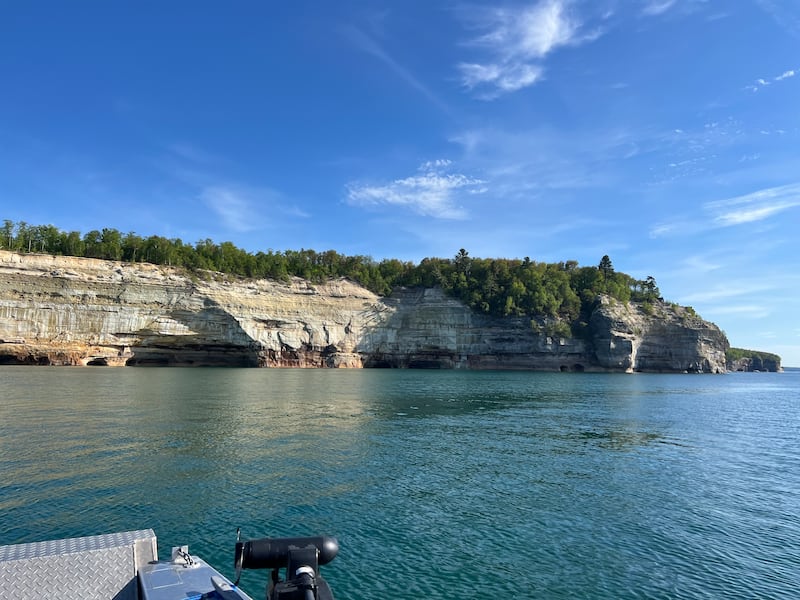
To put that into context, humankind visited the moon before taking a meaningful look at the depths of the world’s largest freshwater system, which straddles the Canada-U.S. border. Few, if any, have returned since.
That propelled Canadian cinematographers Yvonne Drebert and Zack Melnick to spend the next two years documenting what is below the expansive blue canvas of the Great Lakes, hoping to give the world a greater understanding and appreciation of the freshwater world. Along the way, they are also hosting livestreams to interact with those following them on their quest.
“We’re surrounded by images of the ocean, sharks, whales, coral reefs,... those are amazing places,” Drebert said. “But millions of us live right here along the Great Lakes and a lot has been done to bring them back to health. We see our job as showing people what’s under the waves, what’s down there, so maybe they care a little bit about it, because it’s a pretty amazing and pretty vibrant world down there.”
To help people visualize the underwater ecosystem, Drebert and Melnick are using a state-of-the-art water drone by Boxfish Robotics from New Zealand. The couple believes there are only about 20 of them in the world, and they are using the only one currently in the Great Lakes.
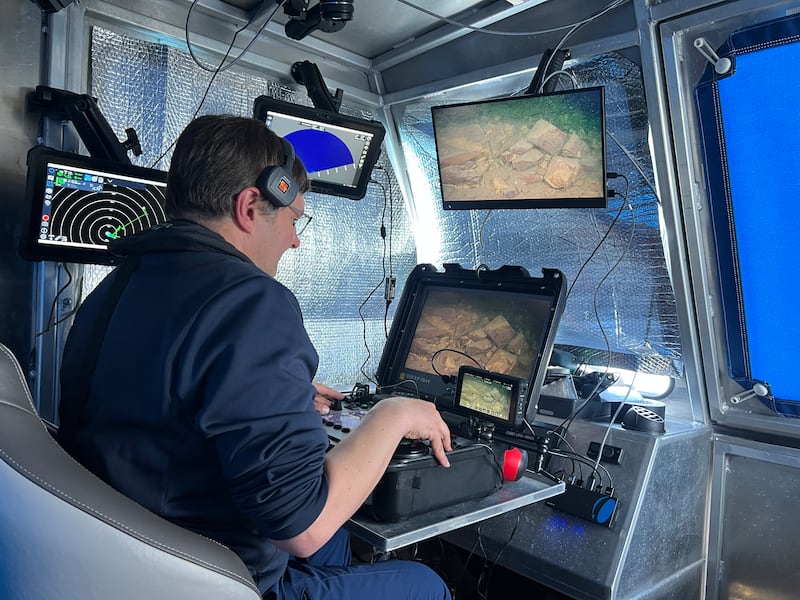
“This particular camera, it has eight thrusters, so it can move in any direction just like a fish,” Drebert said. “So when we see a fish we can get in close to it and become part of the school.”
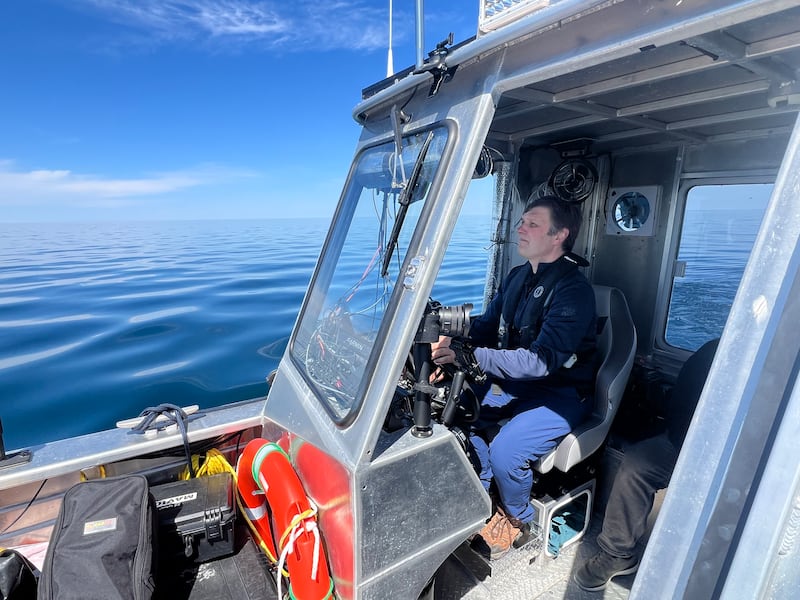
With CTV News on board, the boat’s crew of three set off 50 kilometres of the shore of Munising, Mich., to the deepest known point in the Great Lakes, an underwater mountain called Big Reef.
As Melnick steers the 23-foot boat, named Tail Spinner, he tracks his sonar for depth as he searches for schools of siscowet, the deep-water lake trout native to Lake Superior. This is the last of the Great Lakes where they remain.
During one of the initial deployments of the underwater drone, Melnick locates a large siscowet as he guides the drone and pulls the camera into focus from on board the boat. The fish is resting on the sand at about 70 metres deep. The trout’s large black eyes help it see the drone as it comes closer, using its underwater sight to navigate the dark, cold world down below.
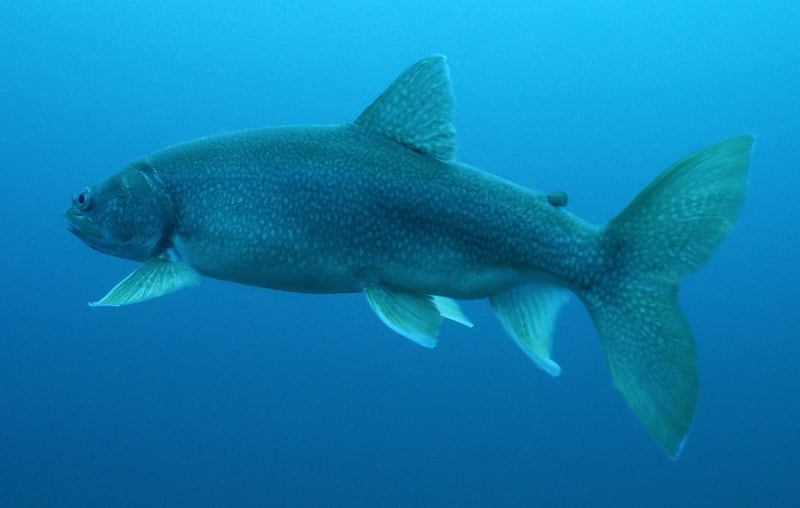
“If you think about the great ecosystems of the world, in Ontario and parts of the U.S., the Great Lakes are our Serengeti, they’re our tropical rainforest, and the lake trout are the top predators,” Melnick said. “The siscowet, those deep-water lake trout, have evolved and held on for thousands of years, specifically to survive in these giant lakes that resemble inland seas that are a lot more interesting than people know.”
The crew has also located red fin trout, filmed soaring through the current created by underwater mountains much like an eagle flies through a mountain passage.
Following the successful early drone dives, the crew on this day makes its way to a new location to attempt the deepest descent it has ever tried.
As the underwater drone is placed in the water, tethered to a long cable, it begins a slow and steady descent, Melnick calls out “100 metres, 200 metres, 300 metres.” In total, it travels 364 metres into the dark, freezing abyss of Lake Superior, a new record for Drebert, Melnick and their team.
With Melnick at the controls of the drone, the first images that appear on the screen are massive boulders, stacked along the face of deep mountainous underwater cliff. Some of the rocks are covered in Great Lakes hydra, similar to the coral found in oceans.
The massive stone structures share a striking resemblance to the famous Pictured Rocks that soar above the shore nearby in Munising, but the two worlds couldn’t feel further apart.
Our first sign of life is a shy burbot cod, peering out at the drone from between two jagged rocks. Then, the drone’s lens spots the rarely seen deepwater sculpin traversing the depths.
Filming a region of the aquatic world that has never been seen before is not lost on Melnick.
“It’s simply amazing to have the privilege to do this,” Melnick said. “To be able to show people this (underwater) world.”
The crew has just begun its two-year assignment documenting these waters. Upon completion, it will be releasing a documentary titled “Hidden Below: The Great Lakes.”
The crew also has a livestream scheduled for Saturday, when they plan to plunge to new depths, reaching 400 metres with their underwater drone and sharing it with the world.
“There’s nothing more magical than getting to see what’s under the waves out here,” Drebert said. “And if we can share that with other folks around Canada and the world and help them care a little more, then that’s pretty special.”
The couple plans to continue their journey until at least 2028, as they travel the depths of North America’s Great Lakes to deliver a picture-perfect perspective that will bridge humanity’s understanding of a freshwater ecosystem seldom witnessed before.

