A Manitoba judge has approved a $129 million settlement in a class-action lawsuit over the provincial government’s use of solitary confinement in youth and adult jails — practices an Ontario law firm argued caused lasting emotional, physical and psychological harm to inmates, including children as young as 12.
Court of King’s Bench Justice Theodor Bock approved the settlement Thursday after hearing testimony from people impacted by the practice, which the lawsuit described as “cruel, inhumane, and degrading treatment” amounting to torture.
The legal action was filed in May 2021 by Koskie Minsky LLP on behalf of two representative plaintiffs who were described as being placed in solitary confinement on multiple occasions.
The class action argued the provincial government’s use of solitary confinement—defined in court filings as segregation in a room or area without meaningful human contact for at least 22 hours a day—was negligent and breached inmates’ Charter rights to life, liberty and security, and protection against cruel and unusual punishment.
According to Proactio, which is administering the settlement fund, the provincial government agreed to resolve the class action through the settlement without a trial while denying liability.
On Thursday, the court heard testimony from several individuals affected by the practice, including a 22-year-old man who had been placed in segregation during his teenage years of incarceration.
He recounted his experience in solitary confinement at the Agassiz Youth Centre in Portage la Prairie — a facility that closed in 2022 and has since been demolished — describing how he spent over two weeks in isolation during his first instance in solitary confinement there.
“I lived it. I’ve seen it. And it will very much likely haunt me for the rest of my life,” he told court. “At the end of the day, this was a horribly traumatic event, something that lives with me to this day.”
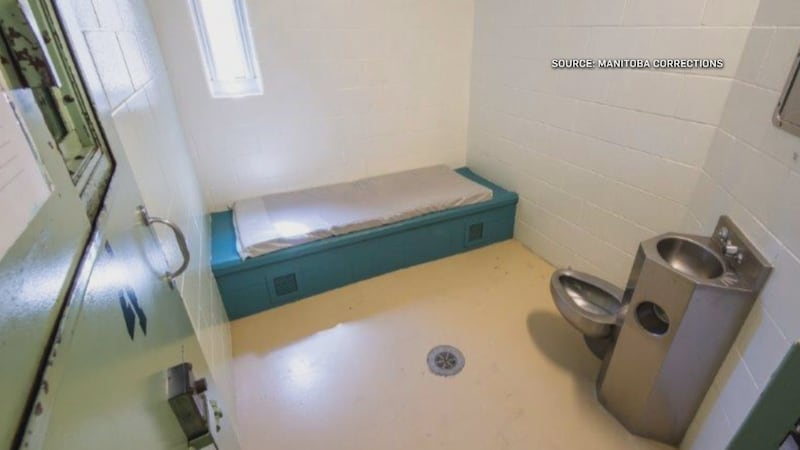
He said the practice has had a “resounding effect” on his relationships, social structure, his trust and others and sleep quality. He further told the court that even fluorescent lighting can trigger an emotional response—a consequence, he explained, of being confined to a cramped cell where the fluorescent lights were left on almost constantly, even while he tried to sleep.
Court also heard from a mother whose son died in 2023. During an incarceration years earlier, he had spent time in segregation—an experience that she said left him afraid of members of society. She is now raising his child and said any settlement funds would go toward her grandson’s education.
“These men and women need to reintegrate into society — and being locked up for 23 hours a day does a lot of damage to that,” she said.
Under the settlement agreement, Proactio says eligible class-action lawsuit members are expected to receive awards starting at $3,000 for adults and $9,000 for youth.
It notes that members may be entitled to higher amounts if they were subjected to a prolonged period or if they suffered specific, provable harms while segregated. The maximum compensation available for class members is $100,000, according to Proactio’s website.
Eligible claimants include youth placed in segregation in a provincial jail after Sept. 12, 2006, and adults placed in segregation after Sept. 12, 2012, who were either held for a minimum of 15 consecutive days or were living with a serious mental illness at the time.
Bock said he plans to release his written reasons for the decision at a later date.
Class-action lawyer James Sayce welcomed the settlement approval in a statement to CTV News, describing it as a “fair outcome that will provide genuine access to justice for the class.”
Justice Minister Matt Wiebe said the provincial government acknowledges the court-approved settlement but added that it would reserve further comment until the written decision is released.
Under Manitoba’s Correctional Services Act, disciplinary segregation can be imposed as a penalty for adult inmates found guilty of a disciplinary offence, for a maximum of 15 days. It is prohibited for youth inmates.
Preventive segregation, used in instances such as when an inmate poses a risk to the facility’s security or the safety of others or themselves, carries no maximum time limit. However, reviews are required at regular intervals, according to the Act.
The class-action settlement in Manitoba follows similar cases in other provinces, such as a lawsuit settled in Ontario in 2020 and in B.C. in 2025.
‘We just need to stop doing this’: Ethics professor
Neil McArthur, director of the Centre for Professional and Applied Ethics at the University of Manitoba, said there is broad consensus that solitary confinement causes lasting harm.
“The critic consensus, both among ethicists and psychologists, is that this is a cruel and unusual punishment that is terrible for people’s long-term psychological health,” he said.
“Human beings are social creatures. If we don’t have social contact, we sink into depression—long-term depression, long-term risk of suicidality. When you’re talking about periods of months or even years, you never recover from that. It destroys you psychologically. We just need to stop doing this.”
McArthur pointed to the Mandela Rules, a United Nations standard holding that anything beyond 15 days in solitary confinement constitutes cruel and degrading treatment. He added that the UN has been clear the practice should never be used on youth or people with mental disabilities.
He said while the settlement’s total figure may appear significant, he noted the individual payout figures are not out of line given what research shows about the long-term mental health consequences of isolation.
“There is an international consensus, a consensus among researchers, that this is an unjustifiable punishment in almost all cases. Hopefully, [the province] is looking to change its practices going forward.”

