As 42-year-old Ashley Wiley helps her two daughters get ready for their dance recital Saturday morning in their Toronto home, she thinks about how she might not have been alive to enjoy these precious moments if she hadn’t pushed her doctor to get screened for colon cancer last year.
“I can’t even believe where I would be if I didn’t (push) ... We would be looking at very different odds and a very different scenario without that screening,” said Wiley in an interview with CTV News on Saturday.
Wiley says she had been experiencing blood in her stool for roughly five years, but chalked it up to a post-pregnancy symptom. But after it persisted for much longer than expected after giving birth, she decided to ask her doctor about it, who she says didn’t offer a colorectal screening test as the primary option until she pushed for it in April 2024.
“I was continuing to have bleeding in my stool so I asked for a colonoscopy -- and just because I was so far from fifty... it wasn’t in front of my mind for my doctor to do a colonoscopy,” said Wiley. “I said ‘should we not do something more? ... Is there not another exam or should we not do a colonoscopy or something?’”
Wiley said after she got a date for a colonoscopy, she called back to her doctor’s office to ask for an earlier date.
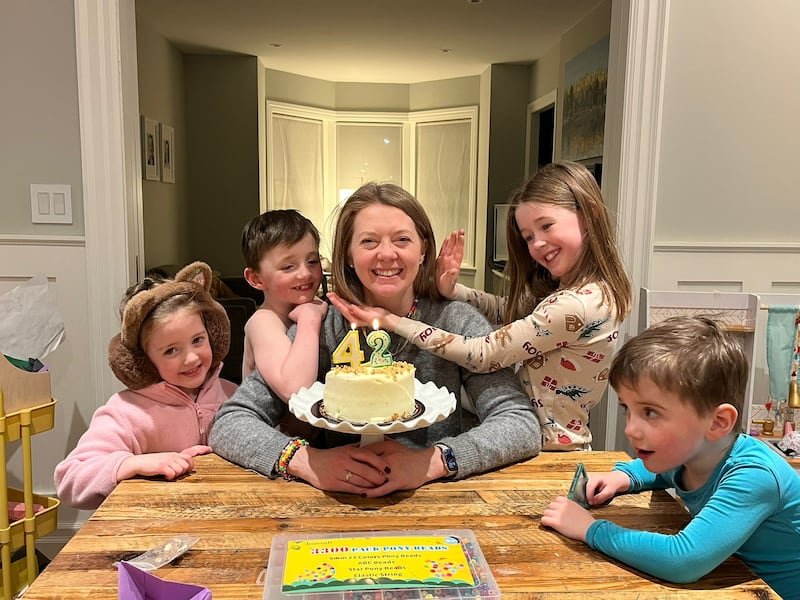
“I felt heard once I pushed,” said Wiley. “It wasn’t the first thing that was offered. I felt if I was closer to fifty, it might’ve been offered more readily.”
Ontario announced that on July 1, it will become the second province in Canada to lower the eligibility age for colon cancer screening to 45 years, joining Prince Edward Island. Most other provinces and territories currently offer publicly-funded screening beginning at age 50, while Ontario is also lowering the eligibility age for those at increased risk to 40.
Wiley, who was 41 when she was diagnosed, is now joining the chorus of voices pushing for other provinces to lower the age limit across the country — and even lower — so that people like her won’t have to resort to pushing their practitioners for screening and waiting long periods because their age bracket is not as much of a priority as those who are 50 and older.
Earlier this year, the Canadian Cancer Society highlighted concern that the incidence of colorectal cancer “has significantly increased among people younger than 50 in Canada” — with the likelihood of a diagnosis now up to 2.5 times higher than for previous generations of the same age.
It’s also calling on all provinces and territories to lower the start age of organized colorectal cancer screening programs to 45 for people at average risk.
A recent report published in the Journal of the Canadian Association of Gastroenterology found that screening at age 45 for all Canadians would result in 15,070 fewer colorectal cancer cases and 6,100 fewer deaths between 2025 and 2071.
“I think (lowering the age) is very significant because we know that if we can detect cancer in an earlier stage, we are able to cure them with higher rates and with less capacity for the treatment,” said Dr. Enrique Sanz-Garcia, a medical oncologist at Princess Margaret Cancer Centre, in a Zoom interview with CTV News Saturday.

“At the same time, what these studies showed is that we can also prevent the deaths, which unfortunately is the situation that we are facing in young people also in the colorectal cancer clinics.”
Dr. Sanz-Garcia advises anyone below the age of fifty to ask their doctor about screening, particularly if they are experiencing symptoms of colorectal cancer, such as abdominal pain, blood in their stool or fatigue.
“So although the guideline is 45, if you have a first-degree relative, you can qualify for earlier screening below the age of 45, if that person was diagnosed at an end to meet age, and the other important thing is that if you develop symptoms that are (suggestive of) colorectal cancer, you are still able to qualify to get a colonoscopy to be checked,” he added.
Now, Wiley is trying to get the message out to other Canadians to push for colorectal cancer screening if they have experienced symptoms, including blood in the stool — even if they’re below the recommended screening age in their province.
“My message would be to pay attention to your body,” said Wiley. “People who experience minor symptoms are probably fine, but you don’t know that until you have the screening.”
She’ll now be taking part in the Princess Margaret Cancer Foundation Ride on June 13 and 14, along with nearly 5,000 registered cyclists to raise money for cancer research and create more awareness of prevention and treatment.
Provinces won’t commit to lowering screening age
CTV News emailed each Canadian province and territory that still has its publicly-funded colon cancer screening age at 50, but none would commit to lowering the screening age to 45 or lower. British Columbia, however, said it is reviewing the starting age for screening.
“BC Cancer continues to assess colon screening age guidelines. We are actively reviewing (the possibility of lowering) the starting age for colorectal cancer screening guidelines to ensure they are effective, up-to-date and informed by the emerging evidence,” said Dr. Fabio Feldman, with the Prevention, Screening, Hereditary Cancer Program and Quality, Safety and Accreditation at BC Cancer in an email to CTV News Saturday.
“We have completed data collection and modelling work. We are now starting to engage regional health authorities.”
Meanwhile, Public Health Agency of Canada spokesperson Mark Johnson said the launch of the National Advisory Committee on Preventive Health Services (NACPHS), which replaces the former Canadian Task Force on Preventive Health Care, will help shape Canada’s health guidelines.
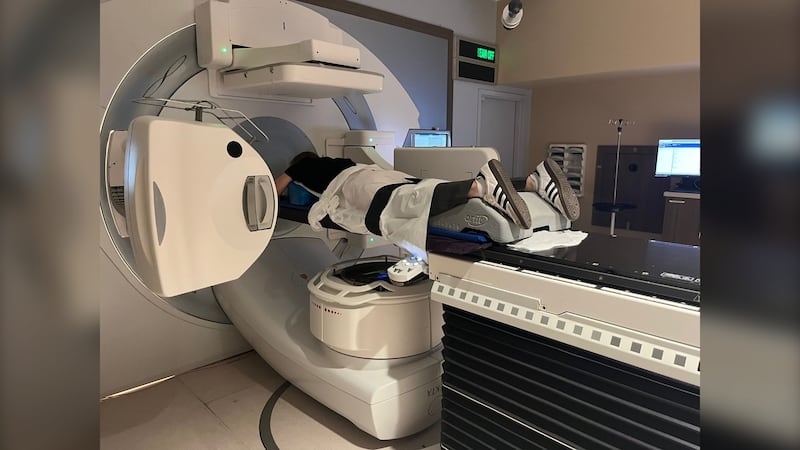
“The (NACPHS) will mark an important step in ensuring that preventive health guidelines — such as cancer screening and other disease prevention measures — continue to be evidence-informed, inclusive and responsive to the needs of people across Canada," said Johnson in an email to CTV News Saturday. “It is anticipated that members of the NACPHS will be announced in the coming days.”
Newfoundland and Labrador’s Department of Health and Community Services is also banking on NACPHS to lead the way.
“When NACPHS issues updated recommendations, the Provincial Cancer Care Program will review the information to determine whether changes to provincial screening guidance are warranted,” said a department spokesperson in a statement Saturday to CTV News.
Alberta’s Ministry of Primary and Preventative Health Services told CTV News via email that anyone at higher risk in the province, including those with a family history of colon cancer, can get screened earlier than age 50, as long as they have a recommendation from their health-care provider.
“Our screening programs are always guided by the best available evidence and regularly reviewed to support early detection and better outcomes. We will continue to evaluate the current program and monitor all emerging evidence to keep strengthening our support for Albertans,” said the statement.
Other provinces and territories did not respond in time for publication.

