HAZELBROOK, P.E.I. - The water still runs from the taps at Douglas and Roberta “Robin” Jenkins’ home, but they no longer trust what once supplied their kitchen, garden and livestock.
In January 2025, the Jenkins say an official from the province knocked on their door with a warning. Provincial testing had found 606.6 nanograms per litre of PFAS (per- and polyfluoroalkyl substances) in their private well. Often called “forever chemicals,” the substances were detected at more than 20 times what Health Canada recommends for drinking.
“We’ve been very reluctant to even shower in the water,” Douglas said.

The Jenkins’ farmhouse is nestled on a 130-acre property in Hazelbrook, P.E.I., a rural community southeast of Charlottetown. It’s been in the family for more than four generations, but now, Douglas says even familiar tasks raise questions, from watering vegetables to rinsing produce and keeping animals.
The concern stretches beyond their fields, with some neighbours also dealing with higher PFAS levels. More than 200 people live in the municipality, many of them relying on private wells.
Douglas calls it “the most toxic town in P.E.I.”
“The science has been evolving, so we’re very nervous about what other long-term effects there could be on us, our farm, our community and our neighbours,” he said.
Turning to the courts
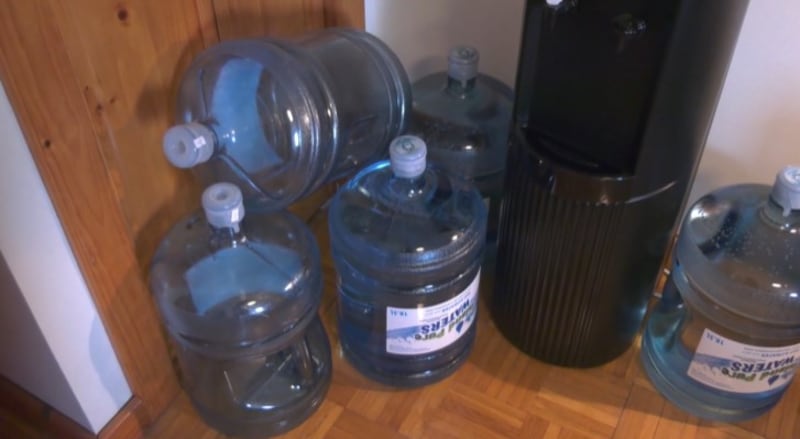
Since PFAS were found, the province has provided the Jenkins with bottled water.
The family says they’ve spent the past year trying to understand the toxicity of the chemicals and the severity of their exposure, writing to government officials, including the premier, asking for help. They say they’ve also spent nearly $15,000 on freedom-of-information requests, trying to gather records about the contamination, but haven’t received the answers they’re looking for.
“We’re sort of backed into a corner,” Douglas said.
The Jenkins are now suing the P.E.I. government, seeking personal damages that approach or exceed $1 million for each plaintiff, plus property damages and the cost of remediation.
“This is a last and desperate resort to make the government accountable for the damages that have occurred, are occurring and are going to occur in the future for the residents of this community,” Douglas said.
A nearby site under scrutiny
It’s not clear what caused the contamination affecting the Jenkins and their neighbours.
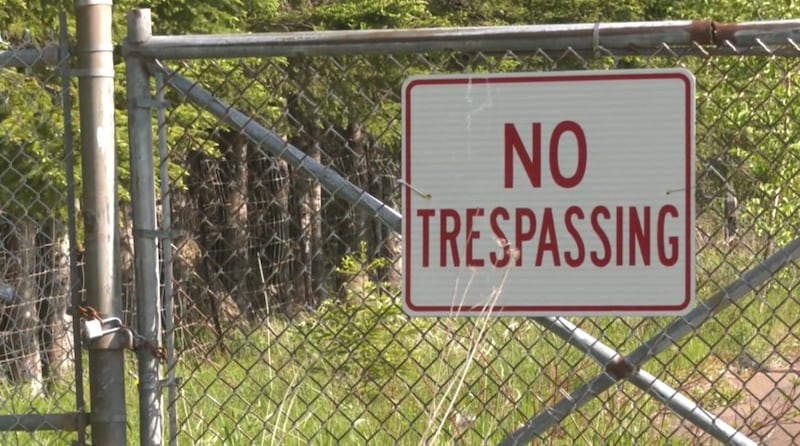
But the family alleges the source is a former disposal site for construction and demolition (C&D) waste near their home, and that the province failed to properly monitor and clean it up.
The controversial site operated for years, drawing complaints from the community long before PFAS were found in the water. Provincial records say the Hazelbrook C&D site was ordered to be closed after an inspection found it wasn’t meeting regulations.
The site is listed in a provincial contaminated sites summary as government-owned.
CTV News asked P.E.I.’s environment department about the lawsuit, but did not receive responses to questions.
The allegations have not been proven in court.
What blood tests showed
In June 2025, the Jenkins had their blood tested for PFAS exposure at a lab in Maine. The resulting report found 113.39 nanograms per millilitre in Robin’s blood, more than five times the level associated with an increased risk of adverse health effects, according to U.S. clinical guidance.
“I can’t believe the amount of emotions that go through your mind in a second,” Robin said, recalling the moment she read the result.
“It went from disbelief, to shock, to anger. But it lands on sadness. It’s just a sad event.”
Results for Douglas showed 78.92 nanograms per millilitre, also well above the level where additional health monitoring is recommended.
The couple was so stunned, they were tested again at the same lab a few months later, with similar results.
“It’s a ticking time bomb within us all,” Robin said. “It’s not going anywhere. Every drink of water we had, it just built up more and more and more.”
Douglas has been diagnosed with two different types of cancer in recent years. The family can’t attribute the illnesses to PFAS, but he said that doesn’t eliminate their concern.
“It’s always in the back of your mind, that maybe some of the chemicals that we’ve been drinking for the last many years might be contributing to making the situation worse,” he said.

Understanding the exposure
Most people have some PFAS in their blood, according to national biomonitoring data.
But Crystal Sweeney, an analytical toxicologist with the Illinois Fire Service Institute and originally from P.E.I., said the goal is to reduce exposure where possible, especially when levels are high.
“Health Canada tells us that PFAS can affect multiple organs, including the liver and kidneys, but also multiple systems,” Sweeney said, listing the immune, reproductive, developmental and endocrine systems. “It can also affect our metabolism.”
That can mean being mindful of everyday sources, including certain non-stick cookware, water-repellent coatings, food packaging and some dental floss.
Blood testing can help document exposure, she said, but it has limits. It can’t confirm where the chemicals came from, show whether they are linked to a current illness or predict future health outcomes.
Sweeney said PFAS are “extremely resistant to degradation” and can last a long time in the environment and the body.
“Even if a certain chemical is banned, that’s persistent, we could still be exposed to it for decades possibly,” she said, adding researchers are still studying how to trap and remove PFAS from the environment.
What happens now
Douglas was born and raised on the property and the Jenkins had hoped to pass it on to their two daughters. But now, he said they don’t want them to bear the burden of dealing with contamination.
They have tried to sell, but Douglas said they have a duty to disclose deficiencies on the property, and the water issue has deterred potential buyers.
The Jenkins want the province to reverse the environmental damage, so they can return the farm to the condition their family enjoyed for generations.
“That would be great, if we could go back to living peacefully, in our retirement years,” Douglas said.

