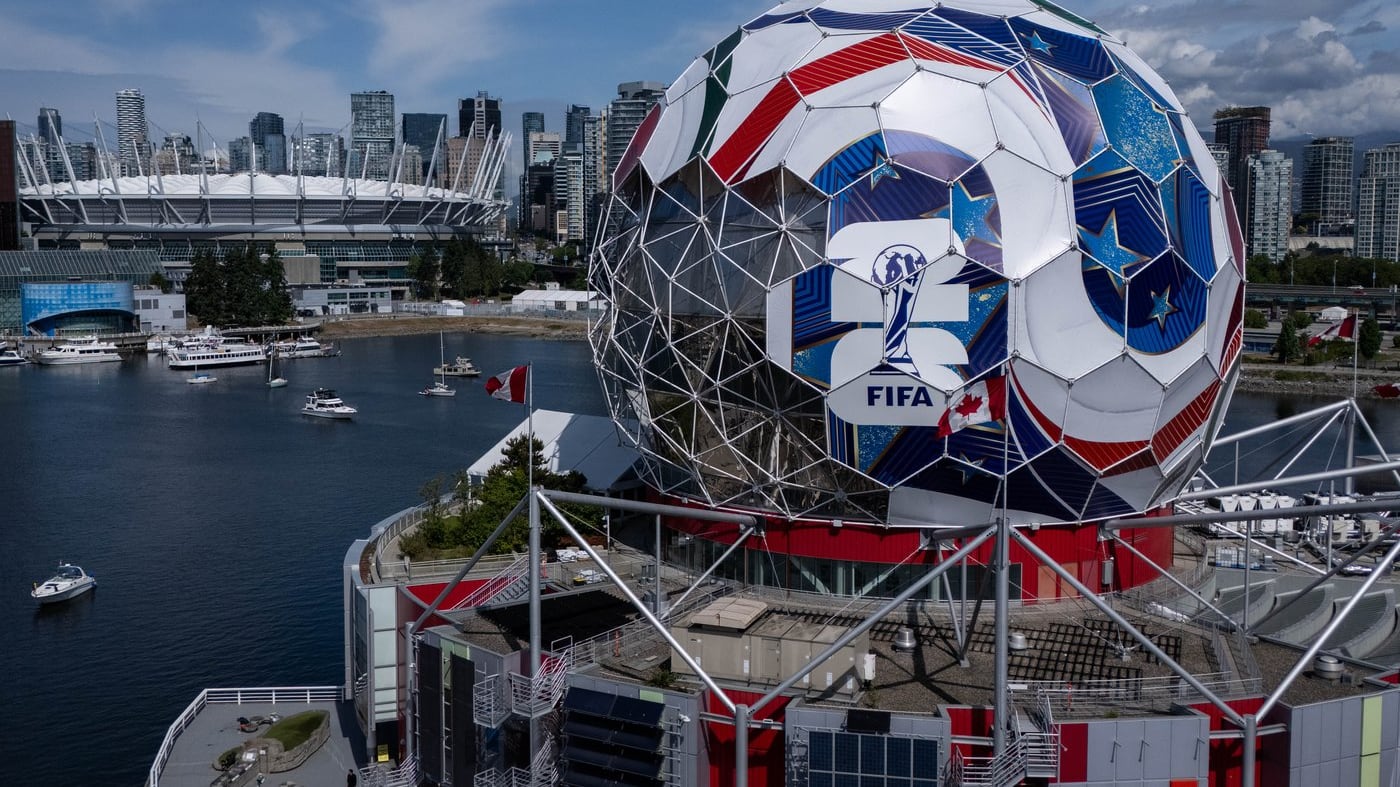
VANCOUVER – Noah Reitman regularly rents out the top floor of his Vancouver home through Airbnb, and he, like many in Vancouver, figured demand during the World Cup would be off the charts.
“We thought, ‘oh, this will be a great opportunity for sure to make some extra cash,’” Reitman said.
But after initially significantly raising his asking price, Reitman dropped it back down, and most of his June bookings, he says, have nothing to do with soccer.
“A lot of people that ended up signing up, ending up not even knowing the World Cup was going on here in Vancouver,” he said. “They just came for normal tourist stuff.”

Reitman does acknowledge he is still generating between 20 to 30 per cent more revenue than normal with his suite.
With days to go before the FIFA men’s World Cup matches kick off in Canada, new data is backing up Reitman’s experience and raising new questions over whether expectations for accommodation demand in host cities were overblown.
In data provided to CTV News by hotel analytics firm CoStar, as of June 1, hotels in Vancouver and Toronto remain less than half full on World Cup match days, despite months of predictions that the tournament would lead to a surge in demand, as hundreds of thousands of fans descend on each city over the course of a total of 13 matches.
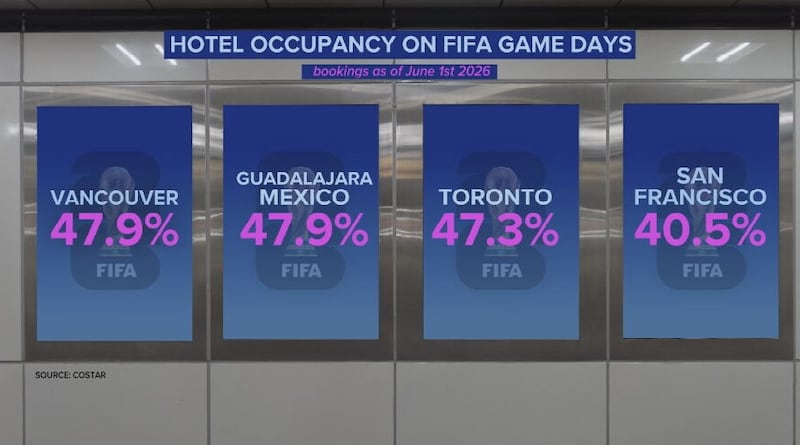
Yet the two Canadian host cities, according to CoStar, are actually doing much better than most, in terms of booked accommodation for the World Cup being shared by cities in Canada, the U.S. and Mexico.
Vancouver and Guadalajara, Mexico are leading the tournament in hotel occupancy on game days at just under 48 per cent. Toronto isn’t far behind at more than 47 per cent. San Francisco is the only American city with more than 40 per cent booked.
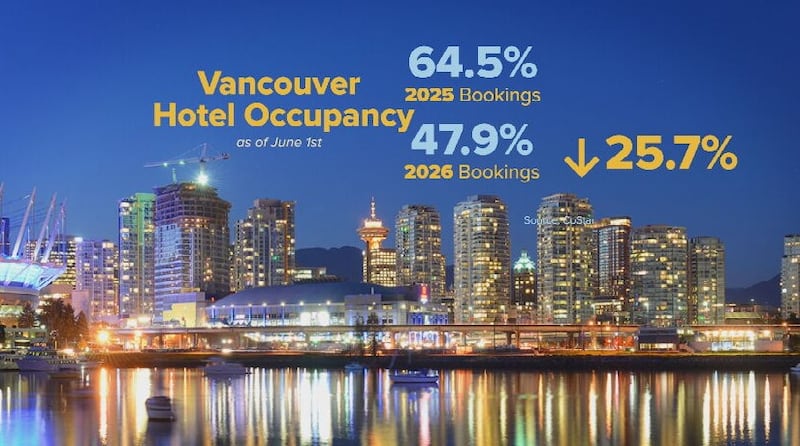
But the data indicates Vancouver occupancy is down dramatically from last June, when the city was 64.5 per cent booked. It’s a drop of more than 25 per cent, explained by Concordia University sports economist Moshe Lander as “economic destruction” not taken into account in most FIFA revenue projections.
“For every tourist that comes in and says, ‘hey, I’m going to spend a dollar here,’ there’s probably a tourist that would have been coming to Vancouver in June that said ‘I’m no longer coming because the World Cup is going to be there, I don’t want to be around that chaos.’”
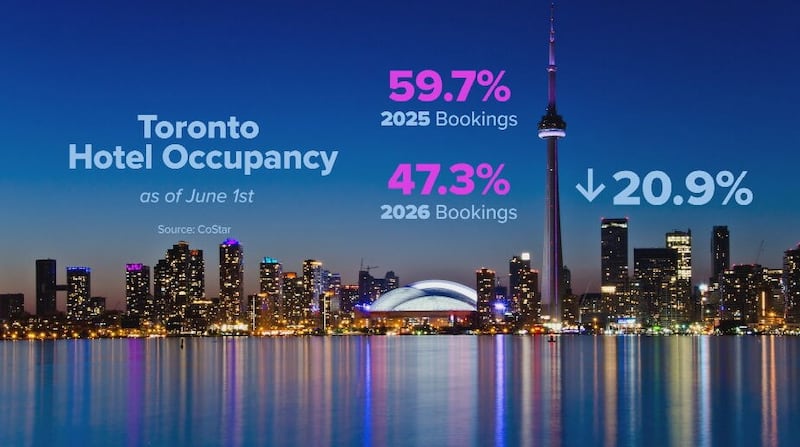
Toronto’s data is similar. The city’s hotels, according to CoStar, were close to 60 per cent booked on the days measured in June 2025, and during the tournament, occupancy currently sits at just over 46 per cent, a drop of almost 21 per cent.
In Vancouver, the hospitality sector believes last-minute bookings will still make a big difference.
“It’s exactly what we thought was going to happen,” said Royce Chwin, president and CEO of Destination Vancouver. “Bookings have been increasing week over week (by) double digits. We’re still behind, but we’ve gained a massive amount of ground.”
Chwin feels many fans who have match tickets may be waiting on booking a hotel to see if prices will come down further. Airbnb told CTV News it doesn’t provide data on how many listed properties are still available, but confirmed 70 to 80 per cent of its remaining listings in Vancouver and Toronto during June are currently priced below $500 per night.

