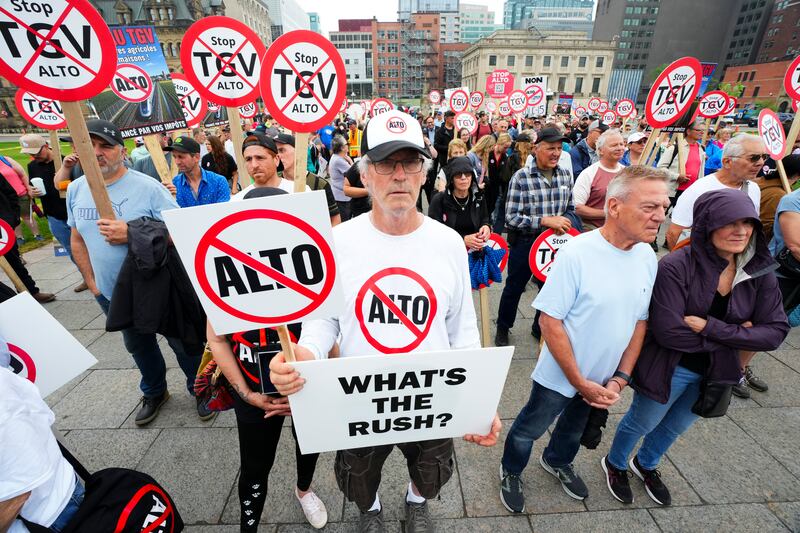
OTTAWA – Quebec and Ontario farmers met up on the Alexandra bridge linking their two provinces before marching to Parliament Hill Wednesday, as they joined forces against a high-speed train.
Their goal is to derail the federal government’s Alto project, which would serve as a quick link in the Toronto-Quebec City corridor. They say their opposition movement is growing, with farmers fearing they will lose their land and part of their livelihood.
“I am the seventh generation working on my family farm and the train is not good for the next generations,” Anthony Lalonde, a 17-year-old from St-Placide, Que., told CTV News. “It can destroy agriculture.”
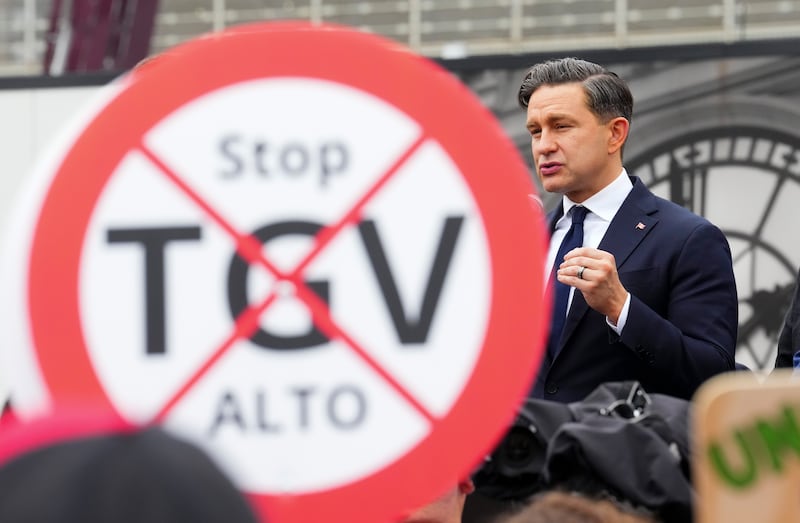
Farmers waved signs that read “Stop Alto” and “Keep your hands off our lands.” Conservative Leader Pierre Poilievre opposes the project and joined protestors on the Hill.
“We are here to fight for our farmers, to fight for our landowners, to fight for our rural communities, to fight for our taxpayers and for affordability against this $90-billion Liberal white elephant,” said Poilievre.
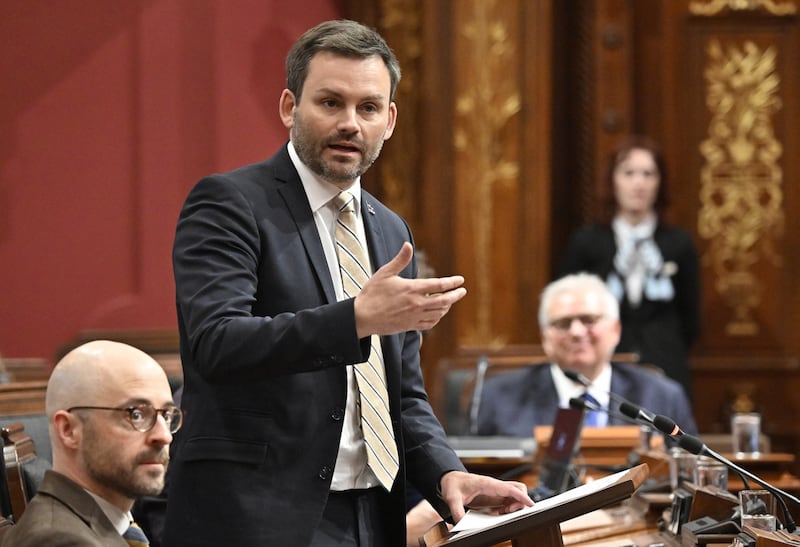
This protest comes in the wake of a declaration by the Parti Quebecois (PQ) that sparked a wave of reaction in Quebec. The PQ said that it would withdraw the province’s support for the Alto train if elected to power in the October provincial election.
The party, which promises to hold a referendum on sovereignty if elected, is leading in the polls. Its leader, Paul St-Pierre Plamondon, suggested that the high-speed train was designed as a vehicle to boost Canadian unity, but that Quebecers were concerned about issues of mobility in their own cities, rather than of travel to Ontario.
Several mayors, including Montreal’s Soraya Martinez-Ferrada and Quebec City’s Bruno Marchand, say the project is vital for the economy, regional mobility and the environment.
Proponents also argued that other parts of the world also have high-speed rail lines through farmland, including France’s TGV, that have proven to be efficient and popular.
The project calls for a 1,000-kilometre-long electric rail line linking Toronto to Quebec City. The federal government says building and setting up the project could create more than 50,000 jobs during the years’ long construction phase.
It would also cut travel time from Toronto to Montreal to just three hours.
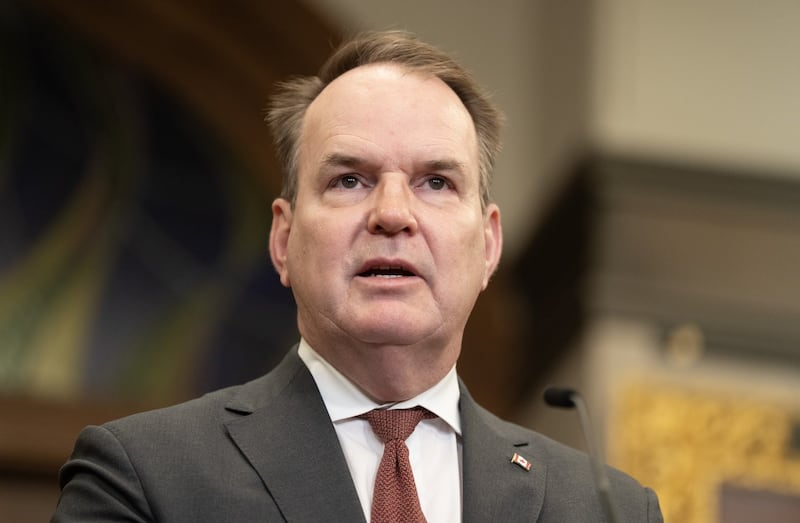
Transport Minister Steven MacKinnon says the Liberal government is sensitive to issues farmers have raised and that Ottawa is footing the bill. But the PQ’s position would be a roadblock for the project if the party is elected.
“This is a formidable, nation-building project that includes Quebec and, of course, would it not include Quebec, then there is no project,” said MacKinnon. “But it is a federal project and a very ambitious federal one.”
Ottawa has also pointed out that, while the proposed route now maps out a 10-kilometre-wide swathe of land that is under study, the final corridor will be around 60 metres wide.
‘Don’t want to re-live that history’
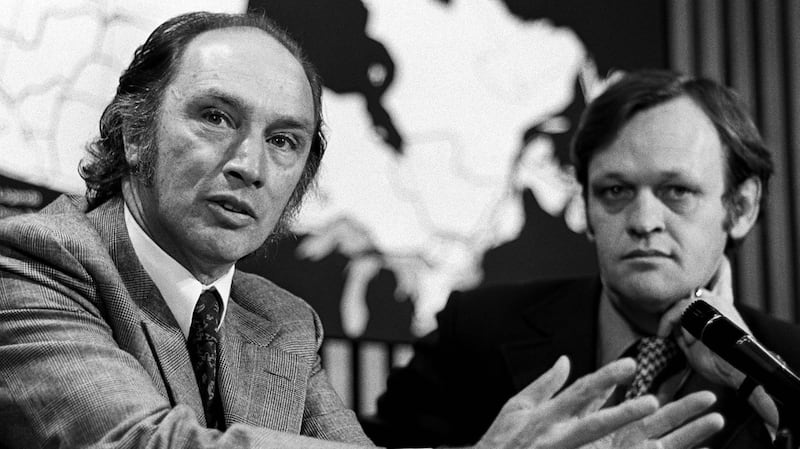
In Mirabel, Que., many fear history is repeating itself and opposition is particularly fierce. In 1969, more than 97,000 acres of farmland were expropriated in the region to make way for an airport terminal inaugurated by then-Prime Minister Pierre Elliot Trudeau that never took off. A large section of the land was never used, and after several years of a bitter legal battle, several plots were returned to owners who had been forced to sell family farms.
About 230 protestors from Mirabel boarded buses to Ottawa to show their opposition. Among them Sylvain Ethier, who says a rail line along the proposed route could section off portions of his land and the city of Mirabel.
“I was nine years old when I started to hear the word expropriation,” said Ethier. “Now more than 50 years later, we don’t want to live through all this again. The government destroyed homes and family farms, we don’t want to re-live that history.”
He now drives the tractor his father took to protest expropriation to make way for the airport more than five decades ago, to protest expropriation to make way for a high-speed train.
Alto has started to survey land along the proposed path to determine the best route, and Ethier says he received an envelope with information that he barely read and put aside.
“If they come to my door, they will stay outside,” he said. “It’s an insult for me to have to think about expropriation again after all we have been through.”
Mirabel municipal councillor Robert Charron says the federal government has set up rules that he says exclude fair negotiations for farmers. While Ottawa has billed the project as boosting Canadian unity, he says farmers are uniting against Alto.
“The image that the government is giving to the farmers is that we are like ancient people that are against being modern,” he said. “We’re not against having a better transport system. But not the way they’re doing it.”
He also says Ottawa must be mindful that in its quest to go full steam ahead with the project, it could inflame tensions in Mirabel, where farmers remember the pain of expropriations.

